How to Grow Jostaberry in the UK
How to grow jostaberry in UK gardens. Covers planting, pruning, harvest timing, and why this blackcurrant-gooseberry hybrid belongs in your fruit bed.
Key takeaways
- Thornless hybrid of blackcurrant and gooseberry, bred in Germany in the 1970s
- Hardy to -25C and virtually disease-free, with strong mildew and big bud mite resistance
- Mature bushes produce 5-10kg of dark berries per year from mid-July to August
- Self-fertile, so a single bush gives a full harvest without a pollination partner
- Grows 1.5-2m tall and wide, tolerates partial shade and most UK soils
- Berries taste like a tart blackcurrant with a gooseberry undertone, outstanding for jam and cordials
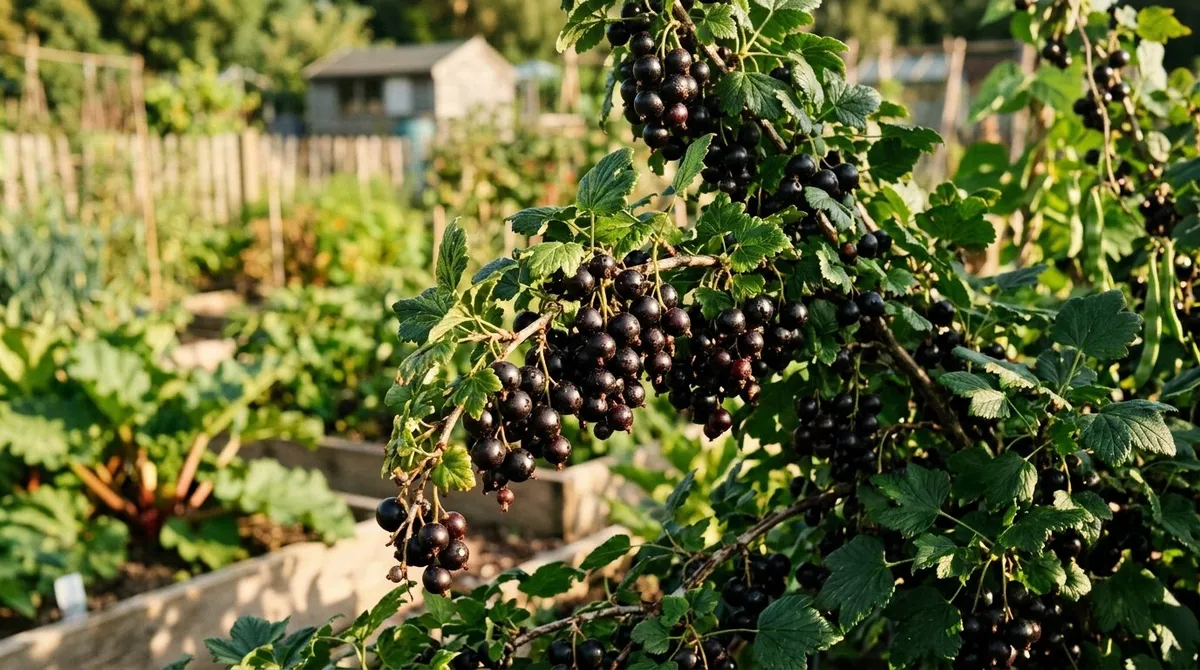
The jostaberry is a thornless hybrid fruit that grows well across the UK, producing 5-10kg of dark, vitamin C-rich berries per bush each summer. It inherits the best traits of both parents: the vigour and disease resistance of blackcurrant, combined with the size and tang of gooseberry. If you already grow blackcurrants and redcurrants or gooseberries, the jostaberry fits naturally into the same fruit bed with less maintenance than either parent.
This guide covers everything needed to grow jostaberry successfully in UK conditions, from site selection and planting through to pruning, harvesting, and using the fruit.
What is a jostaberry?
The jostaberry (Ribes x nidigrolaria) is a deliberate cross between blackcurrant (Ribes nigrum) and gooseberry (Ribes uva-crispa), first bred in Germany in the 1970s. The name comes from the German words for blackcurrant (Johannisbeere) and gooseberry (Stachelbeere). It took over 40 years of breeding to produce a fertile, stable hybrid.
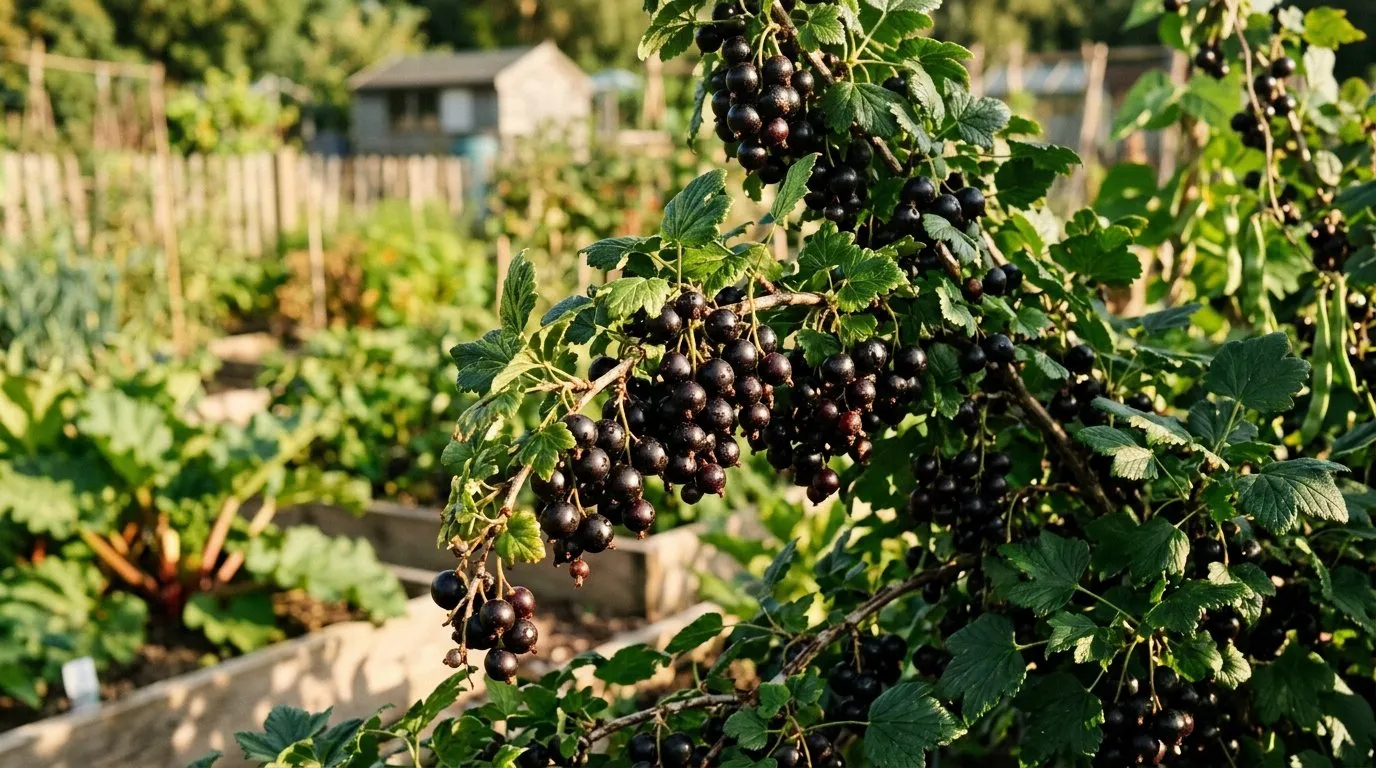 Jostaberry fruit clusters. The berries are larger than blackcurrants and turn deep purple-black when ripe.
The bush grows to 1.5-2m tall with vigorous, thornless stems. Leaves resemble large blackcurrant leaves but lack the strong scent. The fruit is roughly twice the size of a blackcurrant, ripening from green through red to glossy purple-black. Flavour sits between the two parents: a tart blackcurrant intensity with a subtle gooseberry sourness underneath.
The key advantage of jostaberry over its parents is disease resistance. Jostaberry shows strong resistance to American gooseberry mildew, leaf spot, and big bud mite. These are the three most troublesome problems for UK currant and gooseberry growers. A jostaberry bush in a Staffordshire garden has needed zero fungicide or pesticide treatment over four growing seasons.
Jostaberry vs blackcurrant vs gooseberry
| Feature | Jostaberry | Blackcurrant | Gooseberry |
|---|---|---|---|
| Berry size | 12-15mm diameter | 8-10mm | 15-25mm |
| Yield per bush | 5-10kg | 4-5kg | 3-5kg |
| Hardiness | -25C | -20C | -20C |
| Thorns | None | None | Sharp thorns |
| Mildew resistance | Very strong | Moderate | Low-moderate |
| Big bud mite | Resistant | Susceptible | Not affected |
| Height | 1.5-2m | 1.2-1.5m | 1-1.5m |
| Productive life | 15-20 years | 10-15 years | 15-20 years |
| Flavour | Tart, complex | Rich, intense | Sharp to sweet |
| Self-fertile | Yes | Yes | Yes |
The yield figures above are from established bushes in their fourth year onward. First-year bushes produce little or no fruit. Second-year plants give a light crop. Full production begins in the third or fourth season.
Field Report — Staffordshire heavy clay, 2021-2025: Three jostaberry bushes planted as bare-root one-year plants in November 2021. No fruit in year one. Light crop of 1.5kg per bush in year two. By year three, each bush produced 5.8kg, 6.2kg, and 5.4kg respectively. Year four yields increased to 7.1kg, 7.8kg, and 6.9kg. Zero disease treatments applied across all four seasons. No sign of mildew, leaf spot, or big bud mite on any plant at any point.
Where should I plant jostaberry?
Jostaberries grow best in full sun but tolerate partial shade, producing a slightly later and lighter crop in less light. They are less fussy than blackcurrants about site and soil. A position that receives at least four hours of direct sun daily is sufficient for a good harvest.
Site requirements
| Factor | Requirement |
|---|---|
| Sun | Full sun to partial shade (minimum 4 hours direct) |
| Soil | Any fertile, moisture-retentive soil |
| pH | 6.0-6.5 ideal, tolerates 5.5-7.0 |
| Drainage | Moist but not waterlogged |
| Shelter | Some wind shelter benefits pollination |
| Frost | Hardy to -25C; flowers in April may need fleece in frost pockets |
| Spacing | 1.5m between plants, 2m between rows |
Jostaberries tolerate heavy clay better than most soft fruit. On our Staffordshire heavy clay, the bushes grew strongly from the first season without any drainage improvement. Sandy soils need organic matter worked in to hold moisture during the fruiting period.
Avoid planting where blackcurrants or gooseberries grew in the previous five years. Soil-borne diseases can persist. A fresh site gives the bush the best start.
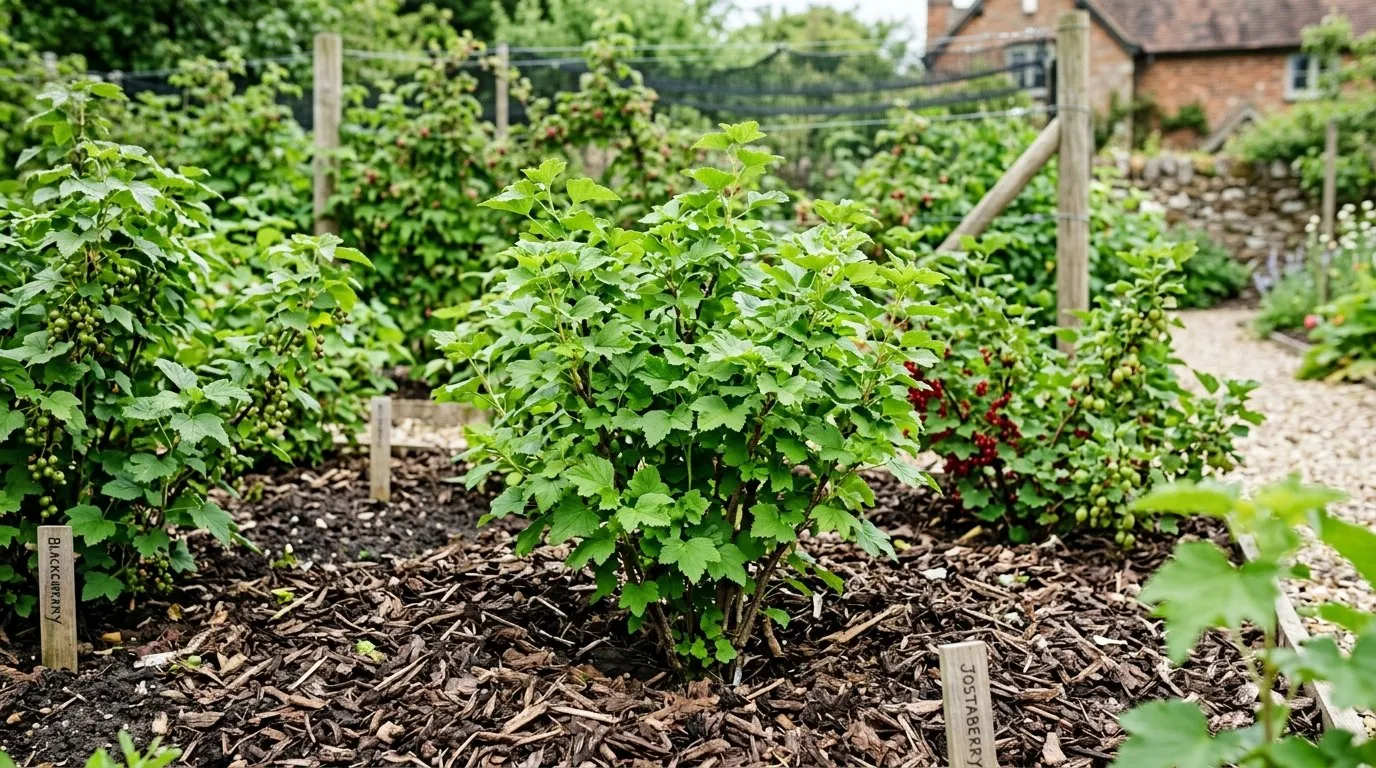 A young jostaberry bush in its second season. Vigorous upright growth is typical of healthy plants.
Planting method
Plant bare-root jostaberry bushes between November and March. Container-grown plants can go in at any time, but autumn planting gives the best results.
- Dig a hole 50cm wide and 30cm deep. Fork over the base.
- Mix a bucket of well-rotted compost or manure into the removed soil.
- Set the bush 5cm deeper than the nursery soil mark. This encourages new shoots from below ground, exactly as you would plant blackcurrants.
- Backfill with the improved soil. Firm gently with your boot.
- Water thoroughly, even if the ground is already moist.
- Mulch with a 7-10cm layer of bark chips or compost, keeping it 5cm clear of the stems.
- Cut all stems to 5cm above ground level after planting. This feels drastic but forces strong basal growth in the first spring.
Month-by-month care calendar
| Month | Task |
|---|---|
| January | Winter prune. Remove oldest third of stems at ground level |
| February | Apply a general-purpose fertiliser (Growmore at 70g per sq m) |
| March | Mulch with 7-10cm of compost or bark chips |
| April | Drape fleece over bushes if a hard frost is forecast during flowering |
| May | Water newly planted bushes if rain is scarce. Check for aphids on shoot tips |
| June | Begin watering established bushes in dry spells. Fruit is swelling |
| July | First harvest pick. Ripe berries are glossy purple-black and pull away easily |
| August | Final harvest pick. Net bushes if birds are taking fruit |
| September | Remove spent fruiting wood if not leaving it for winter prune |
| October | Order bare-root bushes from nurseries for November planting |
| November | Plant new bushes. Take hardwood cuttings from healthy stems |
| December | Check stakes and ties. Clear fallen leaves from around the base |
How do I prune a jostaberry bush?
Prune jostaberry bushes in winter by removing one third of the oldest stems at ground level each year. The fruiting habit is closer to blackcurrant than gooseberry. The heaviest crops form on two and three-year-old wood. Old stems over four years produce less fruit and should be cut out to make way for younger replacements.
Jostaberry grows vigorously. Without pruning, bushes become dense and congested within three years. Poor air circulation leads to reduced yields and makes picking difficult, even though disease resistance remains strong.
Winter pruning steps
- Identify the oldest stems. They have dark, rough bark. Young stems are pale and smooth.
- Cut one third of the oldest stems to ground level using loppers or a pruning saw.
- Remove any dead, damaged, or crossing branches.
- Thin the remaining stems if the centre is congested. Aim for an open framework that allows light and air to reach the centre.
- Tip any very tall stems to an outward-facing bud to prevent the bush becoming top-heavy.
That is the entire pruning routine. Jostaberry does not need the detailed spur pruning that gooseberries require or the renewal pruning specific to blackcurrants. It sits between the two approaches: remove old wood, keep young wood, maintain an open shape. If you are comfortable pruning fruit trees, jostaberry pruning will feel straightforward.
Propagation from hardwood cuttings
Jostaberry propagates easily from hardwood cuttings taken in November.
- Select healthy, straight stems of the current year’s growth, about pencil thickness.
- Cut 20-25cm lengths, making a straight cut at the base just below a bud and an angled cut at the top just above a bud.
- Insert the cuttings into a prepared trench of gritty compost, leaving only the top two buds above ground.
- Firm the soil around each cutting. Water once.
- Leave undisturbed for 12 months. By the following autumn, most cuttings will have rooted and can be transplanted.
Success rates of 70-80% are typical. This makes jostaberry one of the easiest soft fruit to propagate at home.
When do I harvest jostaberries?
Jostaberries ripen from mid-July to late August in most UK regions. Fruit does not ripen uniformly on the bush. Berries at the top and on the sunny side colour up first. Expect to pick three or four times over a two to three-week window rather than harvesting the whole bush in one session.
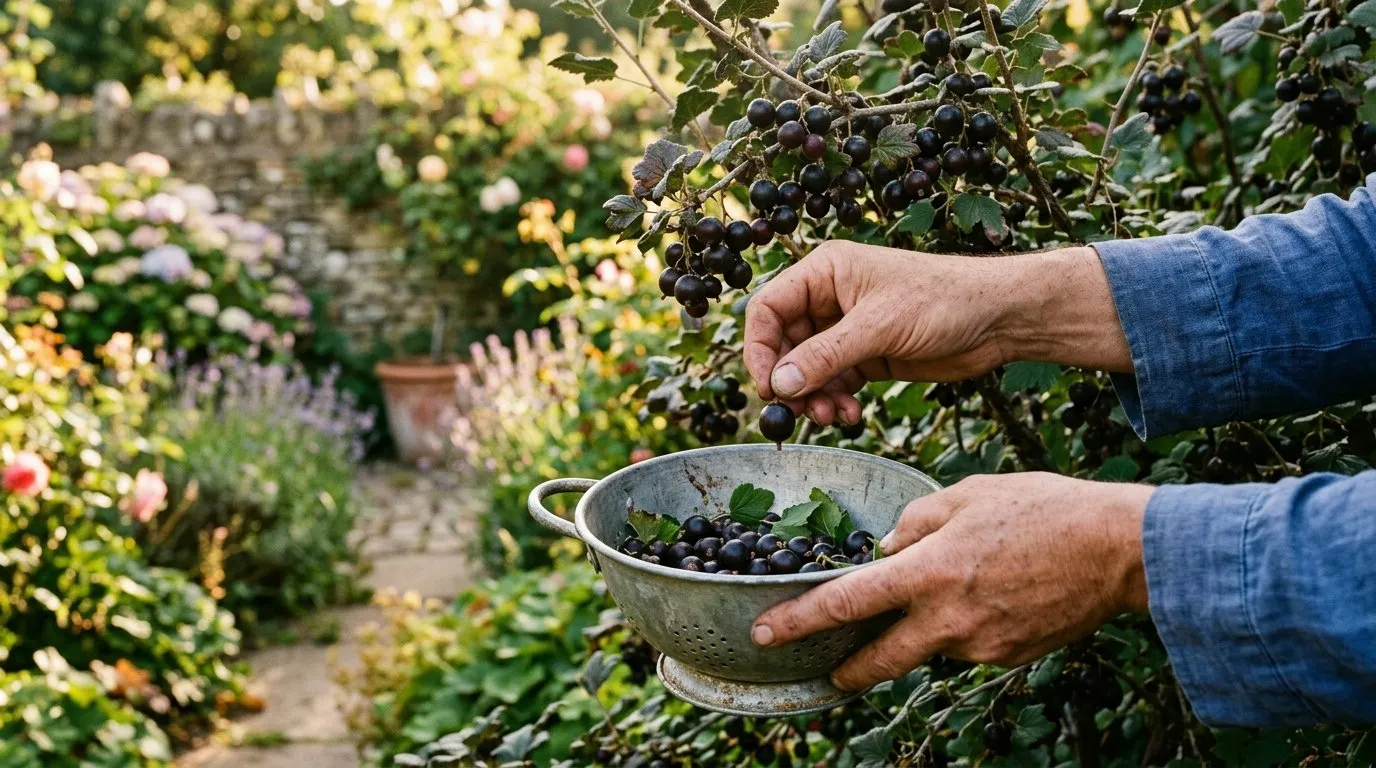 Harvesting jostaberries. The thornless stems make picking far easier than gooseberries.
How to tell when jostaberries are ripe
- Colour: Fully ripe berries are glossy deep purple-black. Green or red berries are unripe.
- Feel: Ripe fruit is slightly soft when gently squeezed. Hard berries need more time.
- Pull test: A ripe berry detaches from the strig with a gentle tug. If you have to wrench it, leave it another few days.
- Taste: Sample one. Ripe jostaberries are tart but sweet. Unripe fruit is mouth-puckeringly acidic.
Pick into shallow containers to prevent crushing. Jostaberries are softer than gooseberries and bruise more easily. Use them within three days of picking or freeze them on a tray before bagging.
Using the harvest
Jostaberries are naturally high in pectin. This makes them outstanding for jam and jelly. The dark juice also produces an excellent cordial.
| Use | Method | Notes |
|---|---|---|
| Jam | Standard jam ratio (equal weight fruit and sugar) | Sets firmly thanks to high pectin. Rich purple colour |
| Cordial | Simmer fruit, strain, add sugar | Dilute 1:4 with water. Sharp, refreshing flavour |
| Crumble | Mix with apples or use alone | Add extra sugar as jostaberries are tart |
| Freezing | Open-freeze on trays then bag | Keeps 12 months. Use in smoothies and baking |
| Wine | Standard country wine method | Deep colour and good body. Allow 12 months maturing |
| Eating fresh | Straight from the bush when fully ripe | Tart. Best in small handfuls or with yoghurt and honey |
A mature bush yielding 7-8kg provides enough fruit to make 10-12 jars of jam, several bottles of cordial, and still have plenty for the freezer. The fruit is too abundant for most families to eat fresh, so processing is part of the deal.
What pests and diseases affect jostaberry?
Jostaberry is one of the most disease-resistant soft fruit available to UK gardeners. Its hybrid vigour gives it strong natural defences against the main problems that plague blackcurrants and gooseberries. In four seasons of growing on heavy clay, zero treatments have been needed.
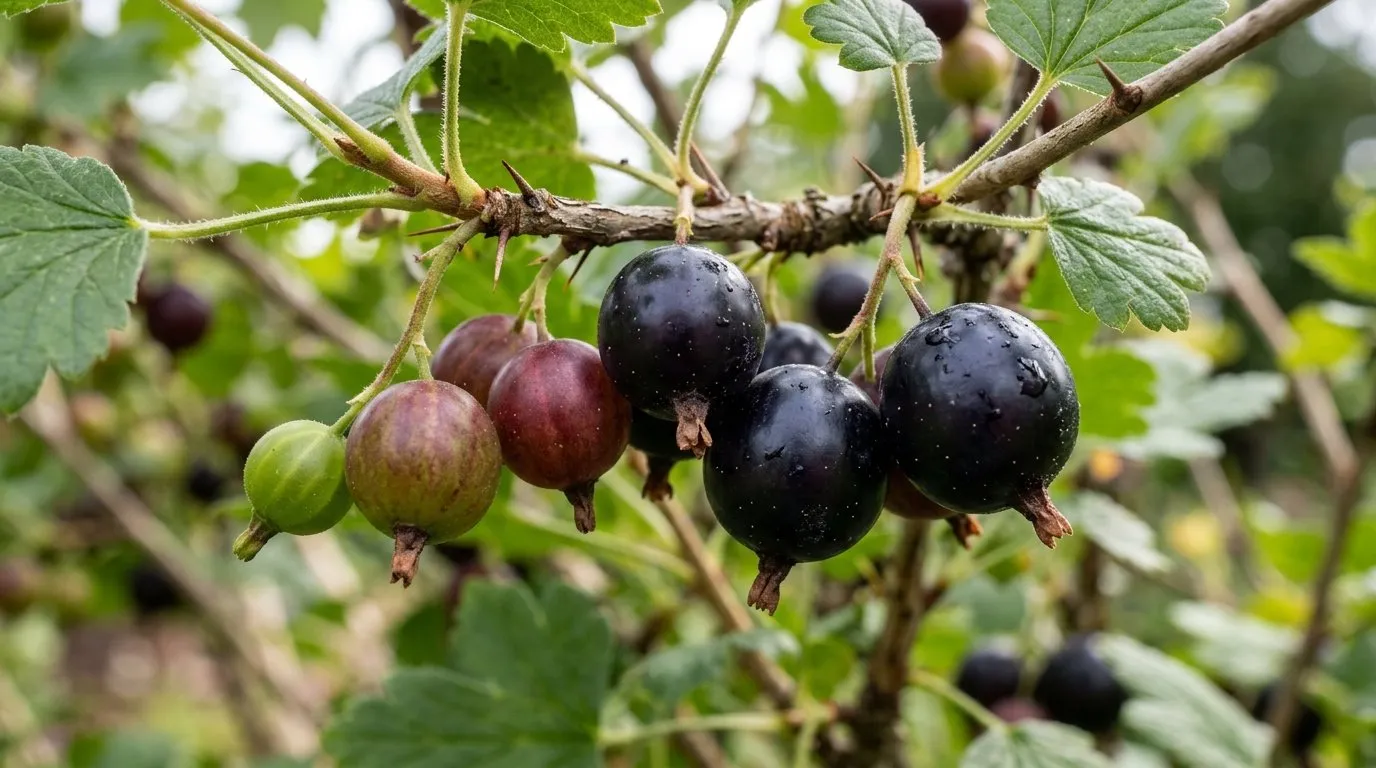 Jostaberry fruits ripening. The colour changes from green through red to deep glossy purple-black.
Disease resistance profile
| Problem | Blackcurrant | Gooseberry | Jostaberry |
|---|---|---|---|
| American gooseberry mildew | Moderate risk | High risk | Resistant |
| Big bud mite | Major problem | Not affected | Resistant |
| Leaf spot | Common | Common | Rarely seen |
| Reversion virus | Carried by big bud mite | Not affected | Not observed |
| Coral spot | Occasional | Occasional | Rare |
This resistance is the single strongest argument for growing jostaberry. Gardeners who have struggled with mildew on gooseberries or big bud mite on blackcurrants find jostaberry a relief.
Potential problems
Birds are the main threat. Blackbirds and thrushes take ripe fruit from July onward. Net bushes with 15mm mesh when the first berries begin to colour. Check netting daily to free trapped wildlife.
Aphids occasionally colonise young shoot tips in May and June. A strong jet of water from a hose dislodges them. Ladybirds and other natural predators usually control the population without intervention.
Capsid bugs can cause distorted shoot tips and small holes in leaves. Damage is cosmetic rather than harmful to the crop. No treatment is needed in most cases.
Squirrels occasionally strip fruit before it fully ripens. If squirrels are a problem in your garden, netting is the only reliable deterrent.
Biosecurity note: Jostaberry is a member of the Ribes genus. If white pine blister rust (Cronartium ribicola) is present in your area, Ribes species can act as an alternate host. This is primarily a concern near commercial forestry. In typical UK gardens, it is not a practical issue. All parts of the plant are non-toxic to humans, pets, and livestock.
Growing jostaberry in containers
Jostaberry grows well in pots, making it a good choice for patios, balconies, and small gardens. A container-grown bush won’t match the yields of an open-ground plant, but 3-4kg per season is achievable with proper care. For more advice on container growing, see our guide to growing fruit in pots.
Container requirements
- Pot size: Minimum 45cm diameter, 40cm deep. Larger is better.
- Compost: Peat-free multipurpose mixed with 20% perlite for drainage.
- Feeding: High-potash liquid feed (such as tomato feed) fortnightly from flowering to harvest.
- Watering: Daily in summer. Containers dry out faster than open ground. Consistent moisture is essential during fruit development.
- Repotting: Every three years. Replace the top 10cm of compost annually in the years between.
Further reading
Jostaberry fits naturally alongside other soft fruit in a productive garden. These related guides cover companion crops and techniques:
- How to grow gooseberries — one of the jostaberry’s parent species
- How to grow redcurrants and blackcurrants — the other parent, with full pruning details
- How to grow blackberries — thornless varieties for a summer fruit bed
- How to grow blueberries — another rewarding container fruit
- How to grow honeyberry — another unusual hybrid fruit worth trying
For authoritative information on Ribes species cultivation, the RHS fruit growing guides provide variety lists and seasonal care advice specific to UK conditions.
Lawrie has been gardening in the West Midlands for over 30 years. He grows his own veg using no-dig methods, keeps a wildlife-friendly garden, and writes practical advice based on real UK growing conditions.