How to Maintain a Garden Pond UK
Seasonal garden pond maintenance guide for the UK. Month-by-month tasks, water quality, plant care and fish health from 12 years of pond keeping.
Key takeaways
- Spring cleanup in March is the single most important pond maintenance task of the year
- Blanketweed thrives in nutrient-rich water — reduce it by adding more plants, not chemicals
- Net the pond from September to catch falling leaves before they rot on the bottom
- Stop feeding fish when water temperature drops below 5C (their metabolism shuts down)
- A well-maintained wildlife pond needs about 30 minutes of attention per week
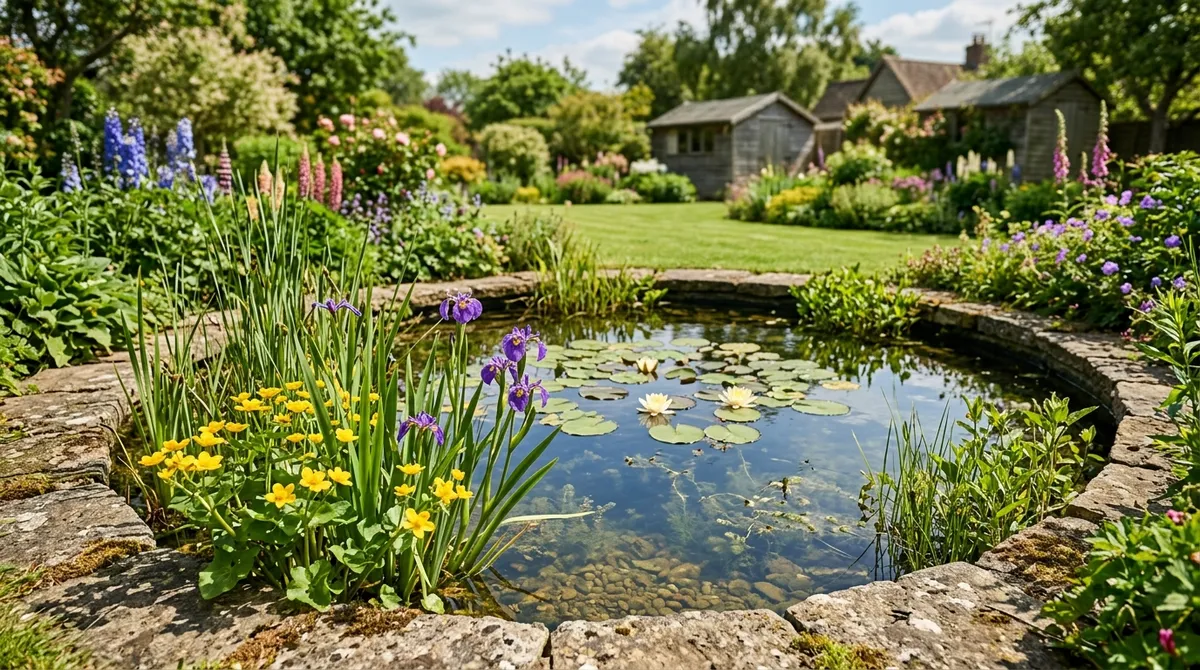
A garden pond is the single best feature you can add for wildlife. Within 24 hours of filling, insects arrive. Within a week, you have pond skaters and water beetles. Within a year, frogs, newts and dragonflies colonise naturally without any help.
The maintenance side puts people off. It should not. A well-designed pond needs about 30 minutes of attention per week during the growing season and almost nothing in winter. The key is doing the right tasks at the right time rather than panicking when problems appear.
After 12 years of maintaining two ponds in the West Midlands — one wildlife, one with fish — I have learned what matters and what is wasted effort. This guide covers every seasonal task in the order you need to do them.
Spring pond maintenance (March to May)
Spring is when the pond wakes up and when most problems are either prevented or allowed to take hold. The March cleanup is the single most important maintenance event of the year.
March: the big cleanup
Remove winter debris. Scoop out dead leaves, twigs and decaying plant matter from the bottom using a pond net or by hand. Decomposing organic material releases nutrients that feed algae and depletes oxygen. Do not drain the pond. Remove debris while the water stays in place.
Cut back dead growth. Trim dead stems of marginal plants (iris, rushes, sedge) to 5cm above the water line. New growth appears from the base within weeks.
Check the pump and filter. Reconnect the pump if you removed it for winter. Clean the filter housing but do not clean the filter media in tap water — rinse in a bucket of pond water to preserve the beneficial bacteria colonies.
Test water quality. Use a basic pond test kit (5-10 pounds from garden centres) to check pH, ammonia and nitrite levels. pH should be 6.5-8.5. Ammonia and nitrite should read zero. High readings after winter indicate too much organic matter on the bottom.
April: planting and dividing
Divide overgrown marginals. Lift clumps of iris, marsh marigold and water mint, split them with a sharp spade and replant in aquatic baskets with pond compost (not garden compost, which releases too many nutrients). This keeps plants vigorous and prevents them from taking over.
Add new plants. April and May are the best months to introduce new aquatic plants. Submerged oxygenators (hornwort, elodea) go directly into the water. Marginals go in baskets at the correct depth for each species. Water lilies go into baskets on the pond bottom.
Resume fish feeding. Start feeding fish when water temperature consistently exceeds 8C, typically mid-April. Use a wheat-germ based food designed for spring feeding, which is easier for fish to digest in cool water.
May: algae watch
Green water is normal in spring. A temporary algae bloom in April-May is natural as sunlight increases but plants have not yet grown enough to compete for nutrients. It usually clears within 4-6 weeks without intervention as the balance establishes.
Blanketweed appears. The first filamentous algae (blanketweed) appears in May. Remove by hand — twist a stick through it like winding spaghetti. Regular removal prevents it building up. Adding a barley straw bale (one mini bale per 4,500 litres) helps suppress growth as it decomposes.
| Spring task | When | Time | Priority |
|---|---|---|---|
| Remove bottom debris | March | 30-60 min | Essential |
| Cut back dead marginals | March | 20 min | Essential |
| Check pump and filter | March | 15 min | Essential |
| Test water quality | March | 10 min | Recommended |
| Divide overgrown plants | April | 30-60 min | As needed |
| Add new plants | April-May | 30 min | Optional |
| Resume fish feeding | Mid-April | Ongoing | If fish present |
| Remove blanketweed | May onwards | 10 min weekly | As needed |
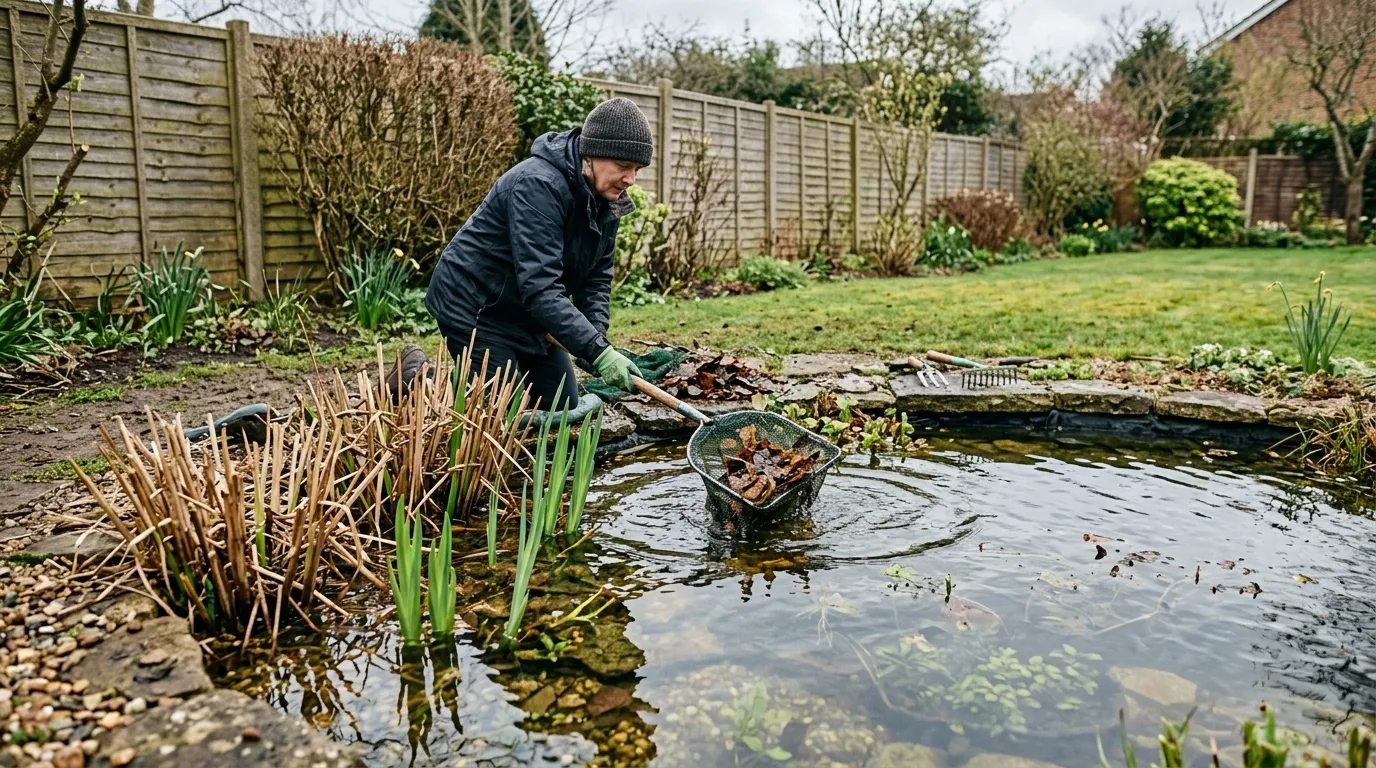
A garden pond in March after the spring cleanup. Dead marginal growth has been cut back and debris removed from the bottom. New iris shoots are visible at the edges.
Summer pond maintenance (June to August)
Summer maintenance is about water levels, oxygenation and keeping blanketweed under control.
Water levels
Evaporation can drop the water level by 2-5cm per week in hot weather. Top up with rainwater from a water butt wherever possible. Tap water contains chlorine and nutrients that encourage algae. If you must use tap water, add it slowly through a spray attachment to help chlorine gas off, and never replace more than 10% of the total volume at once.
Oxygenation
Warm water holds less dissolved oxygen than cold water. On hot days above 25C, fish may gasp at the surface. If this happens, run the pump or fountain to agitate the surface and increase oxygen exchange. In wildlife ponds without a pump, ensure at least a third of the water volume contains submerged oxygenating plants.
Blanketweed management
Summer is peak blanketweed season. The long-term solution is biological, not chemical. Pond chemicals kill algae but also harm beneficial organisms and do nothing to address the underlying nutrient problem. The algae returns within weeks.
Biological control: Increase submerged plant coverage to 60-70% of the pond area. Plants compete directly with algae for dissolved nutrients. Once the plants win the competition, blanketweed declines permanently.
Surface shade: Water lily pads and floating plants should cover 50-60% of the water surface by midsummer. This reduces light reaching the algae and keeps the water cooler.
Plant management
Remove dead flower heads before they set seed (unless you want the plant to self-seed). Thin vigorous growers like water mint and brooklime before they crowd out less aggressive species. Water lilies that have outgrown their baskets stop flowering — lift, divide and repot in July.
Autumn pond maintenance (September to November)
Autumn is about one thing: preventing leaf litter from entering the pond. A single autumn’s worth of leaves rotting on the pond bottom creates enough nutrient load to fuel algae for the entire following year.
September: net the pond
Stretch fine-mesh pond netting over the entire surface before the first leaves begin to fall. Secure the edges with bricks, pegs or a timber frame. The net catches leaves, which you empty weekly by lifting one side and shaking them off.
This is the single most effective thing you can do for long-term water clarity. I ran a comparison for three autumns: the netted pond had crystal clear water the following spring, while the unnetted pond had green water until June.
October: reduce feeding
Reduce fish feeding as water temperature drops. At 10C, switch to a wheat-germ autumn food and feed every other day. Fish activity visibly slows as their metabolism decreases.
November: prepare for winter
Remove the pump if your pond freezes regularly. A pump circulating cold surface water to the pond bottom destroys the warm-water refuge that fish and wildlife rely on.
Cut back marginals that have finished for the year, but leave hollow-stemmed plants (rushes, iris) standing. The hollow stems allow gas exchange through ice cover in winter.
Remove any remaining leaves that got past the net. A final scoop of the bottom removes the last decomposing matter before winter dormancy.
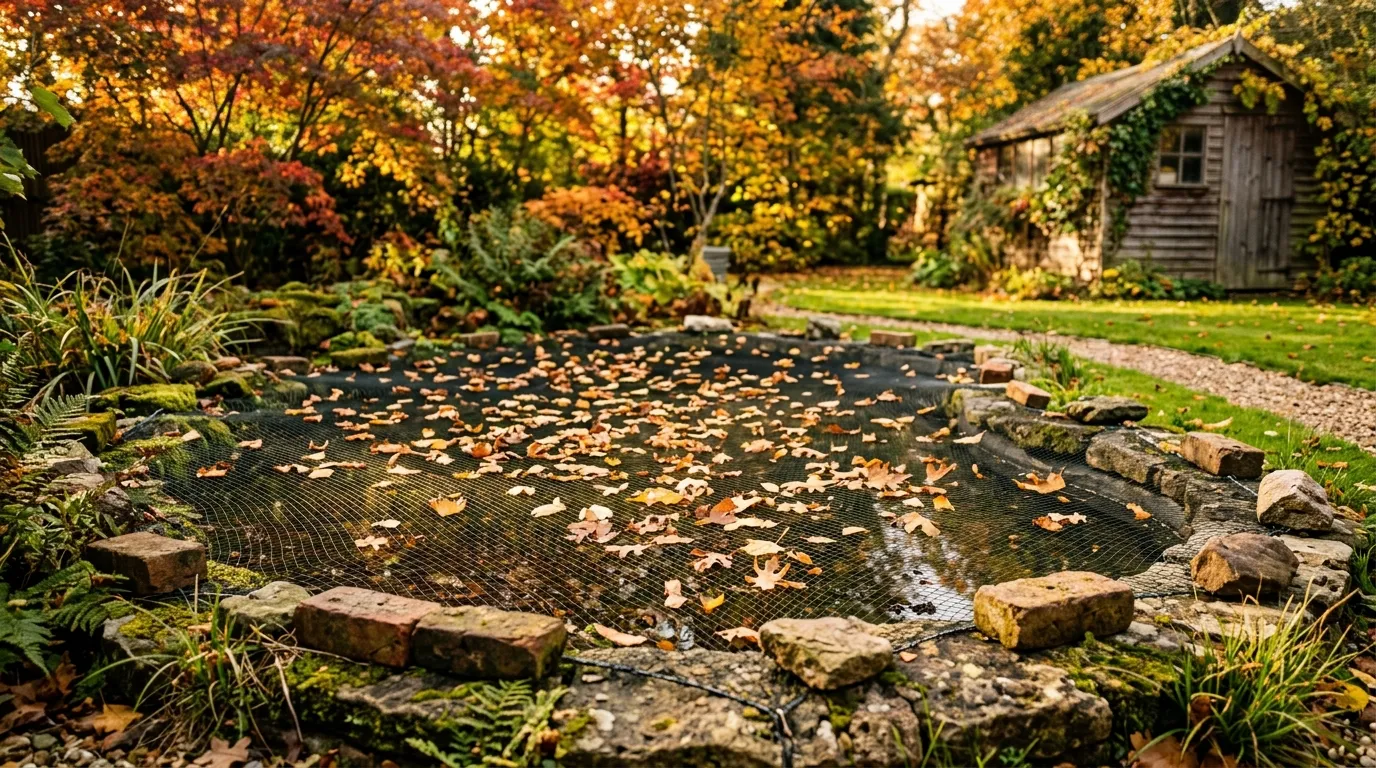
Pond netting installed in September catches falling leaves before they reach the water. This single task does more for water clarity than any other maintenance action.
Winter pond maintenance (December to February)
Winter is the quiet season. The pond needs minimal attention but a few critical actions prevent problems.
Stop feeding fish
Stop all feeding when water temperature drops below 5C, typically November or December in most of the UK. Fish metabolism drops to near zero in cold water. Their digestive system cannot process food, and uneaten food rots on the bottom, producing toxic ammonia.
Do not worry about fish starving. Pond fish survive UK winters comfortably by entering a state of torpor, using stored body fat. They will start feeding again naturally when the water warms in spring.
Keep a hole in the ice
During prolonged freezing, toxic gases (hydrogen sulphide, ammonia) build up under the ice. A hole in the ice allows these gases to escape. Do not smash the ice — the shockwave stresses fish and can kill them.
Methods to keep a hole open:
- Float a tennis ball or a section of pool noodle on the surface. Pour warm water around it daily to keep the area unfrozen
- Use an electric pond heater (a heated ring that sits in the water, 15-25 pounds)
- Place a pan of hot water on the ice surface to melt a hole gently
Check water levels
Winter rain usually keeps levels topped up, but check after dry cold spells. Ice formation can also draw water away from the liner edges, which may expose and damage the liner.
Common pond problems and solutions
Green water: Caused by single-celled algae. Solution: increase submerged plant coverage, add floating plants for surface shade, reduce fish stocking and feeding. UV clarifiers work but treat the symptom rather than the cause.
Blanketweed: Filamentous algae that forms cotton-wool-like masses. Solution: physical removal by hand, barley straw, and increasing plant competition. In persistent cases, test for high phosphate levels — often caused by tap water top-ups or run-off from fertilised borders.
Heron predation: Herons visit garden ponds in early morning and evening. Solutions: pond netting (most effective), a motion-activated sprinkler, or ensuring the pond has a deep section (75cm+) where fish can hide. Plastic heron decoys do not work — real herons are not territorial enough to avoid them.
Leaking liner: Water level drops consistently without evaporation. Find the leak by letting the water drop to a stable level — the leak is at that height on the liner. Repair with a pond liner patch kit (available from aquatic centres). Prevent future leaks by trimming marginal plants that root through the liner.
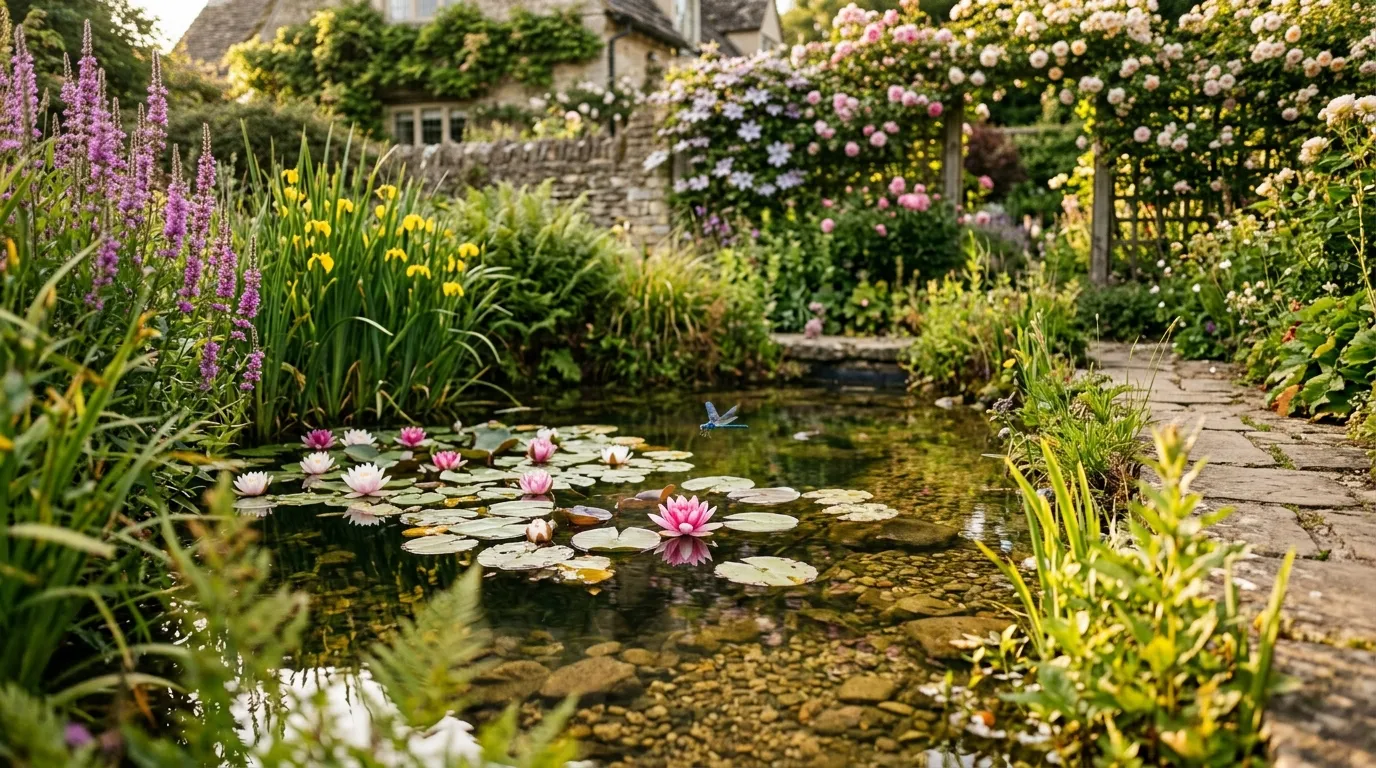
A well-maintained garden pond in July with clear water, water lily pads covering half the surface, and healthy marginal planting. This is the result of consistent seasonal maintenance.
Building a wildlife pond
If you do not yet have a pond and want to create one, the wildlife pond guide covers construction from scratch. The key design features that reduce ongoing maintenance are:
Shallow margins (10-20cm deep) that warm quickly and support diverse planting. These are where most wildlife activity concentrates.
A deep zone (60-90cm) that stays cool in summer and does not freeze solid in winter. One deep section in the centre or to one side is enough.
Gently sloping sides so hedgehogs, frogs and other animals can climb in and out easily. A pond with vertical sides is a death trap for small mammals. Add a ramp (a half-submerged log or a pile of stones) if your existing pond has steep edges.
Native plants that support local wildlife. Purple loosestrife, marsh marigold, water mint and iris pseudacorus all thrive in UK conditions and attract specific pollinator species.
Related reading
- How to build a wildlife pond UK
- How to attract wildlife to your garden UK
- Rainwater harvesting for beginners UK
- How to grow water lilies UK
- How to feed garden plants UK
Lawrie has been gardening in the West Midlands for over 30 years. He grows his own veg using no-dig methods, keeps a wildlife-friendly garden, and writes practical advice based on real UK growing conditions.