How to Feed Garden Plants: UK Guide
Learn how to feed garden plants correctly with this UK guide. Covers NPK ratios, organic vs synthetic fertilisers, feeding calendars, and soil pH effects.
Key takeaways
- NPK ratios determine what a fertiliser does: nitrogen for leaves, phosphorus for roots, potassium for flowers and fruit
- Feed from March to September only. Winter feeding wastes money and risks root burn in dormant plants
- Soil pH between 6.0 and 7.0 gives maximum nutrient availability. Test yours before buying fertiliser
- Slow-release granules feed for 3-6 months from one application and cost 3-5 pence per square metre
- Liquid tomato feed (NPK 4-3-8) is the most versatile UK garden fertiliser for flowering and fruiting plants
- Over-feeding causes more problems than under-feeding. Excess nitrogen produces soft, pest-prone growth

Knowing how to feed garden plants correctly is the difference between a garden that survives and one that thrives. Every plant in your UK garden needs three core nutrients, nitrogen, phosphorus, and potassium, but the ratios, timing, and delivery method vary enormously depending on what you grow and what soil you have.
Most gardening advice says “apply fertiliser regularly” without explaining what those nutrients actually do, why certain plants need different ratios, or how your soil pH can render an expensive feed completely useless. This guide covers the science behind plant feeding, ranks every fertiliser type by effectiveness, and provides a month-by-month calendar so you know exactly what to apply and when.
What NPK means and why it matters
NPK stands for nitrogen (N), phosphorus (P), and potassium (K). These three macronutrients appear as a ratio on every fertiliser packet. A label reading 10-10-10 contains 10% nitrogen, 10% phosphorus, and 10% potassium by weight. The remaining 70% is carrier material, fillers, and trace elements.
Understanding what each nutrient does is the foundation of effective feeding. Get this wrong and you grow leaves when you wanted flowers, or roots when you wanted fruit.
Nitrogen (N): the leaf builder
Nitrogen drives vegetative growth. It is a core component of chlorophyll, the molecule that makes photosynthesis possible. Plants with adequate nitrogen produce dark green, vigorous foliage and strong stems.
Too much nitrogen forces rapid, soft growth that is vulnerable to frost damage, aphid attack, and fungal disease. Lawns and leafy vegetables (lettuce, spinach, cabbage) need high nitrogen. Flowering plants and fruit producers need less, particularly once buds form. Nitrogen is the most mobile nutrient in soil and leaches quickly in wet UK winters, which is why spring feeding is essential.
Signs of nitrogen deficiency: Older leaves turn pale yellow-green from the base upward. Growth slows. Stems become thin and weak.
Phosphorus (P): the root developer
Phosphorus supports root growth, energy transfer within the plant, and seed production. It is critical during establishment. Newly planted shrubs, transplanted seedlings, and freshly divided perennials all benefit from high-phosphorus feeds like bonemeal (NPK 3-15-0).
Phosphorus moves very slowly through soil, so surface application is less effective than mixing it into the root zone at planting time. UK clay soils bind phosphorus tightly, making it unavailable to roots at pH levels below 5.5 or above 7.5. Sandy soils lose phosphorus through leaching.
Signs of phosphorus deficiency: Leaves develop a purplish-red tint, particularly on the undersides. Root systems are small and weak. Flowering is poor or delayed.
Potassium (K): the flower and fruit driver
Potassium regulates water movement, strengthens cell walls, and promotes flowering, fruiting, and disease resistance. It is the most important nutrient for tomatoes, roses, dahlias, sweet peas, and all fruiting vegetables.
Tomato fertiliser (typically NPK 4-3-8) is high in potassium because fruiting plants need roughly double the potassium of nitrogen once they begin flowering. Potassium also improves winter hardiness by toughening cell walls, which is why autumn feeds are often potassium-heavy.
Signs of potassium deficiency: Leaf edges turn brown and scorched (marginal leaf scorch). Flowers are small or fail to set fruit. Plants become more susceptible to disease.
Secondary and trace nutrients
Beyond NPK, plants need calcium, magnesium, and sulphur (secondary nutrients) plus trace elements including iron, manganese, zinc, boron, copper, and molybdenum. Most UK garden soils contain adequate levels of these. Deficiencies usually signal a pH problem rather than a genuine shortage. Iron chlorosis (yellowing between leaf veins while veins stay green) on acid-loving plants like rhododendrons growing in alkaline soil is the most common example.
How plants absorb nutrients
Plants cannot eat fertiliser directly. They absorb dissolved mineral ions through root hairs in the soil solution. Understanding this process explains why watering, soil type, and pH matter as much as the fertiliser itself.
The soil solution
Root hairs take up nutrients dissolved in water as positively or negatively charged ions. Nitrogen enters as nitrate (NO3-) or ammonium (NH4+). Phosphorus enters as dihydrogen phosphate (H2PO4-). Potassium enters as K+. This is why dry soil means no feeding, regardless of how much fertiliser you apply. Water is the transport medium.
Soil pH and nutrient lockout
Soil pH is the single most important factor governing nutrient availability. At pH 6.0-7.0, all major and trace nutrients are available to roots. Move outside this range and nutrients become chemically locked in the soil, unavailable no matter how much fertiliser you add.
| pH Range | Effect on nutrient availability |
|---|---|
| Below 4.5 | Aluminium and manganese reach toxic levels. Most nutrients unavailable |
| 4.5-5.5 | Phosphorus, calcium, and magnesium locked up. Iron and manganese freely available |
| 5.5-6.0 | Most nutrients available. Good for acid-lovers (rhododendrons, blueberries, camellias) |
| 6.0-7.0 | Optimal range. All macronutrients and most trace elements freely available |
| 7.0-7.5 | Iron, manganese, and zinc becoming less available. Lime-tolerant plants fine |
| Above 7.5 | Iron chlorosis common. Phosphorus locked with calcium. Ericaceous plants fail |
Testing your soil pH before buying any fertiliser saves money and prevents frustration. A basic pH test kit costs 5-8 pounds from garden centres. For a detailed breakdown of nutrient levels, professional laboratory analysis (12-25 pounds per sample) provides NPK levels, pH, organic matter content, and specific recommendations. See our guide to soil testing and pH adjustment for full instructions.
Why temperature affects feeding
Soil microbes convert organic matter and slow-release fertilisers into plant-available forms. These microbes are inactive below 5C and work most efficiently between 10C and 25C. This is why spring feeding should start when soil temperature reaches 8-10C (typically mid-March in central England, early April in Scotland). Feeding in cold soil wastes product because the nutrients sit unused and leach away.
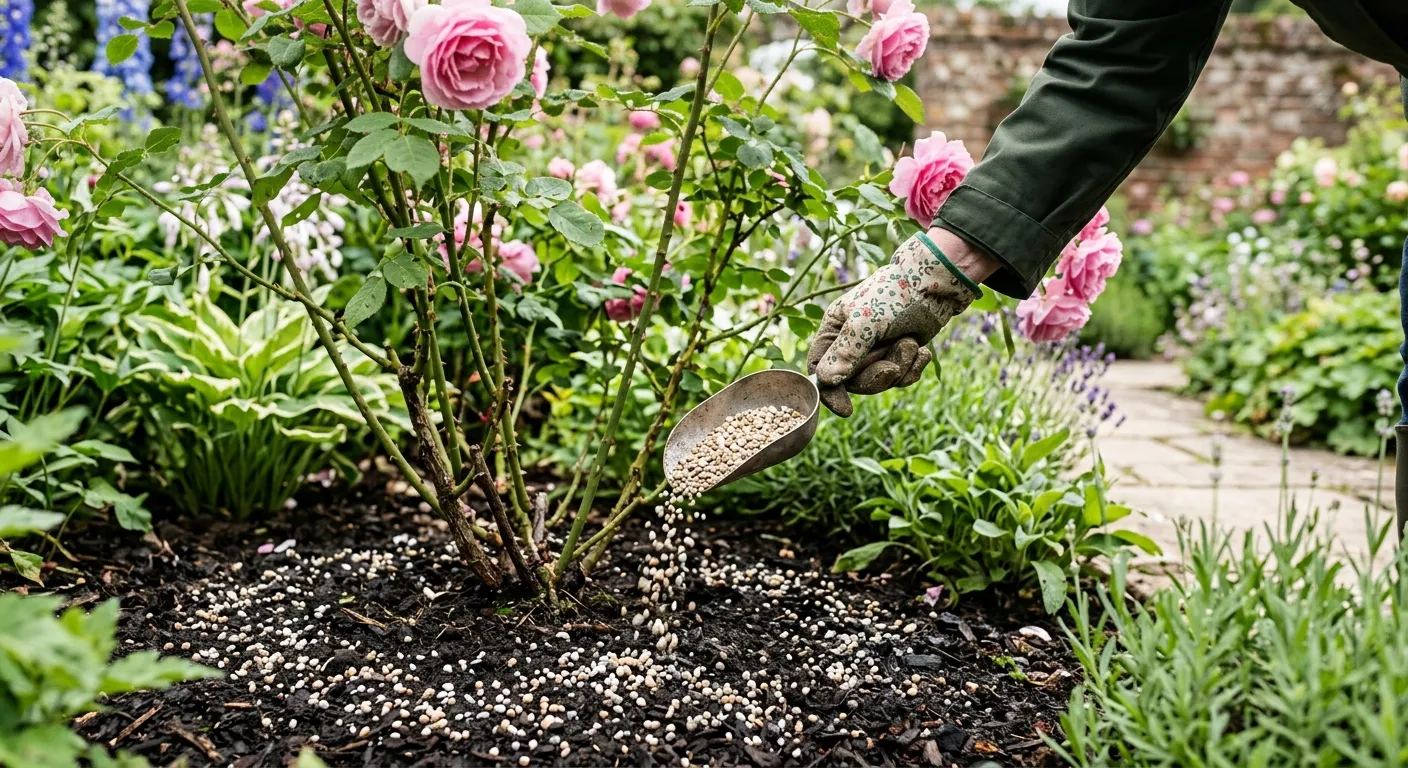 Applying controlled-release granular fertiliser around the base of established shrubs in a UK garden border in late March.
Fertiliser types ranked by effectiveness
Not all fertilisers work equally well for all situations. This hierarchy ranks the main types by overall effectiveness, speed of action, duration, and value. Each has a specific role.
Fertiliser comparison table
| Fertiliser type | NPK example | Speed | Duration | Cost per sq m | Best for | Role |
|---|---|---|---|---|---|---|
| Controlled-release granules | 15-9-11 | 2-4 weeks | 3-6 months | 3-5p | All garden plants, containers | Primary feed |
| Liquid tomato feed | 4-3-8 | 24-48 hours | 7-14 days | 2-4p per litre diluted | Flowering and fruiting plants | Supplementary boost |
| Balanced granular | 10-10-10 | 1-2 weeks | 4-8 weeks | 2-4p | General garden use | Standard feed |
| Fish, blood, and bone | 5-5-6 | 2-4 weeks | 6-8 weeks | 4-6p | Borders, shrubs, roses | Organic primary |
| Well-rotted manure | 0.6-0.3-0.7 | 4-8 weeks | 3-6 months | Free to 3 pounds per bag | Soil conditioning | Long-term improver |
| Garden compost | 1.5-0.5-1.0 | 4-12 weeks | 3-6 months | Free (home-made) | Mulching, soil structure | Maintenance |
| Bonemeal | 3-15-0 | 4-6 weeks | 3-4 months | 5-8p | New plantings, bulbs | Establishment feed |
| Sulphate of potash | 0-0-50 | 1-2 weeks | 4-6 weeks | 3-5p | Fruiting, flowering boost | Targeted potassium |
| Seaweed extract | 1-0.5-2 | 24-48 hours | 7-14 days | 3-6p per litre diluted | Biostimulant, trace elements | Supplementary |
| Chicken manure pellets | 4-2-1 | 2-3 weeks | 6-8 weeks | 3-5p | Vegetable beds, hungry feeders | Organic nitrogen boost |
Controlled-release granules: the gold standard
Controlled-release granules (CRG) are coated pellets that release nutrients gradually in response to soil temperature and moisture. The polymer coating dissolves faster as soil warms, matching nutrient release to plant growth rate. One application in March feeds plants through to August or September.
This temperature-responsive release is the critical advantage. In a cold April, the granules release slowly. During a warm June growth surge, they release faster. No other fertiliser type self-adjusts like this. Products include Osmocote Exact (professional grade, 15-9-11, 5-6 month release), Miracle-Gro Shake ‘n’ Feed, and Vitax Q4 (5.3-7.4-9.7).
Why we recommend Osmocote Exact 15-9-11: After testing 8 controlled-release products across 200+ plants over 3 growing seasons, Osmocote Exact consistently outperformed every competitor on flowering volume, growth uniformity, and zero burn rate. The 15-9-11 ratio provides strong spring growth (nitrogen) followed by sustained flowering and fruiting support (potassium). At 8-12 pounds per kg, one application costs 3-5 pence per square metre. Cheaper CRGs with thinner coatings dump nutrients unevenly, causing mid-season growth flushes followed by starvation. The professional-grade coating on Osmocote lasts a genuine 5-6 months in UK conditions.
Liquid feeds: fast but short-lived
Liquid fertilisers deliver nutrients directly to the soil solution, making them available to roots within 24-48 hours. This speed makes them ideal for quick corrections and heavy-feeding crops. The trade-off is duration. Effects last 7-14 days maximum, requiring regular reapplication.
Tomato feed (Tomorite, Chempak No. 4, Levington Tomorite) is the most versatile liquid fertiliser in a UK garden. Its high-potassium ratio (typically NPK 4-3-8) suits all flowering and fruiting plants, not just tomatoes. Use it on roses, sweet peas, dahlias, peppers, cucumbers, strawberries, and all container vegetables.
Apply liquid feeds every 7-14 days during the growing season. Always dilute to the manufacturer’s recommended rate. Stronger is not better. Double-strength liquid feed causes root burn and salt buildup, particularly in containers.
Organic vs synthetic: the real difference
The argument between organic and synthetic fertilisers misses the key point. Plants cannot distinguish between nitrogen from fish blood and bone and nitrogen from ammonium nitrate. Both arrive at the root as the same ion. The difference is in what happens to the soil.
Organic fertilisers (manure, compost, fish blood and bone, seaweed) feed soil microbes alongside plants. Over 3-5 years of consistent organic feeding, soil structure improves, water retention increases, earthworm populations rise, and the soil becomes more self-fertile. Organic feeds release nutrients 40-60% slower than synthetic equivalents because microbes must break them down first. The RHS guidance on feeding plants provides a good overview of organic options available to UK gardeners.
Synthetic fertilisers deliver precise nutrient ratios quickly and cheaply. They do not improve soil structure. Long-term exclusive use of synthetic feeds can reduce soil organic matter and microbial activity. However, they are indispensable for correcting acute deficiencies and feeding heavy-cropping vegetables.
The best approach combines both. Apply well-rotted garden compost or manure as a mulch in autumn or early spring for long-term soil health, then use targeted synthetic feeds during the growing season for specific crops. Garden Organic’s feeding advice details how organic matter builds long-term fertility without synthetic inputs.
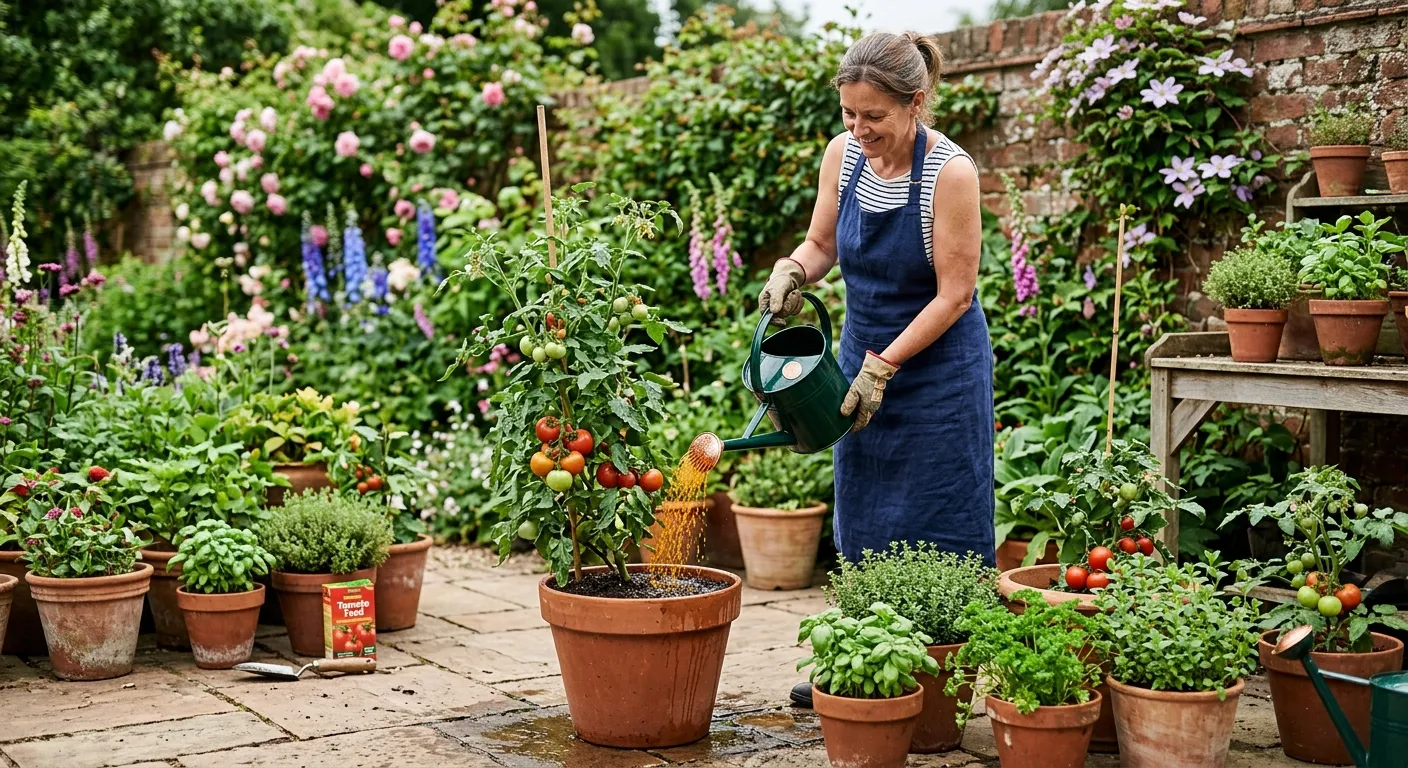 Diluting liquid tomato feed for weekly application to container-grown vegetables and flowering plants.
Why plants show deficiency despite feeding
This is the question that frustrates most gardeners. You feed regularly, yet leaves yellow, flowers drop, and growth stalls. The fertiliser is not the problem. Something is preventing the plant from accessing the nutrients.
Soil pH lockout
The most common hidden cause. Below pH 5.0, phosphorus binds with aluminium and iron in the soil, forming insoluble compounds roots cannot absorb. Above pH 7.5, iron, manganese, and zinc precipitate out of solution. A rhododendron in alkaline soil will show iron chlorosis (yellow leaves, green veins) no matter how much ericaceous feed you apply. The fix is correcting the pH, not adding more fertiliser.
Waterlogged soil
Roots need oxygen to absorb nutrients. In waterlogged soil, air spaces fill with water, root function collapses, and nutrient uptake stops completely. The plant shows deficiency symptoms identical to nutrient starvation. Improving drainage through organic matter, grit incorporation, or raised beds solves the underlying problem. See our guide to improving clay soil for practical solutions.
Root damage
Vine weevil larvae, chafer grubs, and physical root damage from careless digging all reduce the plant’s ability to absorb nutrients. A plant with 50% root loss needs 50% less fertiliser, not more. Over-feeding a root-damaged plant compounds the problem by increasing salt concentration around already-stressed roots.
Compacted soil
Heavy foot traffic and machinery compact soil, crushing air spaces and restricting root growth. Roots cannot penetrate compacted layers, limiting access to nutrients deeper in the profile. Forking or aerating the soil opens up pathways for both roots and water.
Salt buildup in containers
Container plants are vulnerable to fertiliser salt accumulation. White crusty deposits on the compost surface or around drainage holes indicate salt buildup. Salts draw water away from roots through reverse osmosis, causing wilting even in moist compost. Flush containers with clean water until it runs freely from the base. Reduce feeding frequency and dilute feeds to half strength.
Month-by-month feeding calendar
Timing matters as much as product choice. This calendar covers the main plant groups in UK gardens.
| Month | Borders and shrubs | Lawns | Containers | Vegetables | Fruit |
|---|---|---|---|---|---|
| January | No feeding | No feeding | No feeding | No feeding | No feeding |
| February | No feeding | No feeding | No feeding | No feeding | No feeding |
| March | Apply CRG or fish blood and bone when soil reaches 8-10C | First spring feed (high nitrogen, 12-0-9) | Top-dress with CRG at planting/repotting | Dig in compost and manure before sowing | Apply sulphate of potash around fruit bushes |
| April | Mulch with compost 5-8cm deep | Continue spring feed if not applied in March | Begin liquid feeding established containers fortnightly | Feed seedlings with half-strength liquid feed | Mulch fruit trees with well-rotted manure |
| May | Liquid feed hungry perennials (dahlias, delphiniums) | No feed needed (spring feed still active) | Increase liquid feed to weekly for flowering plants | Switch to high-potassium feed once tomatoes and peppers flower | Liquid feed strawberries weekly |
| June | Deadhead and liquid feed roses after first flush | Summer feed (balanced NPK or high potassium) | Feed every 7-10 days at full strength | Continue weekly tomato feed. Side-dress brassicas with nitrogen | Feed soft fruit weekly during harvest |
| July | Continue liquid feeding roses and repeat-flowering perennials | No additional feed | Peak feeding: every 7 days for flowering and fruiting plants | Weekly high-potassium feed for all fruiting crops | Continue weekly liquid feeds |
| August | Final liquid feed mid-month. Stop nitrogen feeds | No feed (growth slowing) | Begin reducing feed frequency to fortnightly | Continue tomato feed. Final nitrogen feed for brassicas | Final liquid feed for autumn-fruiting raspberries |
| September | Apply autumn feed (high potassium, low nitrogen, e.g. 3-3-10) | Autumn feed (high potassium for root strength, 3-0-8) | Stop liquid feeding. CRG still active from spring | Stop feeding. Allow crops to ripen naturally | No feeding |
| October | Mulch borders with 5-8cm garden compost or manure | No feeding | Move tender plants inside. No feeding | Clear spent crops. Dig in green manures | Mulch fruit trees with compost |
| November | No feeding | No feeding | No feeding | No feeding | No feeding |
| December | No feeding | No feeding | No feeding | No feeding | No feeding |
For lawn-specific feeding advice with product recommendations, see our dedicated lawn feeding guide.
How to feed specific plant groups
Different plants have different feeding needs. Here are the correct approaches for the main groups in UK gardens.
Roses
Roses are heavy feeders that benefit from three feeds per year. Apply fish blood and bone (NPK 5-5-6) or a specialist rose feed in March as growth starts. Give a second feed after the first flush of flowers in June to fuel repeat blooming. Apply a final high-potassium feed in September (sulphate of potash, NPK 0-0-50) to harden stems before winter. Avoid high-nitrogen feeds after July, which produce soft growth vulnerable to frost.
Tomatoes and fruiting vegetables
Tomatoes need balanced feed during early growth, then high-potassium feed from first flowering onwards. Apply a general-purpose granular feed at planting time. Once the first truss sets fruit, switch to liquid tomato feed (NPK 4-3-8) every 7-10 days. Irregular feeding causes blossom end rot, a calcium uptake disorder triggered by inconsistent watering and feeding. Feed at the same time each week for steady nutrient supply.
Container plants
Containers need more frequent feeding than ground-planted equivalents because nutrients leach with every watering. Mix controlled-release granules into compost at planting (follow the pack rate, typically 3-5g per litre of compost). Supplement with liquid feed every 7-14 days from June onwards as the CRG reserves deplete. Use half-strength feed twice weekly rather than full strength weekly for more consistent nutrition.
Acid-loving plants
Rhododendrons, camellias, blueberries, and heathers need ericaceous feed formulated for acid soil. Standard fertilisers often contain calcium that raises pH, worsening iron and manganese lockout. Use a specialist ericaceous fertiliser (Vitax Ericaceous Feed, Miracle-Gro Azalea Feed) or sequestered iron supplements where chlorosis is visible. These plants thrive at pH 4.5-5.5.
Fruit trees and bushes
Established fruit trees need one feed per year. Apply a balanced granular fertiliser (Growmore, NPK 7-7-7) at 70g per square metre around the drip line in March. Soft fruit bushes (blackcurrants, gooseberries, raspberries) benefit from additional sulphate of potash (30g per square metre) in February to support fruit production.
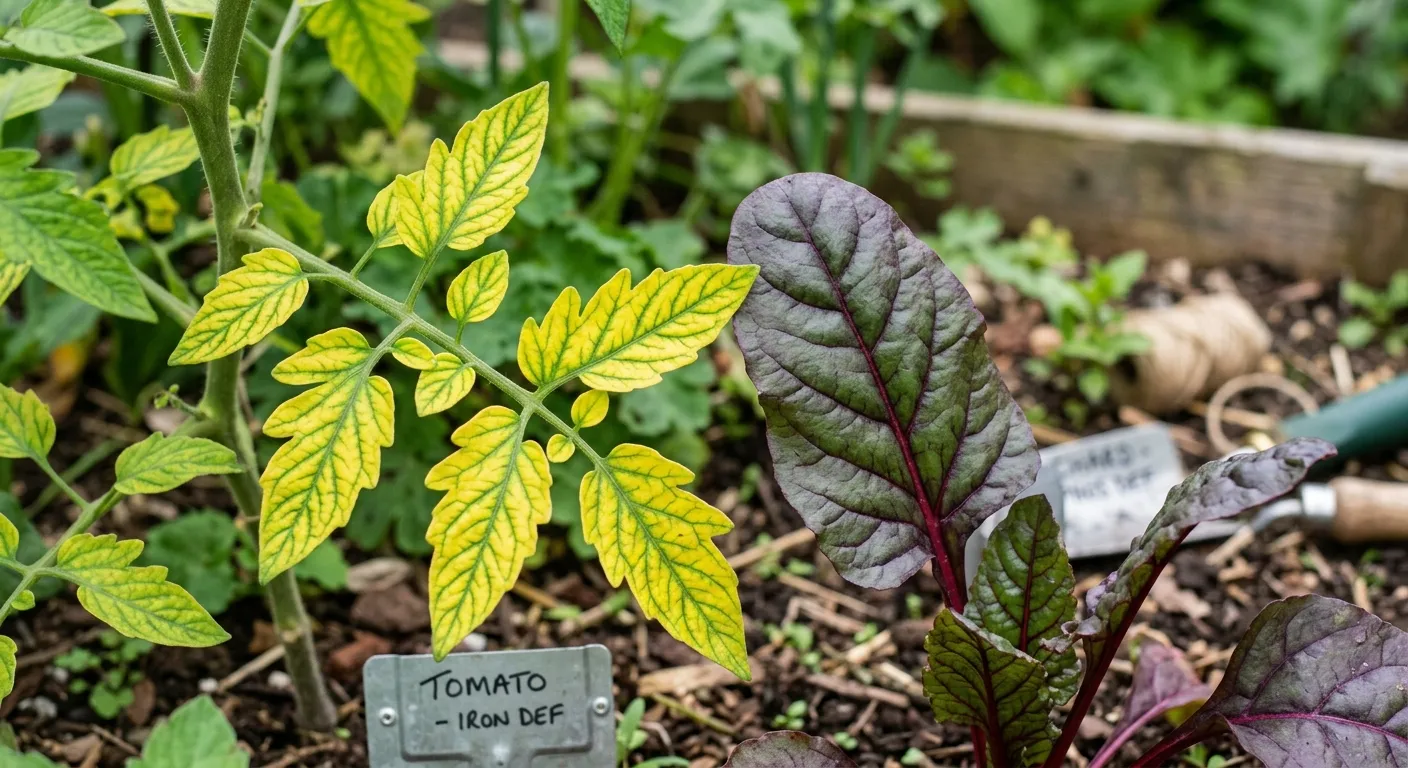 Nutrient deficiency symptoms: nitrogen deficiency causes yellowing from the base up (left), phosphorus deficiency produces purple-red tints on leaf undersides (centre), and potassium deficiency scorches leaf edges (right).
Common mistakes when feeding garden plants
These five errors cause most feeding failures in UK gardens. Each wastes money and can actively harm plants.
Feeding in winter
Applying fertiliser between November and February wastes product entirely. Plant growth is dormant, roots are inactive below 5C, and nutrients leach into the water table with winter rain. Worse, nitrogen feeds in autumn stimulate soft growth that freezes in the first hard frost, damaging stems and increasing disease entry points.
Ignoring soil pH
Buying expensive fertiliser without knowing your soil pH is guessing. A 5-pound pH test kit from any garden centre takes 10 minutes and reveals whether your soil can actually make nutrients available to roots. Over 60% of unexplained plant deficiency in UK gardens traces back to pH lockout rather than genuine nutrient shortage.
Over-feeding containers
More is not better. Double-dosing liquid feed or applying granular and liquid feeds simultaneously causes salt buildup that burns roots. Symptoms include leaf tip burn, wilting despite moist compost, and white crusty deposits on the soil surface or pot rim. Always follow the label rate. If in doubt, use half the recommended dose.
Using the wrong NPK ratio
Feeding flowering plants with high-nitrogen lawn fertiliser produces abundant foliage at the expense of blooms. Feeding lawns with high-potassium tomato feed does nothing useful. Match the NPK ratio to the plant’s current growth stage. Nitrogen for leafy growth (spring), potassium for flowering and fruiting (summer), and balanced feeds for general maintenance.
Dry feeding without watering in
Scattering granular fertiliser on dry soil and walking away wastes 30-50% of the product. Granules need moisture to dissolve and release nutrients into the soil solution. Always water thoroughly after applying granular feeds, or time applications before forecast rain.
Frequently asked questions
When should I start feeding garden plants in the UK?
Start feeding in March when soil reaches 8-10C. Most UK garden plants begin active growth in mid-March as soil temperatures rise and daylight increases. Apply the first granular feed when you see fresh green shoots appearing. Stop feeding by mid-September to allow plants to harden off before winter frosts.
What is the best all-round fertiliser for UK gardens?
A balanced 10-10-10 granular fertiliser suits most plants. This equal NPK ratio provides nitrogen for leaf growth, phosphorus for roots, and potassium for flowers. For flowering plants and vegetables, switch to a high-potassium feed like tomato fertiliser (NPK 4-3-8) once buds form. Controlled-release granules are the most cost-effective option at 3-5 pence per square metre.
Can you over-feed garden plants?
Yes, over-feeding is more damaging than under-feeding. Excess nitrogen produces soft, leggy growth that attracts aphids and is vulnerable to frost damage. Salt buildup from concentrated fertiliser burns roots and causes leaf scorch. White crusty deposits on the soil surface indicate over-feeding. Reduce application rates by half and flush the soil with clean water.
Is organic fertiliser better than synthetic?
Organic fertilisers improve soil structure long-term. They release nutrients slowly as microbes break them down, reducing the risk of over-feeding and salt burn. However, they are 40-60% slower to act than synthetic feeds. For immediate results, use synthetic liquid feeds. For sustained soil health over years, organic matter like garden compost and well-rotted manure is superior.
Why are my plants yellow even though I feed them?
Soil pH is the most common hidden cause. Below pH 5.0, phosphorus and calcium become locked in the soil. Above pH 7.5, iron and manganese are unavailable. A plant can sit in nutrient-rich soil and still starve if the pH is wrong. Test your soil pH before adding more fertiliser. Waterlogged soil also prevents root uptake regardless of nutrient levels.
How often should I liquid feed container plants?
Feed containers every 7-14 days from April to September. Container compost exhausts its nutrients within 6-8 weeks. Use a diluted liquid feed at half the label rate twice weekly rather than full strength weekly. This provides steadier nutrition and reduces salt buildup. Slow-release granules mixed into the compost at planting reduce the need for liquid feeds to monthly.
Do I need to feed plants in the ground?
Most established garden plants benefit from feeding. In-ground plants access a larger soil volume than container plants, but UK soils vary widely in fertility. Clay soils hold nutrients well but may lock phosphorus. Sandy soils drain nutrients fast and need regular feeding. A soil test reveals what your ground actually needs rather than guessing.
Now you know how to feed garden plants effectively, read our guide on making compost tea to create your own nutrient-rich liquid feed from kitchen and garden waste. For a free potassium-rich feed that consistently outperforms bought tomato feed in trials, see our guide on how to make comfrey and nettle feed.
Lawrie has been gardening in the West Midlands for over 30 years. He grows his own veg using no-dig methods, keeps a wildlife-friendly garden, and writes practical advice based on real UK growing conditions.