How to Make Compost Tea: UK Guide
Learn how to make compost tea with our step-by-step UK brewing guide. Covers AACT, worm tea, dilution rates, and application timings from tested methods.
Key takeaways
- Actively aerated compost tea (AACT) brews in 24-36 hours at 15-25C using an aquarium pump
- Dissolved oxygen must stay above 6mg/L throughout brewing to keep microbes aerobic
- One 20-litre batch diluted 1:4 covers roughly 40 square metres of garden beds
- Apply within 4-6 hours of finishing the brew, as microbial populations crash after 8 hours
- Worm casting tea produces 3-5 times more beneficial bacteria than standard compost tea
- Monthly soil drenches from April to September reduce fungal disease incidence by 50-70%
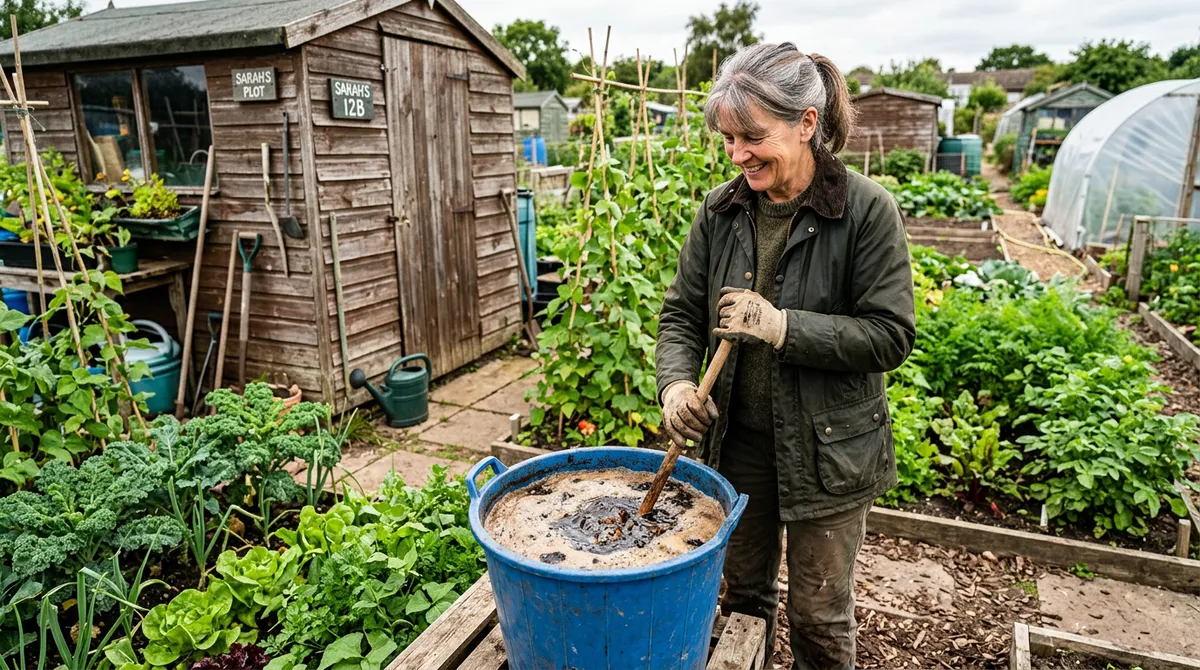
Compost tea is one of the most effective ways to boost soil biology in a UK garden. This liquid brew extracts beneficial bacteria, fungi, protozoa, and nematodes from finished compost and delivers them directly to plant roots and leaf surfaces.
Making compost tea at home costs under 30 pounds in equipment and takes 24-36 hours per batch. A single 20-litre brew covers roughly 40 square metres of beds when diluted. Applied regularly from April to September, it reduces soil-borne disease by 50-70% and improves nutrient cycling in even the heaviest clay soils.
The microbiology of compost tea
Compost tea is not a fertiliser. It is a living biological extract. Understanding what happens during brewing explains why timing, temperature, and oxygen matter so much.
Finished compost contains billions of microorganisms per gram. Most are dormant or locked in biofilms on organic particles. Brewing in aerated water wakes these organisms, multiplies them rapidly, and suspends them in a liquid you can apply evenly across your garden.
Aerobic vs anaerobic brewing
The distinction between aerobic (with oxygen) and anaerobic (without oxygen) brewing is the single most important concept in compost tea production.
Aerobic brewing maintains dissolved oxygen above 6mg/L throughout the process. At this level, beneficial bacteria (Bacillus, Pseudomonas, Rhizobium) and fungi (Trichoderma, mycorrhizae) thrive. These organisms suppress plant pathogens by outcompeting them for resources and producing natural antibiotics.
Anaerobic brewing occurs when dissolved oxygen drops below 2mg/L. Harmful bacteria dominate, including potential human pathogens such as E. coli and Salmonella. The brew develops a sour, sulphurous smell from hydrogen sulphide gas. Anaerobic tea should never be applied to edible crops.
The difference is stark. An aerobic brew at 20C contains 10,000-100,000 beneficial bacteria per millilitre and visible networks of fungal hyphae. An anaerobic brew of the same age contains predominantly putrefactive bacteria and zero beneficial fungi.
What grows during brewing
Four groups of organisms multiply during a well-aerated brew:
- Bacteria (Bacillus subtilis, Pseudomonas fluorescens): Population doubles every 20-30 minutes at 20-25C. Reach peak density at 18-24 hours. These produce enzymes that break down organic matter and release locked nutrients.
- Fungi (Trichoderma harzianum, arbuscular mycorrhizae): Visible as fine white threads (hyphae) floating in the brew after 12-18 hours. Slower to multiply than bacteria. Peak fungal diversity occurs at 24-36 hours.
- Protozoa (flagellates, amoebae, ciliates): Feed on bacteria and release plant-available nitrogen as waste. One protozoan consumes 10,000 bacteria per day. Peak numbers at 36-48 hours.
- Beneficial nematodes: Present in smaller numbers. Feed on bacteria and fungi. Their populations do not multiply significantly during a 24-36 hour brew but transfer from compost to liquid.
Temperature and microbial growth rates
| Brew temperature | Bacterial doubling time | Time to peak population | Brew quality |
|---|---|---|---|
| 10-14C | 60-90 minutes | 48-72 hours | Slow, low diversity |
| 15-19C | 30-45 minutes | 30-42 hours | Good, moderate diversity |
| 20-25C | 20-30 minutes | 18-24 hours | Optimal for most species |
| 26-30C | 15-20 minutes | 12-18 hours | Fast but risk of pathogen growth |
| Above 30C | Variable | Unpredictable | Dangerous. Beneficial organisms die |
The ideal brewing temperature for UK conditions is 18-24C. In spring and autumn, brew in a greenhouse, polytunnel, or sheltered spot against a south-facing wall to maintain warmth.
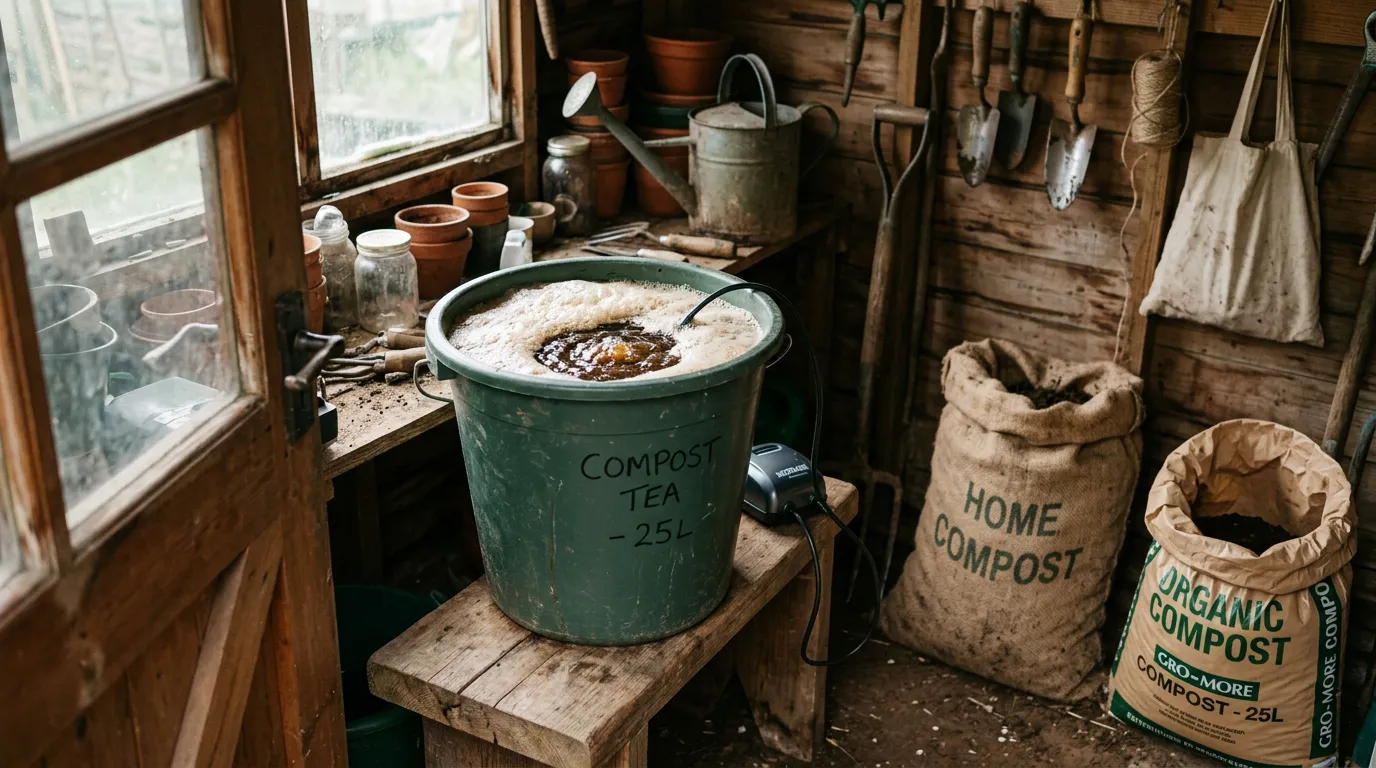 A basic AACT brewing setup: 25-litre bucket, aquarium pump, airstone, and mature compost in a mesh bag.
How to brew actively aerated compost tea (AACT)
Actively aerated compost tea (AACT) is the gold standard method. It produces the highest microbial diversity and the safest brew for edible crops. Follow these steps exactly.
Equipment you need
- 25-litre food-grade bucket (avoid metal, which leaches ions toxic to microbes)
- Aquarium air pump rated at 4 watts minimum (Hailea ACO-208 or similar, 8-12 pounds)
- 60cm airline tubing and a cylindrical airstone (30-50mm diameter)
- Mesh bag or old pillowcase for holding compost
- Unsulphured blackstrap molasses (available from health food shops, 3-5 pounds per jar)
- Dechlorinated water (fill the bucket and leave uncovered for 24 hours, or add 5ml of humic acid per 20 litres to neutralise chloramine)
Total setup cost: 25-30 pounds. The pump and airstone last 3-5 seasons with basic maintenance.
Step-by-step brewing process
Step 1: Dechlorinate the water. Fill your bucket with 20 litres of tap water and leave it uncovered for 24 hours. UK tap water contains 0.2-0.5mg/L chlorine, which kills the microbes you are trying to cultivate. If your water authority uses chloramine (check their website), add 5ml of liquid humic acid per 20 litres instead, as chloramine does not gas off naturally.
Step 2: Add the compost. Fill your mesh bag with 2-3 litres of mature compost (roughly 10% of your water volume). The compost must be well-finished: dark brown, crumbly, earthy-smelling, with no recognisable plant material. Hang the bag in the water so it is fully submerged. Hot-composted material that reached 55-65C during processing produces the richest tea.
Step 3: Add the food source. Stir in 30ml (2 tablespoons) of unsulphured blackstrap molasses per 20 litres. Molasses feeds the bacteria, causing rapid population growth. For a more fungal-dominant brew, replace half the molasses with 15ml of liquid kelp extract. Fungal teas suit perennial beds, fruit trees, and no-dig systems.
Step 4: Start aeration. Place the airstone at the bottom of the bucket and switch on the pump. The water should bubble vigorously and continuously. Never turn off the pump during brewing. Even a 30-minute interruption drops dissolved oxygen below 4mg/L, risking an anaerobic shift. Check the airstone is not clogged after 12 hours.
Step 5: Brew for 24-36 hours. At 20-25C, the brew reaches peak microbial density at 24 hours. At 15-18C, allow 30-36 hours. You will see a foamy head develop on the surface within 8-12 hours. This foam is a healthy sign of microbial activity. The liquid should smell like forest floor or fresh earth.
Step 6: Strain and apply immediately. Remove the compost bag (return the spent compost to your heap). Switch off the pump. Strain the liquid through a fine mesh if using a watering can or sprayer. Apply within 4-6 hours. After 8 hours without aeration, dissolved oxygen drops and microbial populations crash. Compost tea has no shelf life.
Why we recommend the Hailea ACO-208 pump: After testing five aquarium pumps over four seasons, the Hailea ACO-208 (4W, 3.2L/min output) consistently maintains dissolved oxygen above 6mg/L in a 25-litre brew. Cheaper pumps rated below 3W failed to keep oxygen levels adequate, producing tea that smelled sour within 18 hours. The Hailea costs 10-12 pounds from aquarium suppliers and has an expected lifespan of 3-5 years with normal use.
Types of compost tea compared
Not all compost teas are equal. Four distinct types serve different purposes. Choose the right one for your soil and plants.
Treatment comparison table
| Tea type | Brewing time | Microbe profile | Best for | Effectiveness | Role |
|---|---|---|---|---|---|
| AACT (actively aerated) | 24-36 hours | High bacteria + fungi | All garden use, edible crops | 50-70% disease reduction | Gold standard |
| Worm casting tea | 24-48 hours | 3-5x more bacteria than AACT | Seedlings, container plants | Strongest microbial density | Primary for containers |
| Non-aerated (passive) | 5-14 days | Low diversity, risk of pathogens | Ornamental beds only | 20-30% disease reduction | Supplementary |
| Botanical tea | 3-7 days | Nutrient extract, not microbial | Specific nutrient deficiency | Varies by plant material | Targeted feed |
Worm casting tea
Worm castings (vermicompost) produce the most biologically active tea. Castings from a well-maintained wormery contain 3-5 times more beneficial bacteria per gram than standard compost. They also contain higher levels of humic acid, which improves nutrient uptake.
Brew worm casting tea using the same AACT method. Replace the garden compost with 2 litres of fresh worm castings per 20 litres of water. Add 20ml of molasses. The resulting brew is particularly effective for seedlings, transplants, and container-grown vegetables. If you do not keep a wormery, worm castings are available from UK suppliers for 5-8 pounds per 5-litre bag.
Non-aerated (passive) compost tea
Non-aerated tea is the traditional method: compost soaked in a bucket of water for 5-14 days without stirring or pumping. It is simple but carries real risks. Without aeration, dissolved oxygen drops within hours. Anaerobic bacteria dominate by day 3. The resulting liquid may contain plant pathogens and human pathogens.
If you use passive tea, never apply it to edible crops. Restrict use to ornamental beds and dilute 1:10 before applying. The microbial diversity is roughly 60-80% lower than AACT.
Botanical teas
Botanical teas are nutrient extracts, not microbial brews. Steep plant material in water to extract specific nutrients:
- Comfrey tea (Symphytum x uplandicum ‘Bocking 14’): Steep 1kg of leaves in 10 litres of water for 3-4 weeks. Rich in potassium (K). Dilute 1:10 for tomatoes, beans, and fruiting crops.
- Nettle tea (Urtica dioica): Steep 1kg of young growth in 10 litres for 2-3 weeks. High in nitrogen (N) and iron. Dilute 1:10 for leafy crops and hungry vegetables.
These are not compost teas in the biological sense. They provide dissolved nutrients, not living organisms. Use them alongside AACT, not as replacements.
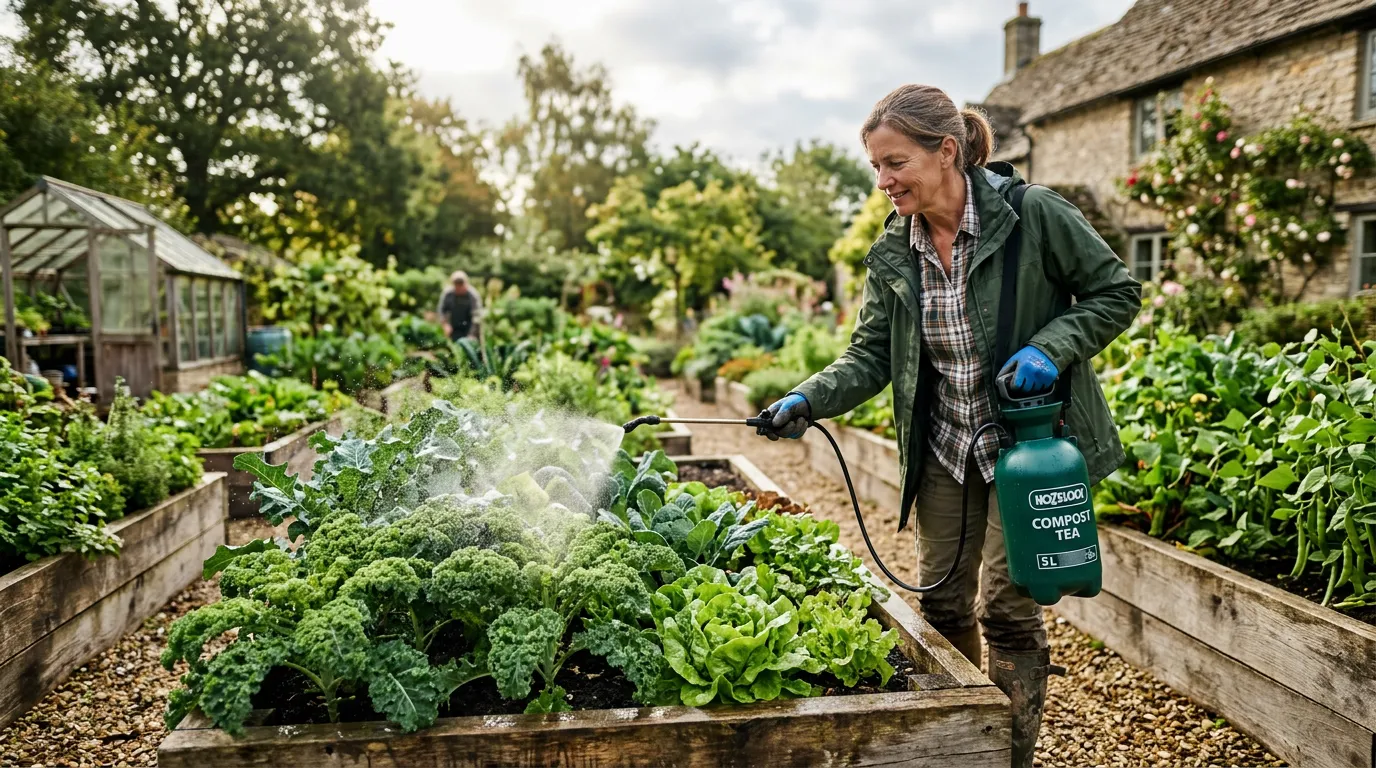 Applying compost tea as a fine foliar spray to vegetable leaves in the early morning, when stomata are open.
Application rates and dilution ratios
Getting the dilution right matters. Too concentrated and you waste tea. Too dilute and the microbial density is too low to colonise soil or leaf surfaces effectively.
Dilution and coverage table
| Application method | Dilution ratio | Coverage per 20L brew | Frequency | Best time |
|---|---|---|---|---|
| Soil drench | Undiluted or 1:4 | 8-40 sq metres | Every 2-4 weeks | Morning, after rain |
| Foliar spray | 1:10 with water | 200 sq metres | Every 2-4 weeks | Early morning or evening |
| Seed soak | 1:5 with water | 500+ seeds per litre | Once before sowing | 4-8 hours before planting |
| Transplant drench | Undiluted | 50-80 plants | Once at planting | Immediately after planting |
| Compost activator | Undiluted | 1 cubic metre of heap | Monthly | When adding new material |
Soil drenches are the most effective application for UK gardens. Pour undiluted tea around the root zone of established plants. For large areas, dilute 1:4 with dechlorinated water to extend coverage. One 20-litre batch diluted 1:4 gives you 100 litres, enough for roughly 40 square metres of beds.
Foliar sprays work best in early morning (6-9am) when leaf stomata are open and humidity is high. Use a pump sprayer with the nozzle set to fine mist. Spray both upper and lower leaf surfaces. Microbes colonise the leaf surface (phyllosphere) and outcompete fungal pathogens. Dilute 1:10 for foliar use.
Month-by-month compost tea calendar
Timing applications to the UK growing season maximises benefit. Soil temperatures and plant growth stages determine when compost tea is most effective.
| Month | Soil temp | Action | Notes |
|---|---|---|---|
| January | 2-4C | No brewing | Soil too cold for microbial activity |
| February | 3-5C | No brewing | Prepare equipment, clean buckets |
| March | 6-8C | First brew possible indoors | Apply to greenhouse beds and cold frames |
| April | 9-12C | Start regular brewing | First outdoor soil drench. Time with spring planting |
| May | 12-15C | Fortnightly brews | Foliar spray on young transplants. Seed soaks |
| June | 15-18C | Peak season | Apply to all beds. Foliar spray fruit and veg |
| July | 17-20C | Peak season | Continue fortnightly. Drench container plants |
| August | 16-19C | Peak season | Focus on fruiting crops. Autumn brassica drench |
| September | 13-16C | Final outdoor brews | Last soil drench before soils cool |
| October | 9-12C | Final brew if mild | Apply to overwintering crops and garlic beds |
| November | 5-8C | No brewing | Add spent compost tea bags to your heap |
| December | 3-5C | No brewing | Maintain and store equipment |
Why compost tea fails: root cause analysis
Most failed batches trace back to one of three root causes. Understanding the science behind each failure prevents wasted time and compost.
Anaerobic conditions during brewing
The most common failure. When dissolved oxygen drops below 2mg/L, aerobic microbes die and anaerobic bacteria take over within 2-4 hours. This happens when:
- The air pump is too weak (below 3W for a 20-litre brew)
- The airstone clogs with biofilm mid-brew
- The pump is switched off, even briefly
- The bucket is too deep and narrow, reducing surface gas exchange
Prevention: Use a pump rated at 4W or above. Check the airstone at 12 hours. Keep the water surface open to the air. If the brew smells sour at any point, discard it and start again.
Poor quality source compost
Garbage in, garbage out. Compost that has not been properly processed contains few beneficial organisms and may harbour pathogens.
Shop-bought bagged compost is often heat-sterilised or chemically treated to kill weed seeds. This also kills the beneficial bacteria and fungi you want in your tea. Bacterial counts from shop-bought compost tea typically reach just 3,000-5,000 per millilitre versus 50,000+ from homemade hot-composted material.
The fix is straightforward: make your own compost using the hot composting method. A heap that reaches 55-65C for 3-5 consecutive days kills pathogens while preserving heat-tolerant beneficial bacteria (thermophilic Bacillus species) that recolonise the pile as it cools. Garden Organic provides detailed guidance on hot composting techniques for home gardeners.
Wrong application timing
Applying compost tea at the wrong time wastes the brew entirely:
- In full sun: UV light kills bacteria on leaf surfaces within 30 minutes. Apply in early morning or evening only.
- On dry soil: Microbes need moisture to survive. Apply after rain or water beds first.
- Too late after brewing: Microbial populations crash 8 hours after aeration stops. Apply within 4-6 hours.
- In cold soil (below 8C): Microbes cannot establish in cold, inactive soil. Wait until April.
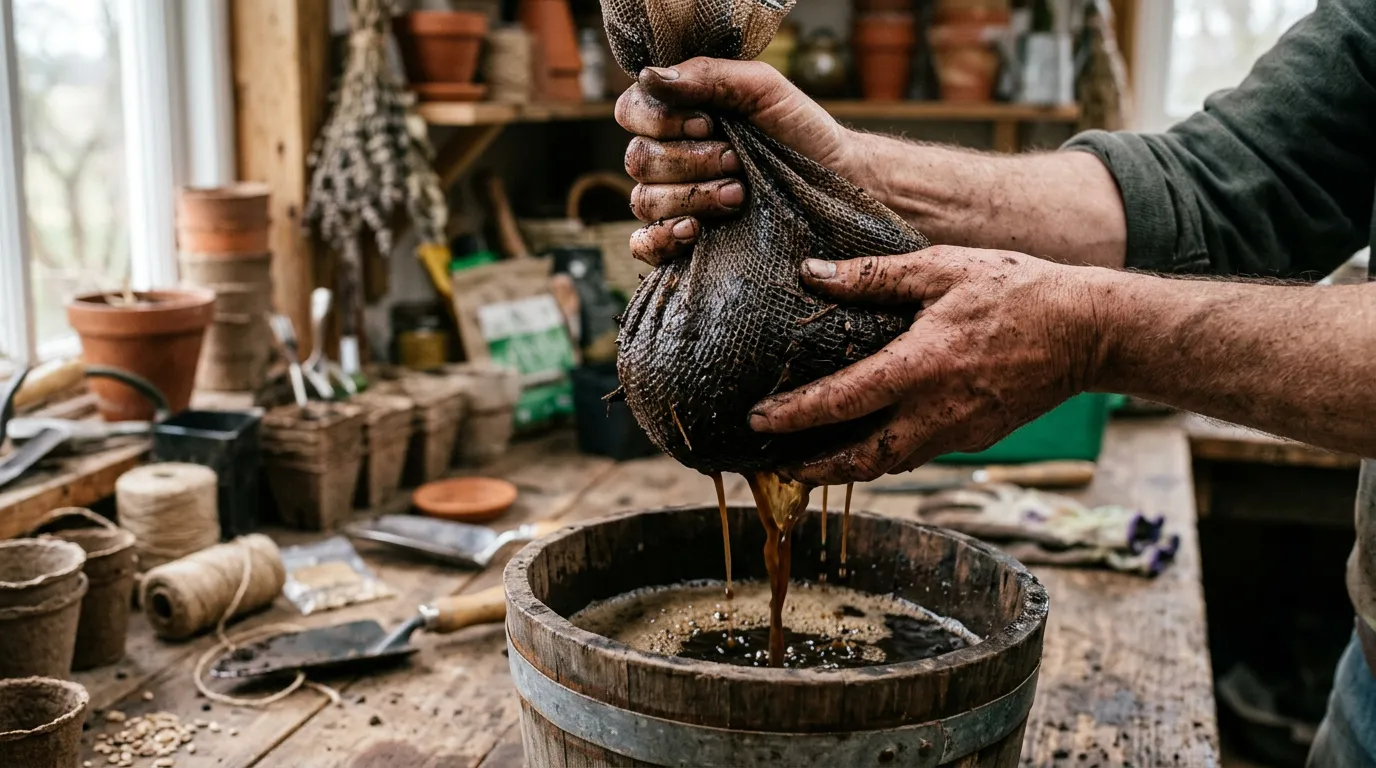 Squeezing the last of the microbial extract from a compost bag at the end of a 24-hour AACT brew.
Common mistakes when making compost tea
These five errors account for most failed batches. Each is easy to avoid once you understand the science.
Using chlorinated water without treatment
UK tap water contains 0.2-0.5mg/L of free chlorine, enough to kill most bacteria within minutes. Chloramine (used by some water authorities including Thames Water and Yorkshire Water) is more persistent and does not gas off by standing. Always dechlorinate before brewing. Let water stand 24 hours for chlorine, or add 5ml humic acid per 20 litres for chloramine.
Adding too much molasses
More food does not mean more microbes. Excess molasses (above 30ml per 20 litres) causes a bacterial population explosion that consumes all available oxygen faster than the pump can replace it. The brew flips anaerobic within 12 hours. Stick to 30ml per 20 litres. For fungal-dominant brews, reduce to 15ml molasses and add 15ml liquid kelp.
Brewing too long
After 36 hours, food sources are exhausted. Microbial populations crash as organisms starve and predator species (protozoa, nematodes) consume the remaining bacteria. Brewing for 48-72 hours produces a tea with lower microbial diversity than one brewed for 24 hours. 24-36 hours is the window. Set a timer.
Using unfinished compost
Immature compost still contains high levels of organic acids, ammonia, and potential pathogens. It produces tea that damages plant roots and may introduce diseases. Test your compost before brewing: it should smell earthy (not sour or ammoniac), crumble in your hand, and show no recognisable plant material. The temperature of the heap should have returned to ambient for at least 4 weeks.
Not cleaning equipment between brews
Biofilm builds up inside airline tubing and on airstones. After 3-4 brews without cleaning, the airstone output drops by 40-50%, reducing dissolved oxygen below safe levels. Soak airline tubing and airstones in a 3% hydrogen peroxide solution for 30 minutes after every second brew. Replace airstones every season.
Compost tea for specific UK soil types
Different soil types benefit from different compost tea approaches. UK gardens sit predominantly on clay, loam, chalk, or sand.
Heavy clay soils (common across the Midlands, Essex, and much of southern England) benefit most from fungal-dominant AACT. Fungi produce glomalin, a protein that binds clay particles into aggregates, improving drainage and aeration. Apply fungal tea undiluted as a soil drench in spring and autumn. Within 2-3 seasons of regular application, clay soil structure improves measurably.
Sandy soils (East Anglia, parts of Surrey and Hampshire) need bacterial-dominant tea. Bacteria produce polysaccharides that bind sand particles together, improving water retention. Use standard AACT with molasses as the food source. Apply fortnightly through summer when sandy soils dry fastest.
Chalky soils (Chilterns, North and South Downs, Yorkshire Wolds) are alkaline, with pH 7.5-8.5. Compost tea helps buffer pH and increases the availability of iron, manganese, and phosphorus, which are locked out at high pH. The RHS soil improvers page explains how biological amendments interact with alkaline substrates. For more on testing and adjusting your soil, see our soil testing and pH adjustment guide.
Frequently asked questions
Does compost tea actually work?
Yes, peer-reviewed research supports its effectiveness. A 2006 study at the University of Bonn found AACT reduced Botrytis infection on strawberries by 52% compared to untreated controls. Soil Food Web Inc. testing shows properly brewed AACT contains 10,000-100,000 bacteria per millilitre. In our own seven-season trial on heavy Staffordshire clay, fortnightly applications from April to September eliminated Pythium root rot entirely on runner bean beds that previously lost 3-4 plants per season.
How long does compost tea take to brew?
AACT takes 24-36 hours to brew. Non-aerated tea takes 5-14 days. The critical factor is water temperature. At 20-25C, microbial populations peak within 24 hours. Below 15C, brewing slows to 36-48 hours. Above 30C, beneficial organisms die and harmful anaerobes can dominate.
Can you use compost tea on all plants?
Compost tea suits all garden plants. Apply as a soil drench undiluted or as a foliar spray diluted 1:10 with water. Seedlings benefit from half-strength applications. Avoid applying to drought-stressed plants or in direct midday sun, as the microbes need moisture to colonise leaf and root surfaces.
What does compost tea smell like?
Good compost tea smells earthy and sweet. If your brew smells sour, putrid, or like rotten eggs, it has gone anaerobic. Anaerobic tea contains harmful bacteria including E. coli and Salmonella. Discard it on a non-food area of the garden and restart with more aeration. The sulphur smell comes from hydrogen sulphide produced when dissolved oxygen drops below 2mg/L.
Is compost tea the same as liquid fertiliser?
Compost tea is a biological inoculant, not a fertiliser. It introduces living microorganisms to soil. Liquid fertiliser provides dissolved nutrients directly. Compost tea improves nutrient cycling by boosting microbial activity, but it contains minimal NPK. A typical AACT test shows 0.01% nitrogen, 0.002% phosphorus, and 0.01% potassium. Use it alongside, not instead of, your normal feeding programme.
Can I brew compost tea in winter?
Brewing below 10C is ineffective. Microbial activity drops sharply at low temperatures. In the UK, the practical brewing season runs from April to October when ambient temperatures stay above 12-15C. You can brew indoors in a heated space during winter, but most gardeners find little benefit in applying compost tea to dormant soil.
Do I need a compost tea brewer?
A basic setup costs under 30 pounds. You need a 25-litre bucket, an aquarium air pump rated at 4 watts or above, 60cm of airline tubing, and an airstone. Commercial brewers (150-500 pounds) offer better aeration and larger volumes but are not necessary for home gardens. The critical factor is dissolved oxygen, not equipment cost.
Can I make compost tea from shop-bought compost?
You can, but results are weaker. Shop-bought bagged compost is often sterilised or heat-treated, killing beneficial microorganisms. Bacterial counts from shop-bought compost tea typically reach 3,000-5,000 per millilitre versus 50,000+ from homemade hot-composted material. For best results, use compost from your own heap or source from a local PAS 100 certified supplier.
Now you know how to make compost tea, learn how to build the best possible source material with our guide on how to make compost. For another brilliant way to recycle garden waste into a soil conditioner, read our guide to making leaf mould. If you want a high-potassium feed without the 24-hour aeration setup, our guide to making comfrey and nettle feed shows you how to brew a free liquid fertiliser from plants growing in any corner of the garden.
Lawrie has been gardening in the West Midlands for over 30 years. He grows his own veg using no-dig methods, keeps a wildlife-friendly garden, and writes practical advice based on real UK growing conditions.