Spring Gardening Jobs: Complete UK Checklist
Month-by-month spring gardening checklist for UK gardens. Covers lawn care, pruning, sowing, borders, wildlife, and pond tasks for March to May.
Key takeaways
- Over 60 spring tasks organised across 9 garden areas from March to May
- First lawn cut in March at 4cm height, dropping to 2.5cm by May
- Prune late-flowering shrubs like buddleia and hardy fuchsia in March
- Sow tender crops indoors from March and plant out after last frost in late May
- Feed fruit trees with high-potash fertiliser in March for better fruiting

Spring is when UK gardens wake up. From early March to the end of May, the workload ramps from gentle preparation to full-speed planting. Getting the right jobs done in the right month makes the difference between a productive summer and a frustrating one. For the rest of the year, see our summer, autumn, and winter gardening jobs guides.
This guide organises every spring task by garden area and by month. Work through each section systematically, or use the month-by-month table at the end to plan your weekends. For specific sowing guidance, see our seed sowing calendar and our guide on how to sow seeds indoors. The RHS seasonal job finder is a useful companion reference.
Lawn care
The lawn is the most visible part of most UK gardens. Spring treatment determines how it looks all summer.
First cut and mowing
Give the first cut in March once grass starts actively growing. Our guide on when to mow your lawn covers seasonal mowing heights in detail. Set the mower blades to 4cm, the highest practical setting. Cutting too short shocks the grass after its winter dormancy. Never remove more than one-third of the blade height in a single pass.
Gradually lower the cutting height through April. By May, you can mow at 2.5-3cm for a fine lawn or 3-4cm for a family lawn. Mow weekly through spring, or twice weekly during the rapid growth period of late April and May.
Gardener’s tip: Leave the grass box off for the first cut of the season. The clippings return nutrients to the soil and help the lawn green up faster.
Scarifying and aerating
Scarify the lawn in late March or April to remove the layer of dead grass and moss (thatch) that builds up over winter. Our full guide on scarifying and aerating your lawn covers the technique step by step. Use a spring-tine rake on small lawns or a powered scarifier on larger areas. Thatch thicker than 1cm blocks water, air, and feed from reaching the roots.
Aerate compacted areas by pushing a garden fork 10cm into the ground at 15cm intervals. This breaks up surface compaction caused by winter rain and foot traffic. On heavy clay, fill the holes with sharp sand to improve long-term drainage.
Feeding and weed treatment
Apply spring lawn feed from mid-March once soil temperatures reach 8-10C consistently. Our lawn feeding guide covers seasonal feed types and application rates. Use a nitrogen-rich formulation designed for spring, not an autumn feed (which is high in potassium). Water in if no rain falls within 48 hours.
Treat lawn weeds from April when they are actively growing. Selective weedkillers work best on warm days when weeds are growing fast. Spot-treat individual weeds in small lawns rather than blanket-spraying. For weed identification and control methods, see our guide on lawn weed identification.
Bare patches
Repair bare patches in April. Our guide on how to fix a patchy lawn covers the full process. Rake the soil, scatter grass seed, and firm gently. Keep the area moist for 2-3 weeks until germination. Net or mesh over the seed prevents birds from eating it.
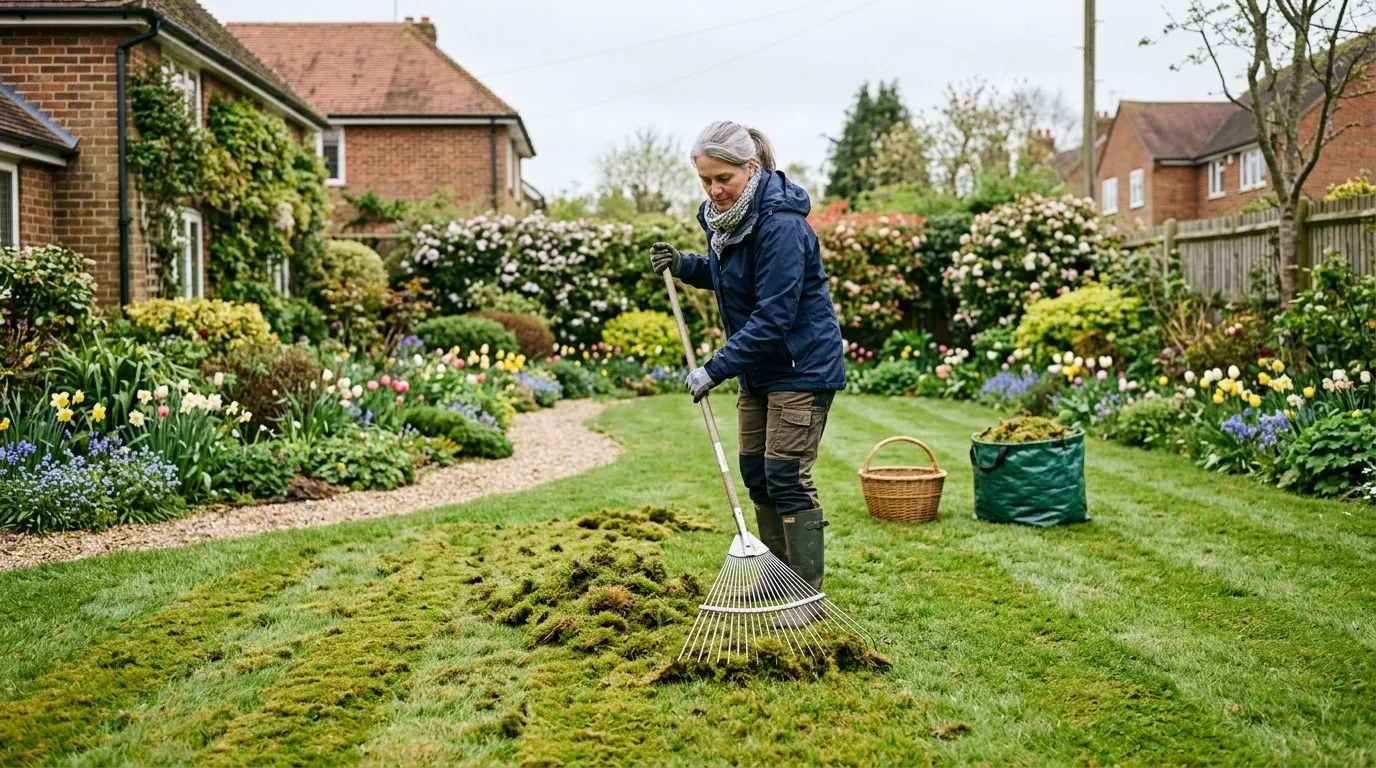 Scarifying the lawn in early spring. Remove moss and thatch before overseeding bare patches in April.
Borders and beds
Spring border work sets the foundation for all your summer colour and structure.
Mulching
Mulch borders in March after weeding. Apply a 5-8cm layer of well-rotted compost, bark chips, or composted green waste around plants, keeping it clear of stems. Mulching suppresses weeds, retains moisture, and feeds the soil as it breaks down. A 3m x 3m border needs roughly six wheelbarrow loads.
If you make your own compost, spring is the time to spread last year’s batch. See our guide on how to make compost for getting the process right.
Why we recommend a 5-8cm compost mulch applied in March: After 30 years of maintaining borders, a thick spring mulch is the single task that delivers the most return for the time invested. On my own beds, applying an 8cm layer of well-rotted compost in early March consistently reduces weeding time by around 60% through summer and cuts watering requirements noticeably during dry spells. The improvement in soil structure after three or four years of annual mulching is dramatic — even a heavy clay border becomes workable and friable.
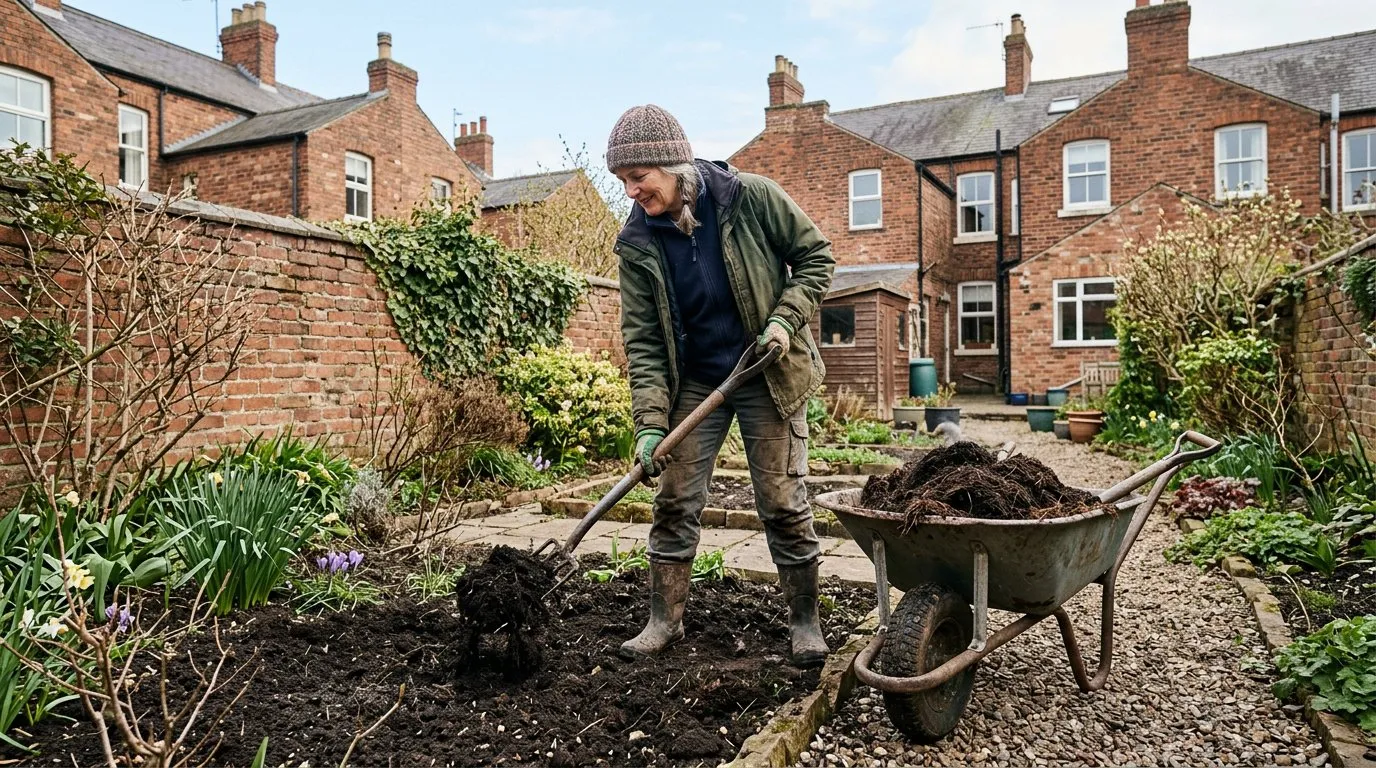 Working compost into borders before spring planting. A 5cm layer of well-rotted compost improves soil structure and feeds plants.
Dividing perennials
Divide overgrown perennials in March or early April before they put on too much new growth. Lift the clump with a fork, split it into sections with two back-to-back forks, and replant immediately. Water well after dividing.
Good candidates for spring division include hostas, hemerocallis, astilbe, geraniums, and ornamental grasses. Do not divide spring-flowering perennials like primulas until after they finish blooming.
Weeding
Start weeding early. Annual weeds are tiny in March and pull out in seconds. By May, the same weeds have deep roots and scatter seed everywhere. Spend 20 minutes weeding per week in spring and you avoid hours of work in summer.
Perennial weeds like bindweed, couch grass, and ground elder need digging out with as much root as possible. Do not rotavate ground infested with perennial weeds because every fragment of root produces a new plant.
Staking tall plants
Install supports for tall perennials in April before they need them. Staking a delphinium or peony after it falls over never looks natural. Push grow-through supports into the ground while plants are 15-20cm tall. The foliage grows through and hides the support.
Warning: Do not stake plants too tightly. A stake should support the plant, not strangle it. Leave enough room for natural movement in the wind, which strengthens the stems.
Pruning
Spring pruning follows one simple rule: prune plants that flower on this year’s growth in spring. Plants that flower on last year’s growth get pruned after flowering.
Late-flowering shrubs
Prune these hard in March before new growth starts:
- Buddleia davidii - cut back to 60cm from ground level. New shoots produce flowers from July.
- Hardy fuchsia - cut all stems to 5-10cm from ground level. Fresh growth appears within weeks.
- Lavatera - prune to 30-45cm. These grow fast and flower from June on new wood.
- Caryopteris - cut back to a low framework of 15-20cm.
- Perovskia (Russian sage) - prune to 15cm. New growth carries the late-summer flower spikes.
Roses
Prune hybrid tea and floribunda roses in March if you did not prune in late winter. Cut to an outward-facing bud, 5mm above the bud at a 45-degree angle sloping away from it. Remove dead, damaged, and crossing stems first, then shape the bush. For full instructions, see our guide on how to prune roses.
Climbing roses need a lighter touch. Tie in new shoots horizontally to encourage flowering side shoots. Only remove dead wood and thin, weak stems.
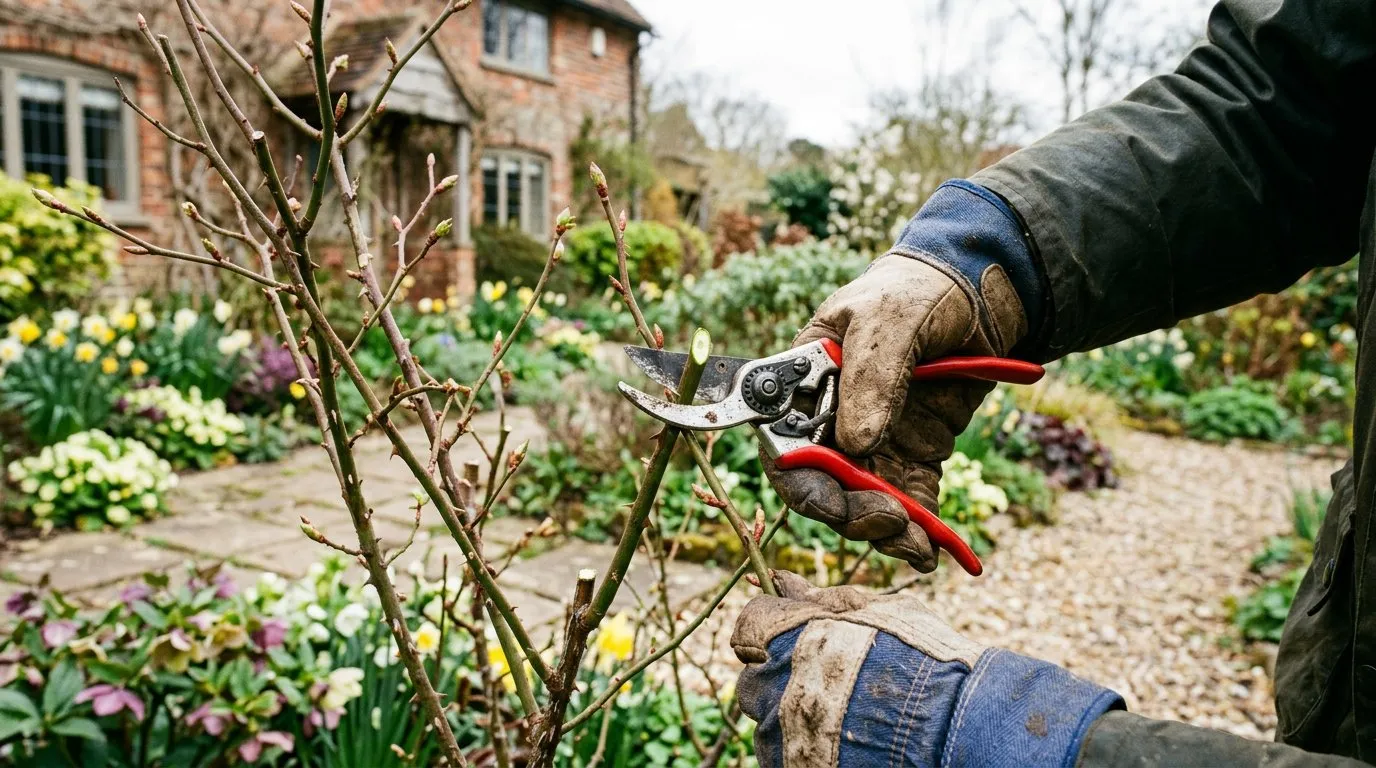 Pruning roses in March. Cut to an outward-facing bud at a 45-degree angle, just above the bud.
Clematis
Clematis pruning depends on the group:
| Group | Flowers on | When to prune | Method |
|---|---|---|---|
| Group 1 (montana, armandii) | Old wood | After flowering (May-June) | Light trim only |
| Group 2 (large-flowered hybrids) | Old and new wood | Late February-March | Remove dead stems, cut to strong buds |
| Group 3 (viticella, texensis) | New wood | February-March | Hard prune to 30cm |
For more on plants that climb walls and structures, see our guide to the best climbing plants for UK gardens.
Sowing and planting
Spring is sowing season. The window for starting crops runs from March through May.
Indoor sowing
Start tender crops indoors from early March. Tomatoes, peppers, chillies, and aubergines need 18-21C to germinate. Use a heated propagator or a warm windowsill. These crops need 6-8 weeks of indoor growing before they go outside. For the full step-by-step process, see our guide on how to sow seeds indoors.
Courgettes, squash, and sweetcorn start indoors from mid-March to April. Sow in individual 9cm pots because they resent root disturbance.
Outdoor sowing
March: Sow broad beans, peas, parsnips, and early lettuce directly outdoors once soil reaches 7C. See our guide to what to plant in March for the full list.
April: The range widens. Add beetroot, carrots, turnips, spring onions, spinach, and chard. Hardy annual flowers go directly into prepared beds. Our flower planting calendar covers month-by-month timing for annuals, perennials, and bulbs. See what to plant in April.
May: Direct sow runner beans, French beans, and sweetcorn outdoors after the last frost. Continue successional sowings of salads and root vegetables. See what to plant in May.
Planting out
Harden off indoor-raised plants over 10-14 days before planting out. Move them outside for increasing periods each day, bringing them in at night. By late May, most tender plants can go out permanently.
Plant summer-flowering bulbs like dahlias, gladioli, and lilies in April and May. Dahlias go out after the last frost. Gladioli can go in from April at fortnightly intervals for a succession of flowers.
Gardener’s tip: Keep fleece handy until the end of May. Late frosts catch out even experienced gardeners. A single layer of horticultural fleece protects tender plants down to -2C.
Greenhouse tasks
A greenhouse extends your growing season by weeks in both directions. Spring preparation is essential.
Cleaning
Clean all glass inside and out in late February or early March. Dirty glass reduces light transmission by 20-30%, which directly affects seedling growth. Wash with warm soapy water and rinse thoroughly. Clean staging, shelves, and pots with a garden disinfectant to remove overwintering pests and diseases.
Ventilation
Check that all vents and louvres open freely. Automatic vent openers (powered by wax cylinders) need checking each spring. Replace the wax cylinder every 3-4 years. Good ventilation prevents damping off, the fungal disease that kills seedlings in warm, humid, still air.
Temperature management
On sunny March days, greenhouse temperatures can swing from 5C at dawn to 30C by midday. Open vents on warm days and close them before evening. Use a minimum-maximum thermometer to track the daily range.
Shade netting or greenhouse shading paint may be needed from late April. Young seedlings scorch in direct sun through unshaded glass.
Fruit garden
Spring feeding and protection determines your fruit harvest.
Feeding fruit trees
Apply a high-potash fertiliser (like sulphate of potash) around the base of fruit trees in March. Scratch it into the soil surface and water in. Potassium promotes flower and fruit development. Follow up with a mulch of well-rotted compost in a ring around the trunk, keeping it 10cm clear of the bark.
Planting bare-root stock
March is the last month for planting bare-root fruit trees and bushes. Water thoroughly after planting and stake trees firmly. Our guides to growing apple trees and cherry trees cover variety selection, rootstocks, and planting technique. Plant bare-root strawberry runners in March for the strongest establishment. For full details, see our strawberry growing guide.
Protecting blossom
Fruit tree blossom appears from April. A single late frost destroys an entire crop. Cover wall-trained fruit with fleece on frost-warning nights. Netting blossom against bullfinches, which strip every bud from cherry, plum, and pear trees if they find them.
Pruning stone fruit
Do not prune plums, cherries, or damsons in winter. Winter pruning risks silver leaf disease entering through the cuts. Prune from late April to August when the sap is flowing and wounds heal quickly.
Wildlife
Spring is the critical season for garden wildlife. Small actions make a real difference.
Bird boxes
Put up bird boxes in early March at the latest. Many species start prospecting for nest sites in February. Position boxes 2-4m high, facing north or east to avoid direct sun and prevailing rain. Clean out old boxes from last year.
For more ways to support birds, see our guide on how to attract birds to your garden.
Log piles and habitats
Stack logs in a shady corner to create habitat for beetles, hedgehogs, frogs, and slow worms. A pile of native hardwood logs left undisturbed supports hundreds of invertebrate species.
Leave a section of lawn unmown from April onwards to create a mini-meadow. This provides food for pollinators and cover for ground-nesting insects.
Planting for pollinators
Plant early-flowering species to feed bees and other pollinators emerging from hibernation. Crocus, hellebores, lungwort, and willow catkins provide nectar in March and April. Follow with aquilegia, foxgloves, and hardy geraniums for May. See our guide on bee-friendly garden plants.
Pond care
Removing blanketweed
Blanketweed thrives in spring when sunlight increases but pond plants have not yet grown enough to shade the water. Twirl it out with a stick or rake. Leave removed weed beside the pond overnight so any trapped creatures can crawl back.
Checking pumps and filters
Switch on pumps and filters from mid-March. Clean filter sponges and check that pump impellers spin freely. Replace UV bulbs in ultraviolet clarifiers, which lose effectiveness after 12 months.
Feeding fish
Start feeding pond fish when water temperature reaches 10C, usually in April. Use a spring/autumn fish food that is easier to digest in cooler water. Feed small amounts every other day. Overfeeding causes algae blooms.
Tools and infrastructure
Sharpening tools
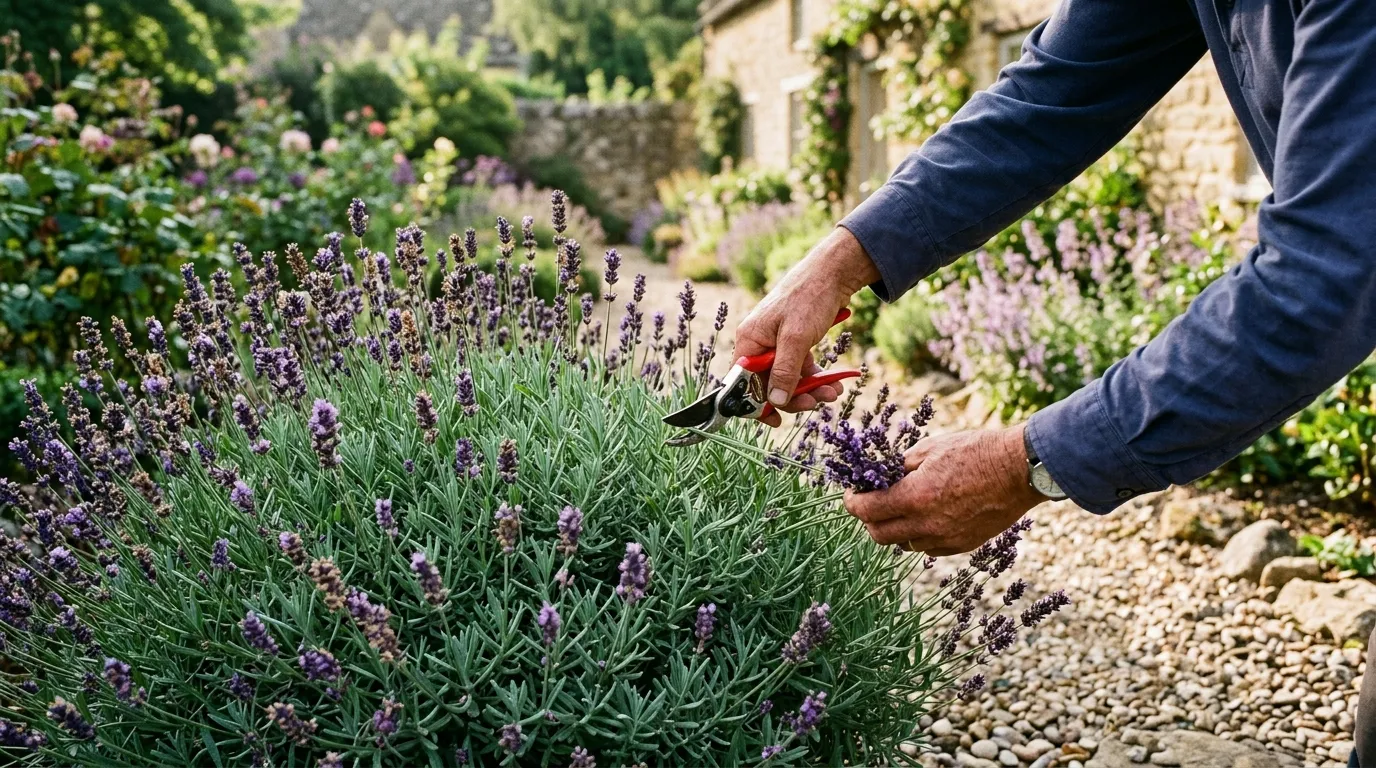
Sharpen secateurs, shears, and hoe blades in March. A sharp hoe slices through weeds on contact. Our step-by-step guide on how to sharpen garden tools covers the correct angles and techniques for every tool. Clean blades with an oily rag after sharpening to prevent rust.
Repairing fences and structures
Inspect all fences, trellis panels, and pergolas. Winter storms loosen posts and split panels. Fix or replace damaged sections before climbing plants grow through them.
Check raised bed sides for rot. Softwood sleepers typically last 5-8 years. Replace any that are crumbling before spring planting fills the bed.
Treating timber
Apply wood preservative to sheds, fence panels, and garden furniture in March or April. The timber needs to be dry. Treat before plants grow up against the timber.
Month-by-month spring checklist
| Task | March | April | May |
|---|---|---|---|
| Lawn: first cut | Yes (4cm) | Lower to 3cm | Lower to 2.5cm |
| Lawn: feed | From mid-March | Second feed if needed | - |
| Lawn: weed treatment | - | Yes | Spot-treat |
| Scarify and aerate | Late March | Early April | - |
| Mulch borders | Yes | - | Top up |
| Divide perennials | Yes | Early April | - |
| Prune late-flowering shrubs | Yes | - | - |
| Prune roses | Yes (if not done) | - | Deadhead |
| Sow indoors | Tender crops | Continue | Final sowings |
| Sow outdoors | Hardy crops | Wider range | Beans, sweetcorn |
| Plant out | Bare-root stock | Bulbs, hardy plants | Tender plants |
| Greenhouse: clean | Yes | - | - |
| Feed fruit trees | Yes | - | Mulch |
| Bird boxes | Install | - | - |
| Pond: blanketweed | Remove | Remove regularly | Remove regularly |
| Sharpen tools | Yes | - | - |
| Repair structures | Yes | Yes | - |
Common mistakes
Cutting the lawn too short too early
Scalping the lawn in March weakens grass that is barely out of dormancy. Set blades high for the first four cuts. A close shave can wait until May when the grass is growing strongly.
Pruning spring-flowering shrubs before they bloom
Forsythia, flowering currant (Ribes), and Chaenomeles flower on last year’s growth. Pruning them in March removes every flower bud. Wait until they finish blooming in April or May.
Planting tender crops out too early
Tomatoes, courgettes, peppers, and dahlias die in frost. The last frost date in most of the UK falls between 15-25 May in the south and late May to early June in the north. Planting out in April because of a warm spell is a gamble that usually fails.
Ignoring weeds until they seed
Annual weeds like hairy bittercress complete their life cycle in 6-8 weeks. A weed that germinates in March scatters thousands of seeds by May. Pull weeds young and often.
Forgetting to harden off
Moving seedlings straight from a warm windowsill to the garden shocks them. The temperature drop from 20C indoors to 5C overnight stalls growth for weeks. Harden off gradually over 10-14 days, increasing outdoor exposure daily.
Now you have your spring tasks covered, read our guide on summer gardening jobs for the next phase of the growing year.
Frequently asked questions
When should I start spring gardening in the UK?
Start in early March with soil preparation. Clear debris, prune shrubs, and begin indoor seed sowing as soon as daylight reaches 11-12 hours. The exact timing shifts by 2-3 weeks between southern and northern regions. Southern gardens can begin outdoor sowing from early March. Northern and exposed gardens should wait until late March.
What is the most important spring gardening job?
Soil preparation is the most important task. Adding compost and clearing weeds in March sets every other job up for success. Plants cannot thrive in compacted, nutrient-poor, or weed-infested ground. Spending a day improving your soil saves weeks of trouble through summer.
When should I mow the lawn for the first time in spring?
Give the first cut in March when grass starts growing. Set blades to 4cm on the highest setting. Never cut more than one-third of the grass height in a single pass. If the lawn has grown long over winter, bring it down gradually over two or three cuts rather than scalping it in one go.
Can I plant out tender plants in April?
No, wait until late May in most of the UK. The last frost date falls between 15-25 May in the south and late May to early June in the north. A warm April day does not mean frost has finished. Night temperatures can drop to -3C in clear April skies.
What shrubs should I prune in spring?
Prune late-flowering shrubs in March, including buddleia, hardy fuchsia, lavatera, and caryopteris. These flower on new wood, so hard pruning in spring encourages vigorous growth. Do not prune spring-flowering shrubs like forsythia or flowering currant until after they finish blooming.
When should I feed my lawn in spring?
Apply spring lawn feed from mid-March once temperatures reach 8-10C consistently. Use a nitrogen-rich spring formulation, not an autumn feed which is high in potassium. Water in if no rain falls within 48 hours. A second feed in late April helps lawns that are slow to green up.
How do I prepare a greenhouse for spring?
Clean all glass inside and out in late February or early March. Dirty glass reduces light transmission by 20-30%. Replace cracked panes, check that automatic vents open freely, and wash staging with garden disinfectant. Replace wax cylinders in auto-vents every 3-4 years. Good ventilation prevents damping off and produces stronger seedlings.
Lawrie has been gardening in the West Midlands for over 30 years. He grows his own veg using no-dig methods, keeps a wildlife-friendly garden, and writes practical advice based on real UK growing conditions.