Allium
Allium hollandicum
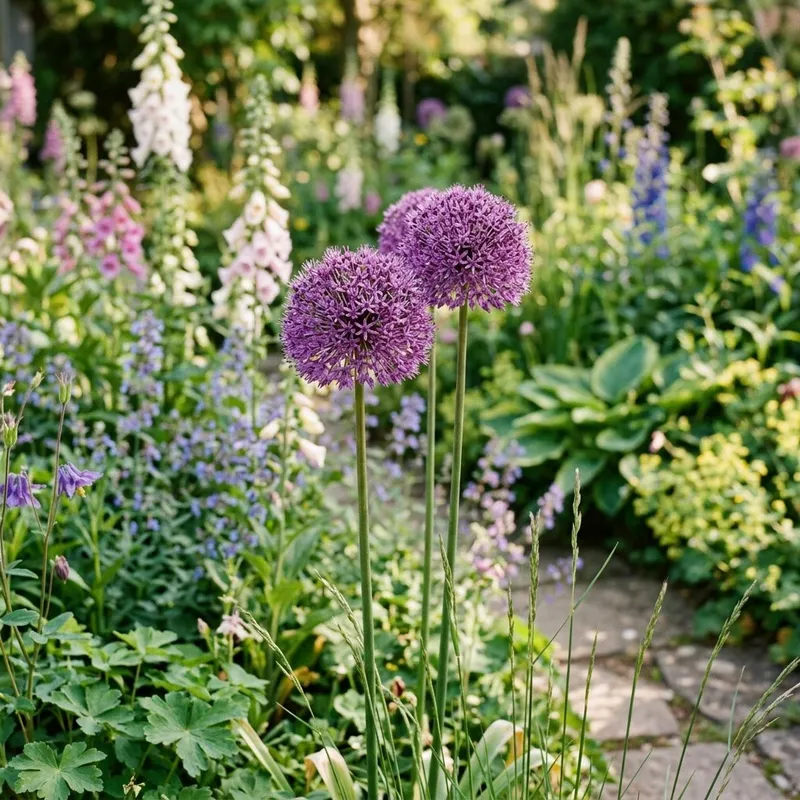
Ornamental alliums produce stunning spherical flower heads on tall, sturdy stems from late May to June. Their architectural purple globes rise above lower planting, creating a dramatic focal point in borders. Part of the onion family, the foliage has a mild garlic scent when crushed. Dried seed heads remain attractive well into autumn. Excellent for contemporary and cottage garden styles alike.
How to grow allium
Plant bulbs in October or November, 10-15 cm deep and 15-20 cm apart. Choose a sunny position with well-drained soil — alliums dislike sitting in wet ground over winter. On heavy clay, add sharp grit to the planting hole to improve drainage. The foliage begins to die back as flowers open, so position behind lower perennials such as hardy geraniums or nepeta to disguise the yellowing leaves. No staking is needed for most varieties. Feed with a general-purpose fertiliser in spring as shoots emerge. Leave dried seed heads in place for winter interest or cut for dried flower arrangements. Divide congested clumps every three to four years in autumn. Alliums are rarely troubled by pests, as the onion scent deters most insects.
Pruning
No pruning required. Dried seed heads can be left for winter structure or cut for indoor arrangements. Remove foliage only once it has fully yellowed.
Propagation
- Offsets (divide in autumn)
- Seed (sow in autumn, flowers in 2-3 years)
Common problems
- Onion white rot
- Downy mildew
- Allium leaf miner
Good companions
Related guides
How to Grow Alliums in the UK
Plant ornamental alliums October-November in full sun, 3x bulb depth. Hardy to -15°C, flowers May-July, seedheads last all winter.
Flower Planting Calendar: Month by Month
Month-by-month flower planting calendar for UK gardens. Covers sowing times for annuals, perennials, biennials, and bulbs across all regions.
Cottage Garden Planting Plan for the UK
How to plan and plant a cottage garden in the UK. Covers classic plants, colour schemes, seasonal structure, and a ready-to-use planting plan.