Cornus
Cornus alba
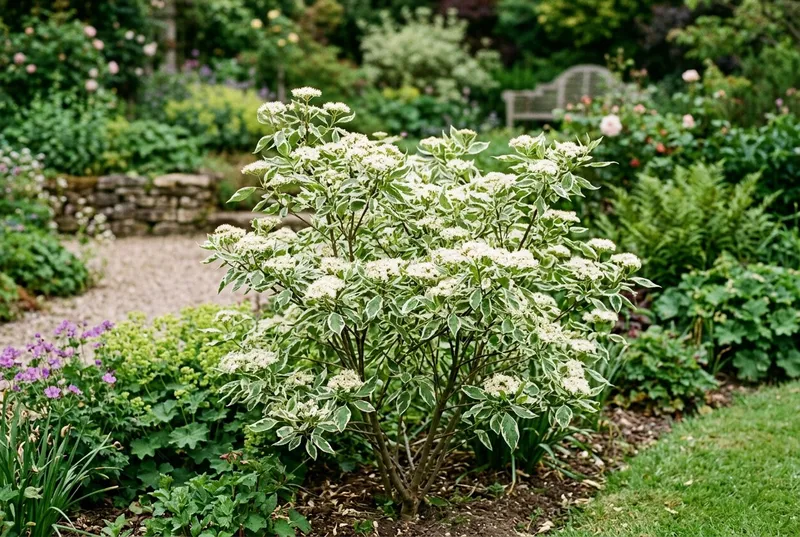
A deciduous shrub grown primarily for its vivid red, orange or yellow winter stems that provide striking colour from November to March. Small clusters of white flowers in early summer are followed by white or blue-tinged berries. The foliage often turns attractive shades of red and purple in autumn. Fully hardy and adaptable, thriving in damp soils. A superb choice for winter interest in UK gardens.
How to grow cornus
Plant in autumn or spring in moist soil. Cornus alba thrives in damp, even waterlogged ground, making it ideal for planting beside ponds, streams and in boggy areas. It also grows well in ordinary garden soil. Position in full sun for the most vivid winter stem colour — the young bark is brightest on stems receiving direct sunlight. Water well during dry periods. Mulch generously in spring with garden compost. Feed with a balanced fertiliser after the annual hard prune. The cultivar 'Sibirica' produces the finest crimson-red stems. 'Elegantissima' has variegated grey-green and white leaves with red winter stems. Plant in groups of three or more for maximum winter impact.
Pruning
Hard prune every year in late March, cutting all stems back to about 15-20cm from the ground. This produces a flush of vigorous young stems with the brightest winter colour. Without hard pruning, the stems become dull grey-brown and lose their ornamental value. Alternatively, cut back one third of the oldest stems each year for a taller, more natural shape.
Propagation
- Hardwood cuttings in late autumn
- Suckers removed and replanted in winter
- Softwood cuttings in early summer
Common problems
- Dull stem colour without annual hard pruning
- Leaf spot in wet summers
- Suckers can spread beyond intended area