Hydrangea
Hydrangea macrophylla
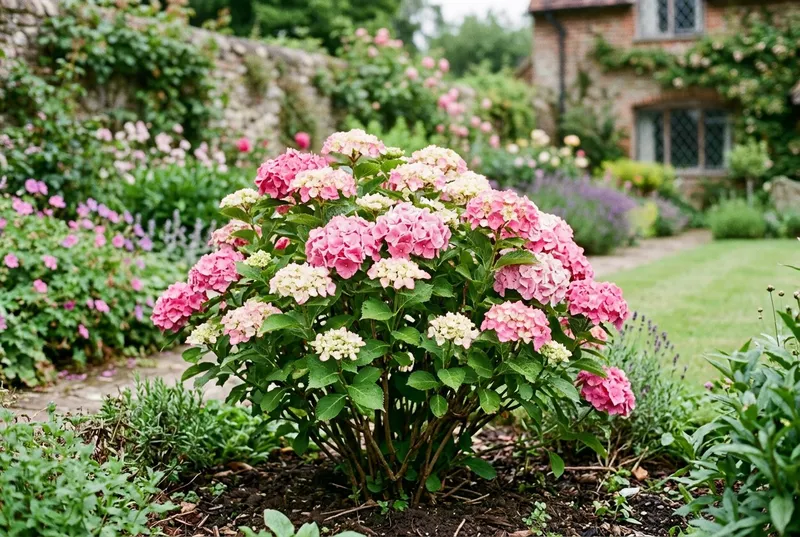
A much-loved deciduous shrub producing large, rounded flower heads from midsummer into autumn. Flower colour ranges from blue on acid soils to pink on alkaline soils. Widely grown across the UK in borders, containers and coastal gardens. Thrives in sheltered spots with morning sun and afternoon shade. One of the most reliable shrubs for late-season colour in British gardens.
How to grow hydrangea
Plant in spring or autumn in a sheltered position with dappled shade. Hydrangeas need reliably moist soil, so dig in plenty of well-rotted compost before planting. Water regularly during dry spells, particularly in the first two seasons while roots establish. Apply a thick mulch of bark chips or leaf mould each spring to retain moisture. Flower colour depends on soil pH: acid soils produce blue flowers, while alkaline soils turn them pink. To encourage blue blooms, apply aluminium sulphate or ericaceous compost around the base. Feed with a balanced fertiliser in April. Protect emerging buds from late frosts with horticultural fleece in exposed gardens.
Pruning
Prune mophead and lacecap varieties in late spring. Cut back last year's faded flower heads to just above the first strong pair of buds. Remove any dead, damaged or crossing stems at the base. Avoid hard pruning, as flowers form on the previous year's growth. Only remove one in three older stems each year to maintain vigour.
Propagation
- Softwood cuttings in late spring
- Semi-ripe cuttings in late summer
- Layering in autumn
Common problems
- Frost damage to early buds
- Powdery mildew in dry conditions
- Vine weevil damage to container plants
- Leaf scorch in full sun