Crocosmia
Crocosmia 'Lucifer'
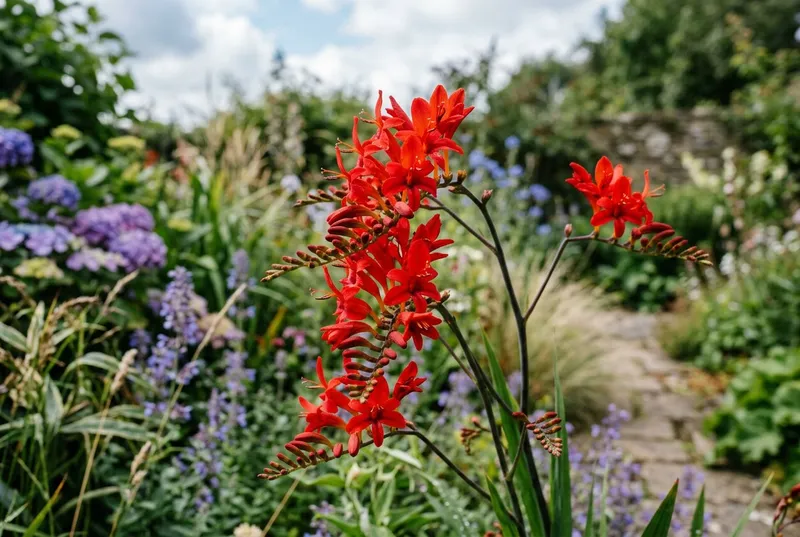
A bold, clump-forming perennial growing from corms and producing arching sprays of brilliant flame-red, funnel-shaped flowers from July to August. 'Lucifer' is the most popular crocosmia cultivar in UK gardens, valued for its intense colour, pleated sword-shaped foliage, and bulletproof reliability. It brings dramatic vertical impact to mid-border positions and is excellent for cutting.
How to grow crocosmia
Plant corms 8-10 cm deep in spring in humus-rich, well-drained soil in sun or light shade. Space clumps 15-20 cm apart. 'Lucifer' is the hardiest crocosmia and survives most UK winters without protection, but a thick mulch of bark over the corms in late autumn helps in colder northern gardens. Water during prolonged dry spells in summer. Feed with a balanced fertiliser in spring as growth begins. Crocosmia spreads steadily via offsets and can form large colonies after a few years — divide every three to four years to control spread and maintain flowering vigour. The sword-like foliage provides useful vertical structure even before and after flowering.
Pruning
Leave foliage intact after flowering until it yellows and dies back naturally in late autumn — the leaves feed the corms for next year's display. Cut dead foliage back to ground level in late November. Remove spent flower stems once the display is over, or leave for seed heads if desired.
Propagation
- Division of corm clumps in spring
- Seed sown in autumn
Common problems
- Red spider mite in hot, dry conditions
- Congested clumps flowering less freely
- Corm rot in waterlogged soil over winter
Good companions
Related guides
Cottage Garden Planting Plan for the UK
How to plan and plant a cottage garden in the UK. Covers classic plants, colour schemes, seasonal structure, and a ready-to-use planting plan.
Best Bee-Friendly Plants for UK Gardens
Attract bees and pollinators with plants that thrive in British conditions. Covers spring, summer, and autumn flowering for year-round forage.
Best Plants for Butterflies in the UK
Top nectar and caterpillar food plants for UK butterflies. Covers 59 species, seasonal planting, host plants, and garden design for butterflies.