Rudbeckia
Rudbeckia fulgida
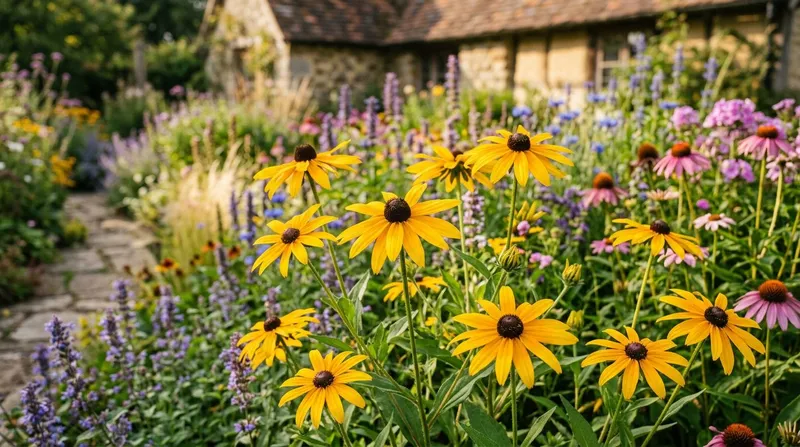
A cheerful, clump-forming perennial producing masses of golden-yellow daisy flowers with prominent dark brown-black cone centres from August to October. Black-eyed Susan is one of the most reliable late-season perennials for UK gardens, flowering prolifically even in its first year. The variety 'Goldsturm' is considered one of the finest border plants ever introduced.
How to grow rudbeckia
Plant in spring or autumn in any reasonable soil in full sun or light shade. Rudbeckia is adaptable and tolerant, performing well on clay, loam, or sand, though it prefers soil that does not dry out completely. Space plants 45 cm apart. Water during prolonged dry spells to maintain flowering. Feed with a balanced fertiliser in spring. Leave the dark seed heads standing through winter for birds and structural interest. Divide clumps every three to four years in spring to prevent them becoming woody and to maintain vigour. Rudbeckia combines brilliantly with ornamental grasses for a naturalistic prairie effect.
Pruning
Leave spent flowers and seed heads standing through autumn and winter for wildlife value and frost interest. Cut all old stems back to ground level in late February or early March before new growth begins. No other pruning is needed during the growing season.
Propagation
- Division in spring
- Seed sown in spring
Common problems
- Powdery mildew in dry conditions
- Slugs on young spring growth
- Aphids on flower buds
Good companions
Related guides
Best Bee-Friendly Plants for UK Gardens
Attract bees and pollinators with plants that thrive in British conditions. Covers spring, summer, and autumn flowering for year-round forage.
Autumn Gardening Jobs: Complete UK Checklist
Month-by-month autumn gardening checklist for UK gardens. Covers planting, bulbs, lawn care, pruning, composting, and wildlife tasks for Sep to November.
Best Plants for Butterflies in the UK
Top nectar and caterpillar food plants for UK butterflies. Covers 59 species, seasonal planting, host plants, and garden design for butterflies.
Ornamental Grasses for UK Gardens
Guide to the best ornamental grasses for UK gardens. Covers tall, medium, and low varieties with planting, dividing, and cutting back advice.