Crocus
Crocus vernus
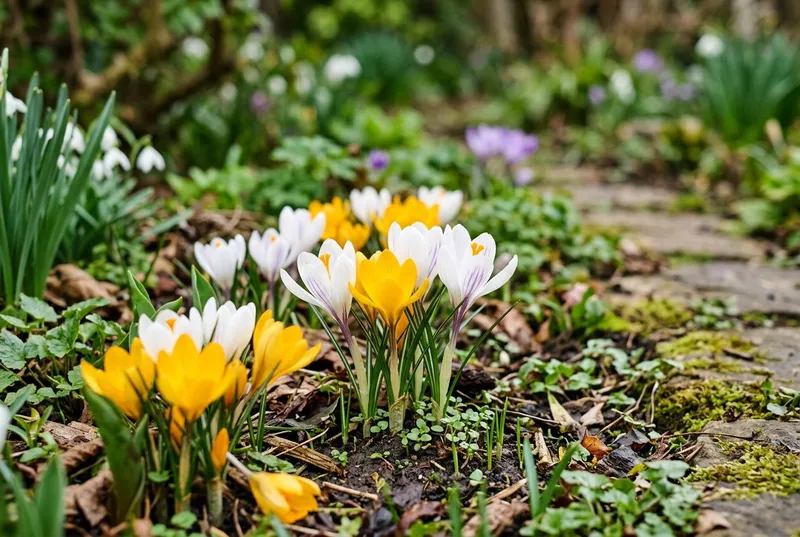
Among the first flowers to appear in UK gardens, crocuses produce goblet-shaped blooms from late January to March. Their vivid purples, yellows, and whites are a vital early nectar source for emerging bees. Grown from corms rather than true bulbs, they naturalise freely in lawns, borders, and rockeries. The saffron crocus (C. sativus) is an autumn-flowering relative used to produce the world's most expensive spice.
How to grow crocus
Plant corms in September or October, 8-10 cm deep and 8 cm apart, with the pointed end facing upwards. Choose a sunny, well-drained position — crocuses rot in waterlogged soil. For naturalising in lawns, scatter corms randomly and plant where they fall for an organic effect. Avoid mowing the grass until at least six weeks after flowering so the foliage can feed the corm. No regular feeding is needed, but a light top-dressing of bone meal at planting time helps establishment. Crocuses multiply freely and congested clumps can be lifted and divided every three to four years after the foliage dies back. Replant cormlets immediately at the same depth.
Pruning
No pruning required. Allow foliage to yellow and wither naturally before removing. If planted in lawns, delay the first mow until leaves have died back completely.
Propagation
- Cormlets (divide after foliage dies back)
- Seed (slow, takes 3-4 years to flower)
Common problems
- Squirrels and mice eating corms
- Birds pecking yellow flowers
- Corm rot in wet soil
- Crocus smut fungus
Good companions
Related guides
When to Plant Spring Bulbs in the UK
Find out when to plant spring bulbs across the UK. Covers daffodils, tulips, crocuses, hyacinths, alliums, and snowdrops with exact timing by type.
Flower Planting Calendar: Month by Month
Month-by-month flower planting calendar for UK gardens. Covers sowing times for annuals, perennials, biennials, and bulbs across all regions.
Best Winter Flowering Plants for the UK
Ten best winter flowering plants for UK gardens from November to March. Covers hellebores, snowdrops, witch hazel, and winter jasmine with care advice.