Echinacea
Echinacea purpurea
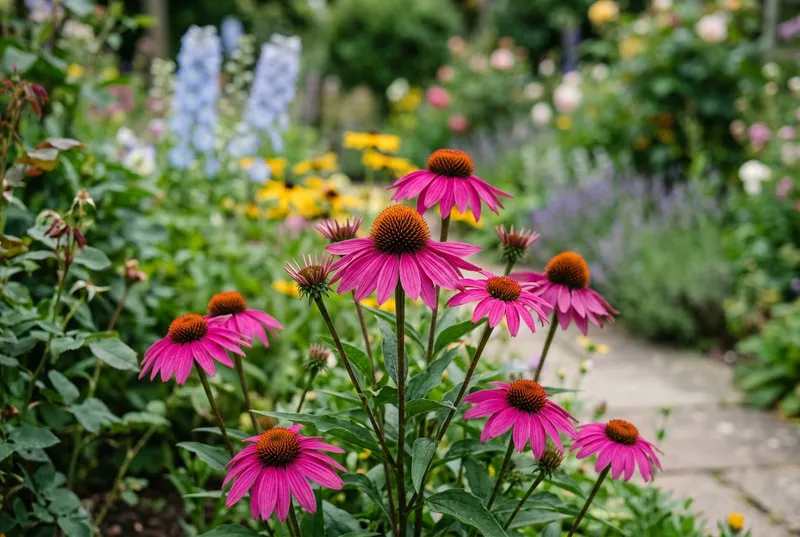
A robust, clump-forming perennial bearing large daisy-like flowers with prominent cone-shaped centres from July to September. Native to North American prairies, echinacea has become a UK garden favourite for its long flowering season, drought tolerance, and value to pollinators. The dried seed heads provide winter interest and food for goldfinches.
How to grow echinacea
Plant in spring in a sunny position with well-drained soil. Echinacea tolerates poor soil better than rich conditions, so avoid heavy feeding. Space plants 45 cm apart and water regularly during the first growing season to establish deep roots. Once settled, they are remarkably drought tolerant. In colder parts of the UK, apply a winter mulch of bark or leaf mould around the crown. Leave spent flower heads standing through winter for the birds and cut back the old stems to ground level in early March. Divide congested clumps every three to four years in spring to maintain vigour.
Pruning
Deadhead regularly during summer to extend flowering, or leave some seed heads for wildlife. Cut all stems back to 5 cm above the ground in late February or early March before new growth emerges. Avoid cutting back in autumn as the old stems protect the crown from frost.
Propagation
- Division in spring
- Root cuttings in late autumn
- Seed sown in spring
Common problems
- Crown rot in waterlogged soil
- Powdery mildew in dry summers
- Slugs on young shoots in spring
Good companions
Related guides
How to Grow Echinacea in the UK
Grow echinacea (coneflower) in UK gardens with this complete guide. Covers varieties, sowing, planting, soil prep, and winter care tips.
Best Bee-Friendly Plants for UK Gardens
Attract bees and pollinators with plants that thrive in British conditions. Covers spring, summer, and autumn flowering for year-round forage.
Drought-Tolerant Plants for UK Gardens
Best drought-tolerant plants for UK gardens. Covers perennials, shrubs, grasses, ground cover, and Mediterranean species that thrive without watering.
Best Plants for Butterflies in the UK
Top nectar and caterpillar food plants for UK butterflies. Covers 59 species, seasonal planting, host plants, and garden design for butterflies.