Fiddle Leaf Fig
Ficus lyrata
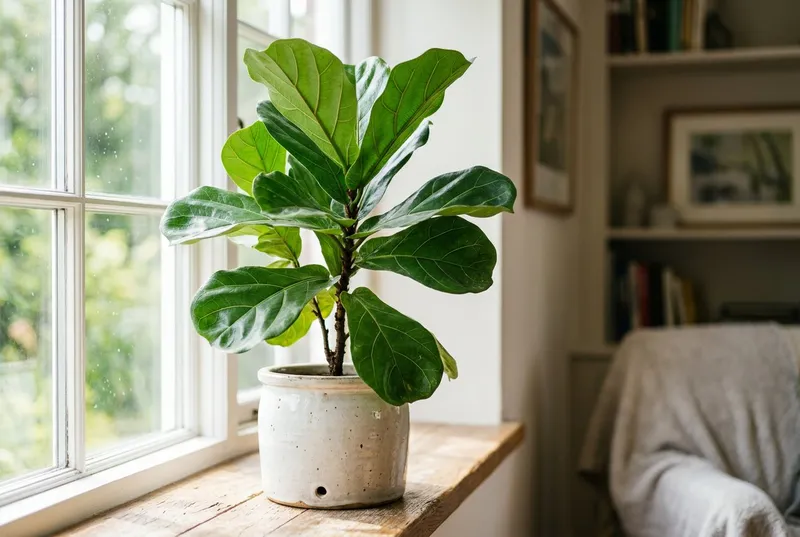
A statement houseplant with large, violin-shaped leaves that can reach 30 cm across. The fiddle leaf fig has become one of the most sought-after indoor plants in UK homes, prized for its bold, architectural silhouette. Native to West African tropical rainforests, it demands consistent warmth and humidity, making it better suited to experienced plant owners. When happy, it grows into an impressive indoor tree.
How to grow fiddle leaf fig
Place near a bright window with indirect light. A south- or west-facing room with a sheer curtain works best in the UK. Fiddle leaf figs dislike being moved and may drop leaves after relocation, so find a permanent spot early on. Water when the top 5 cm of compost feels dry, typically every seven to ten days in summer and fortnightly in winter. Use tepid water and pour away any that collects in the saucer after 30 minutes. Mist the foliage regularly or use a humidifier during the heating season to prevent brown edges. Feed monthly from April to September with a liquid houseplant fertiliser. Repot every two to three years in spring using a rich, well-draining peat-free compost mixed with perlite. Rotate the pot a quarter turn each week to encourage even growth. Keep above 15 degrees Celsius at all times.
Pruning
Prune in spring to control height and encourage branching. Cut the main stem at the desired height using sharp secateurs; the plant will produce new growth below the cut. Remove any dead or damaged leaves at the leaf stalk. Wear gloves as the milky latex sap can irritate skin.
Propagation
- Stem cuttings
- Air layering
Common problems
- Brown spots from overwatering or cold draughts
- Leaf drop from sudden changes in light or position
- Red spider mite in dry air
- Bacterial leaf spot
Good companions
Related guides
Best Indoor Plants for UK Homes
The best indoor plants for UK homes ranked by light needs, care difficulty, and pet safety. Includes lux data for every room orientation.
How to Repot Houseplants
Learn when and how to repot houseplants. Step-by-step guide to pot sizes, compost types, and aftercare for healthy indoor plants.
How to Propagate Houseplants
How to propagate houseplants from cuttings, division, and offsets. Covers water and soil methods with success rates for 10 popular species.
Best House Plants for Beginners UK
The easiest house plants for UK homes. Covers low-light species, watering schedules, common mistakes, and the best plants for every room.