Freesia
Freesia x hybrida
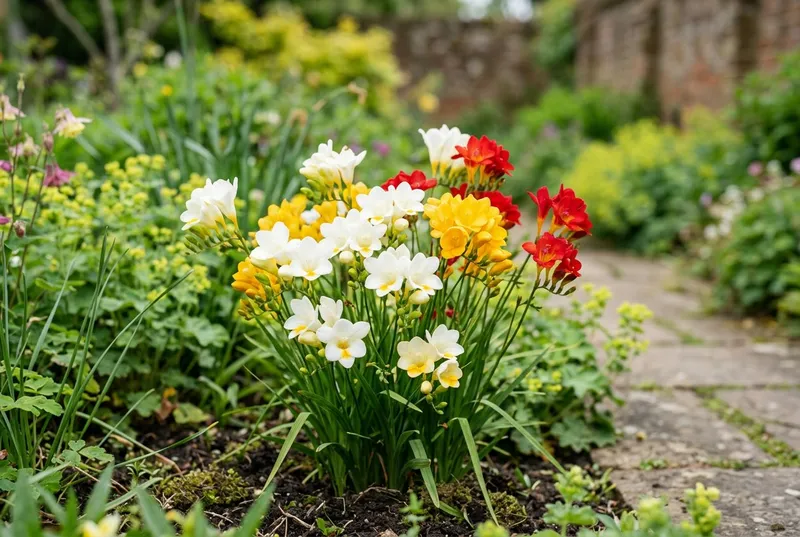
Freesias are treasured for their intensely sweet fragrance and elegant, one-sided sprays of funnel-shaped flowers. Blooming from July to September when grown outdoors in the UK, they produce six to twelve flowers per stem in colours ranging from white and yellow to red, pink, and purple. Native to South Africa, they are half-hardy and grow best in sheltered, warm spots or cool greenhouses. Excellent as cut flowers, lasting up to two weeks in water.
How to grow freesia
Plant corms 5 cm deep and 5-8 cm apart in late March or April, once the risk of hard frost has passed. Choose the warmest, most sheltered spot in the garden — a south-facing wall or raised bed is ideal. Alternatively, grow in pots of loam-based compost in a cool greenhouse or conservatory for earlier, more reliable flowers. Keep soil evenly moist during growth but avoid waterlogging. Support the slender stems with twiggy sticks or a low grid. Feed fortnightly with a high-potash liquid fertiliser once flower buds appear. After flowering, allow the foliage to die back naturally. Lift corms in autumn before the first frost, dry them, and store in a cool, frost-free place over winter. In very mild coastal gardens, they may survive outdoors with a deep mulch.
Pruning
No pruning required. Cut flower stems for arrangements when the first bud opens — remaining buds will open in the vase. Remove faded stems once all flowers have finished.
Propagation
- Cormlets (detach at lifting time)
- Seed (sow in spring under glass, flowers in second year)
Common problems
- Corm rot in wet soil
- Aphids
- Red spider mite under glass
- Frost damage
Good companions
Related guides
Flower Planting Calendar: Month by Month
Month-by-month flower planting calendar for UK gardens. Covers sowing times for annuals, perennials, biennials, and bulbs across all regions.
Best Greenhouse Plants Month by Month
Month-by-month greenhouse planting guide for UK gardeners. Covers what to sow, grow, and harvest in every month from January to December.