Gladiolus
Gladiolus x hortulanus
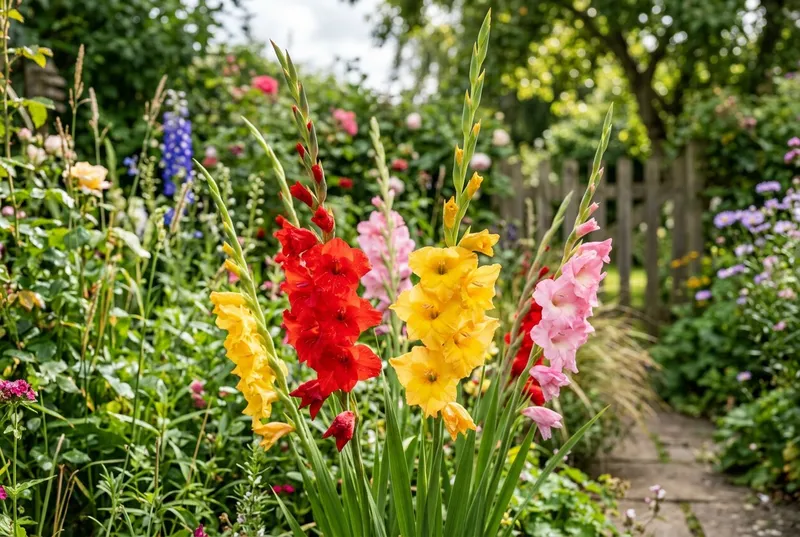
Gladioli produce tall, sword-like spikes of funnel-shaped flowers from July to September, making them a favourite for cut flower growers. Each stem carries 12-20 blooms that open sequentially from the bottom upwards. Available in almost every colour, they bring vertical drama to borders and are staples of flower arranging. Grown from corms, they are half-hardy and must be lifted in autumn in most UK regions.
How to grow gladiolus
Plant corms 10-12 cm deep and 10-15 cm apart from late March to May. Stagger plantings every two weeks for a succession of blooms through summer. Choose a sheltered, sunny spot with fertile, well-drained soil. Stake tall varieties before flowers open to prevent wind damage. Water regularly during the growing season, especially in dry weather. Feed fortnightly with a balanced liquid fertiliser once flower spikes appear. For cut flowers, harvest when the bottom two or three florets have opened. After the first frost, cut stems to 5 cm above ground level. Lift corms carefully, remove soil, and dry in a warm, airy place for two to three weeks. Store in paper bags in a cool, frost-free location over winter. Replant the following spring.
Pruning
No pruning required. Remove individual spent florets to keep the spike looking tidy. Cut flower spikes for vases when the lowest florets begin to open.
Propagation
- Cormlets (detach from parent corm at lifting time)
- Seed (slow, takes 2-3 years to flower)
Common problems
- Gladiolus thrips
- Grey mould (Botrytis)
- Fusarium corm rot
- Wind damage to tall stems
Good companions
Related guides
Flower Planting Calendar: Month by Month
Month-by-month flower planting calendar for UK gardens. Covers sowing times for annuals, perennials, biennials, and bulbs across all regions.
Cottage Garden Planting Plan for the UK
How to plan and plant a cottage garden in the UK. Covers classic plants, colour schemes, seasonal structure, and a ready-to-use planting plan.