Holly
Ilex aquifolium
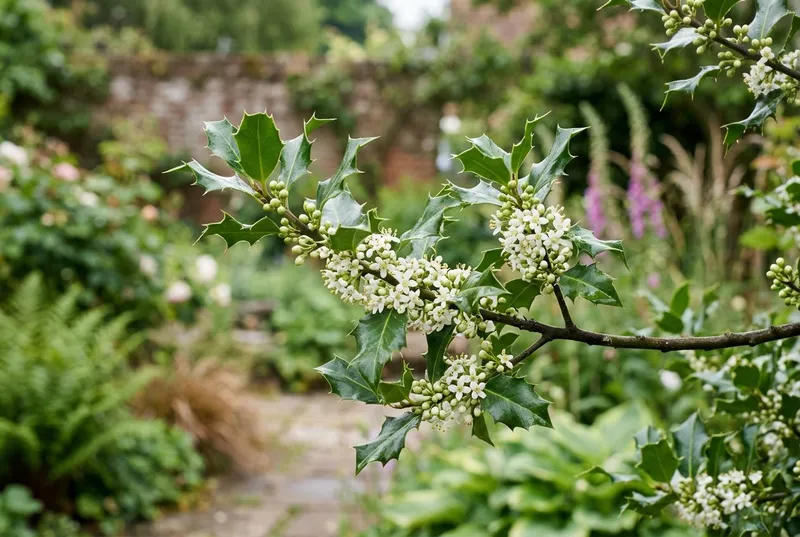
Holly is a native British evergreen tree recognised by its glossy, spiny leaves and bright red winter berries. It provides year-round structure and is one of the most valuable wildlife trees, offering dense cover for nesting birds and winter food for thrushes and blackbirds. Holly grows in sun or deep shade and tolerates pollution, coastal exposure, and most soil types.
How to grow holly
Plant container-grown holly at any time of year, or bare-root plants from November to March. Holly tolerates virtually any conditions but grows fastest in moist, well-drained soil in partial shade. For berries, you need both a male and a female plant within 20 metres, unless you choose a self-fertile cultivar. Variegated forms need more sun to maintain their leaf colour. Water regularly during the first two years. Mulch annually with bark or leaf mould. Holly is slow-growing initially but becomes vigorous once established. It makes an excellent dense hedge, planted at 45 cm spacing.
Pruning
Trim hedges and topiary in late summer (August). Prune specimen trees in late winter if needed, removing dead or damaged branches. Holly responds well to hard renovation pruning if overgrown. Use bypass secateurs for a clean cut; avoid hedge trimmers on large-leaved varieties as they shred the foliage.
Propagation
- Semi-ripe cuttings
- Seed
Common problems
- Holly leaf miner
- Scale insects
- Leaf spot
- Birds stripping berries
Good companions
Related guides
Best Trees for Privacy in UK Gardens
Top evergreen and deciduous trees for garden privacy in the UK. Covers screening species, planting distances, hedge law, and pleaching techniques.
Hedge Planting Guide for the UK
Step-by-step UK hedge planting guide covering species selection, bare-root vs container plants, spacing, planting method, first-year care, and trimming.
Best Evergreen Shrubs for UK Gardens
Ten best evergreen shrubs for year-round interest in UK gardens. Covers Mahonia, Viburnum tinus, Sarcococca, and more with planting and care advice.