Hazel
Corylus avellana
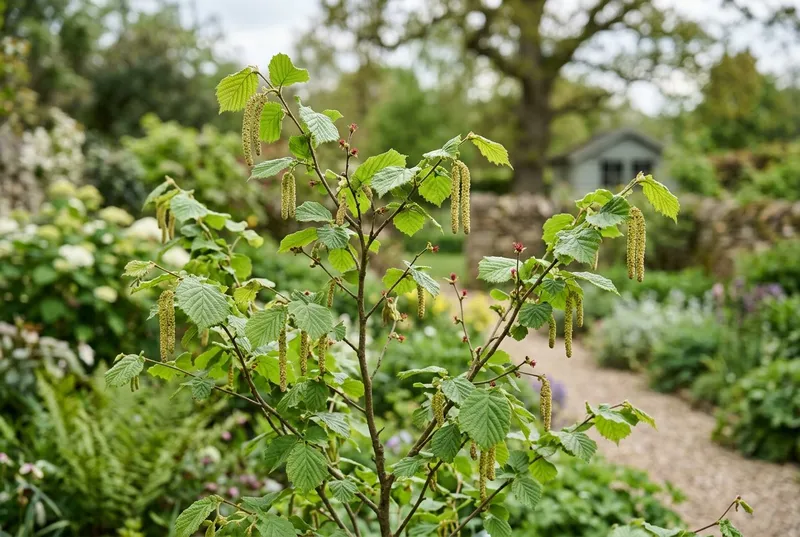
Hazel is a native British multi-stemmed tree or large shrub found in hedgerows and woodlands throughout the UK. Its golden catkins are one of the earliest signs of spring, appearing in February. Hazelnuts ripen in autumn and are prized by squirrels, dormice, and jays. Traditionally coppiced for centuries, hazel provides excellent stakes, bean poles, and garden supports.
How to grow hazel
Plant bare-root hazel between November and March in a sunny or lightly shaded position. It tolerates most soils, including chalk and heavy clay, and grows well in exposed sites. For nut production, plant two or more different cultivars to ensure cross-pollination. Space trees 4-5 metres apart, or 30-40 cm apart for a hedge. Water during dry spells in the first year. Hazel makes an excellent understory tree in woodland gardens and is one of the best native species for wildlife. The contorted form 'Contorta' is prized for its twisted stems in winter flower arrangements.
Pruning
Coppice every 7-10 years in winter by cutting all stems to 15-20 cm above ground. This traditional management creates a multi-stemmed habit and produces straight poles for garden use. Alternatively, prune as a single-stemmed tree by removing lower branches and thinning the crown. For hedges, trim in late winter before catkins shed their pollen.
Propagation
- Seed
- Layering
- Suckers
Common problems
- Squirrel damage
- Nut weevil
- Powdery mildew
- Big bud mite
Good companions
Related guides
How to Create a Wildlife Garden UK
Turn any UK garden into a wildlife haven. Covers ponds, native planting, hedgehog access, bird feeding, bug hotels, and seasonal wildlife tasks.
Hedge Planting Guide for the UK
Step-by-step UK hedge planting guide covering species selection, bare-root vs container plants, spacing, planting method, first-year care, and trimming.
How to Make a Hedgehog-Friendly Garden
Practical guide to creating a hedgehog-friendly garden in the UK. Covers shelters, feeding, hazards, hedgehog highways, and seasonal care tips.