Honeysuckle
Lonicera periclymenum
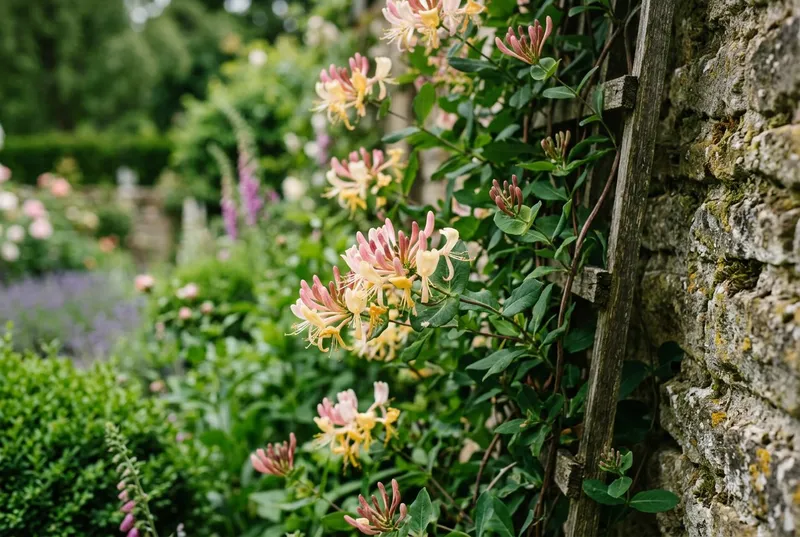
Native honeysuckle is a twining woodland climber found throughout the UK, beloved for its intensely fragrant, tubular flowers in cream, yellow, and pink. It blooms from June to September and produces glossy red berries in autumn that are eaten by thrushes and warblers. Honeysuckle attracts hawkmoths to the garden at dusk and supports the white admiral butterfly caterpillar.
How to grow honeysuckle
Plant in a position where the roots are in cool, moist, shaded soil and the upper growth reaches the light, mimicking its natural woodland edge habitat. Native honeysuckle tolerates most soils and aspects, including north-facing walls. Provide trellis, wires, or an existing hedge or tree for support. Water during dry spells, especially on sandy or chalky soils. Mulch annually with compost to keep roots cool and moist. The cultivar 'Graham Thomas' has larger, cream and yellow flowers and is one of the most fragrant. 'Belgica' flowers earlier, in May and June.
Pruning
Prune in late winter or early spring by removing one-third of the oldest stems at the base. This prevents the plant from becoming top-heavy and bare at the bottom. Honeysuckle flowers on the previous year's growth, so avoid cutting back all stems at once. Tolerates hard renovation pruning if very overgrown.
Propagation
- Layering
- Semi-ripe cuttings
- Hardwood cuttings
Common problems
- Aphids
- Powdery mildew
- Leaf spot
Good companions
Related guides
Best Climbing Plants for UK Gardens
Best climbing plants for UK gardens covering walls, fences, pergolas, and small spaces. Planting advice, aspect guidance, and care tips.
How to Create a Wildlife Garden UK
Turn any UK garden into a wildlife haven. Covers ponds, native planting, hedgehog access, bird feeding, bug hotels, and seasonal wildlife tasks.
Best Plants for Butterflies in the UK
Top nectar and caterpillar food plants for UK butterflies. Covers 59 species, seasonal planting, host plants, and garden design for butterflies.