Jasmine
Jasminum officinale
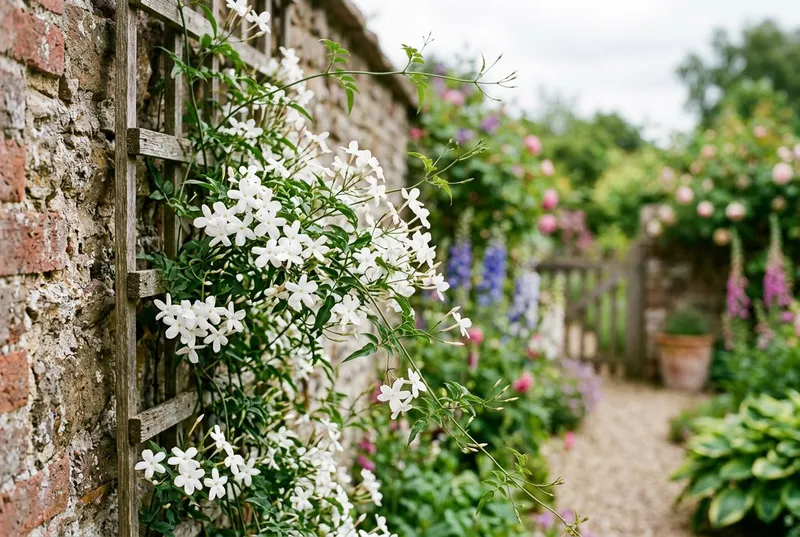
Summer jasmine is a vigorous, twining climber grown for its intensely fragrant white flowers produced from June to September. The sweet scent carries on warm summer evenings, making it perfect for planting near seating areas, doorways, and bedroom windows. Hardy in most of England and Wales, it may need shelter in colder northern and Scottish regions. Semi-evergreen in mild winters.
How to grow jasmine
Plant in a warm, sheltered spot, ideally south or west-facing, in well-drained soil. Jasmine thrives in poor to moderately fertile ground and actually flowers better when not overfed. Provide sturdy wires, trellis, or a pergola for support. Water regularly during the first season. Once established, summer jasmine is fairly drought-tolerant but benefits from watering in prolonged dry spells. Mulch the root area in spring. In colder regions, protect the base with a thick winter mulch. Feed lightly in spring with a balanced fertiliser. The cultivar 'Clotted Cream' has larger, creamy-white blooms.
Pruning
Prune after flowering in late summer or early autumn. Thin out overcrowded stems and remove one in three of the oldest shoots at the base to encourage vigorous new growth. Jasmine can become a tangled mass if neglected, so regular thinning keeps it productive. Tolerates hard renovation pruning if overgrown.
Propagation
- Semi-ripe cuttings
- Layering
Common problems
- Aphids
- Frost damage in harsh winters
- Red spider mite under glass
Good companions
Related guides
How to Grow Jasmine in the UK
How to grow jasmine in UK gardens. Covers summer jasmine, winter jasmine, and star jasmine with planting, pruning, and variety advice.
Best Climbing Plants for UK Gardens
Best climbing plants for UK gardens covering walls, fences, pergolas, and small spaces. Planting advice, aspect guidance, and care tips.
Garden Room Ideas for the UK
Garden room ideas for the UK. Covers planning permission, insulation, costs from £5,000 to £30,000, and year-round use as offices and studios.