Hyacinth
Hyacinthus orientalis
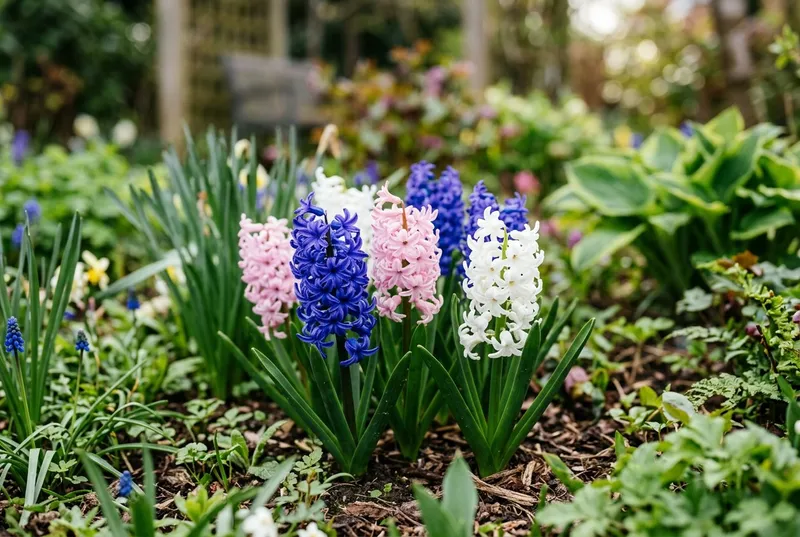
Hyacinths are prized for their dense spikes of intensely fragrant, waxy flowers in March and April. Each bulb produces a single thick stem packed with star-shaped blooms in shades of blue, pink, white, purple, and yellow. Originally from the eastern Mediterranean, they are popular for both garden borders and indoor forcing. A single hyacinth in a room can fill it with scent for weeks.
How to grow hyacinth
Plant bulbs in October or November, 10 cm deep and 8-10 cm apart, in well-drained soil in full sun or light shade. Wear gloves when handling — the bulbs contain oxalic acid that can irritate skin. For indoor forcing, place prepared bulbs in a bulb vase or pot of compost, keep in a cool dark place at 9 degrees Celsius for 10-12 weeks until shoots are 5 cm tall, then bring into warmth and light. Outdoor hyacinths need little care once planted. Feed with a high-potash fertiliser as flowers fade. Flower spikes become looser and more graceful in subsequent years, which many gardeners prefer to the tight first-year blooms. Leave foliage to die back naturally.
Pruning
No pruning required. Snap off spent flower spikes at the base once blooms fade. Leave all foliage intact until it has yellowed completely.
Propagation
- Offsets (detach in late summer)
- Bulb scoring or scooping (specialist technique)
Common problems
- Bulb rot in waterlogged soil
- Grey mould
- Skin irritation from handling bulbs
- Short-lived in heavy clay
Good companions
Related guides
When to Plant Spring Bulbs in the UK
Find out when to plant spring bulbs across the UK. Covers daffodils, tulips, crocuses, hyacinths, alliums, and snowdrops with exact timing by type.
Flower Planting Calendar: Month by Month
Month-by-month flower planting calendar for UK gardens. Covers sowing times for annuals, perennials, biennials, and bulbs across all regions.
Best Indoor Plants for UK Homes
The best indoor plants for UK homes ranked by light needs, care difficulty, and pet safety. Includes lux data for every room orientation.