Iris
Iris germanica
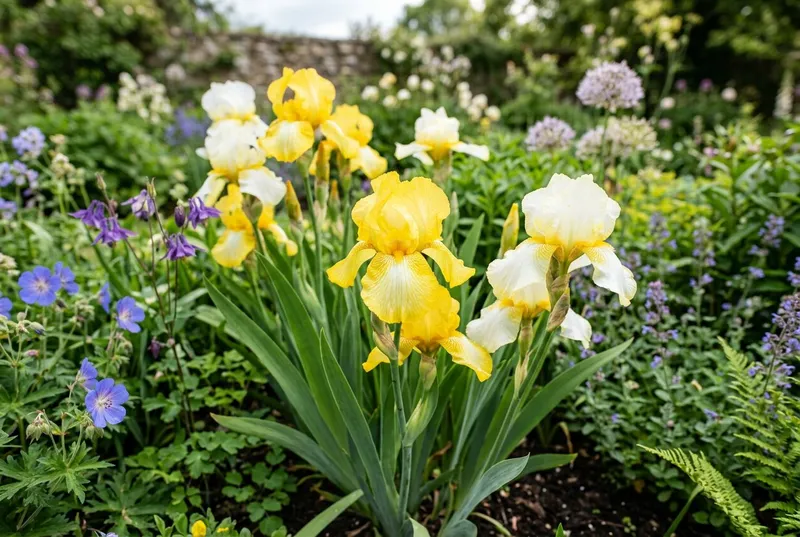
Bearded irises are among the most elegant of border perennials, producing large, ruffled flowers on sturdy stems from May to June. Each bloom has three upright 'standards' and three drooping 'falls' adorned with a fuzzy beard. Grown from rhizomes rather than true bulbs, they thrive in hot, sunny spots with sharply drained soil. Over 30,000 registered cultivars exist, in virtually every colour combination imaginable.
How to grow iris
Plant rhizomes in July or August so they establish before winter. Set the rhizome on the soil surface with roots spread below — the top must be exposed to the sun to bake. This is essential; buried rhizomes flower poorly and are prone to rot. Space 30-45 cm apart. Choose the hottest, most sheltered spot in the garden. Avoid mulching over the rhizome. Feed with a low-nitrogen, high-potash fertiliser in spring and again after flowering. Water only during prolonged dry spells. After flowering, cut the stem to the base but leave the fan of foliage intact. Trim leaves to a 15 cm fan shape in late summer to reduce wind rock and keep borders tidy. Divide congested clumps every three to four years immediately after flowering.
Pruning
Cut spent flower stems to the base. Trim leaf fans to 15 cm in late summer. Remove any dead or damaged leaves throughout the growing season. Do not cut back foliage completely.
Propagation
- Rhizome division after flowering (July-August)
- Seed (variable results, takes 2-3 years to flower)
Common problems
- Iris leaf spot
- Iris rhizome rot (bacterial soft rot)
- Slugs on young growth
- Iris sawfly
Good companions
Related guides
Flower Planting Calendar: Month by Month
Month-by-month flower planting calendar for UK gardens. Covers sowing times for annuals, perennials, biennials, and bulbs across all regions.
Cottage Garden Planting Plan for the UK
How to plan and plant a cottage garden in the UK. Covers classic plants, colour schemes, seasonal structure, and a ready-to-use planting plan.
Drought-Tolerant Plants for UK Gardens
Best drought-tolerant plants for UK gardens. Covers perennials, shrubs, grasses, ground cover, and Mediterranean species that thrive without watering.