Nasturtium
Tropaeolum majus
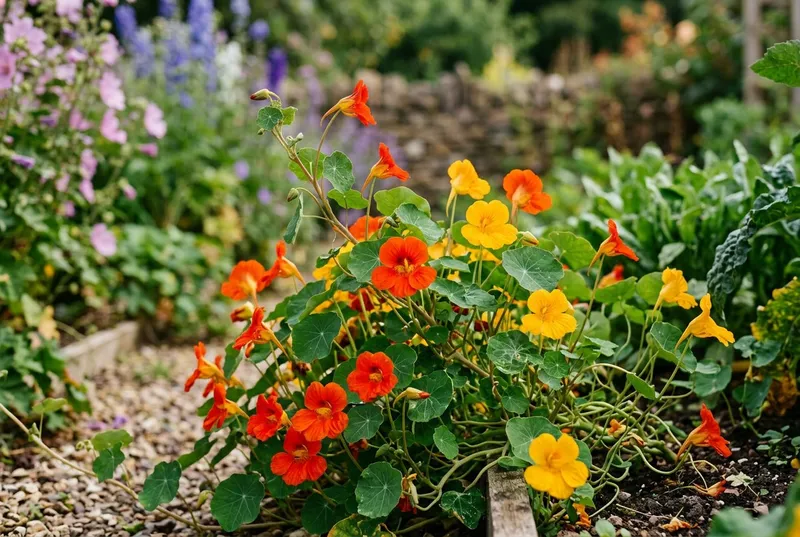
Nasturtiums are fast-growing, unfussy annuals producing vivid trumpet-shaped flowers in fiery shades of red, orange, and yellow from June to October. Both the peppery leaves and flowers are edible, adding colour and a watercress-like bite to salads. They thrive in poor soil where few other plants will grow. Trailing varieties cascade beautifully from hanging baskets and window boxes. Climbing forms scramble up to 3 metres through supports.
How to grow nasturtium
Sow seed directly outdoors from late April to May, 2 cm deep and 20-30 cm apart. Seeds are large and easy for children to handle. Alternatively, sow in pots indoors in April and plant out after the last frost. Choose a sunny spot with poor, well-drained soil — rich, fertile ground produces lush foliage but very few flowers. Do not feed. Water sparingly once established. Nasturtiums are excellent companion plants in the vegetable garden, attracting blackfly away from broad beans and acting as a trap crop. Pick flowers regularly to encourage more blooms. The peppery leaves, flowers, and unripe seed pods (poor man's capers) are all edible. Trailing varieties such as Alaska and Empress of India work beautifully in containers. Seeds are easy to save for the following year.
Pruning
No pruning required. Trim back trailing growth if it becomes too rampant. Remove spent flowers to prolong blooming.
Propagation
- Seed (sow directly April-May)
- Self-seeding
Common problems
- Blackfly (often used as a sacrificial trap crop)
- Cabbage white caterpillars
- Slugs on seedlings
- Excessive foliage in rich soil
Good companions
Related guides
Companion Planting Guide UK
Companion planting guide for UK gardens. Covers the best plant pairings, what to avoid, pest control combos, and a planting chart for vegetables.
Container Vegetable Gardening UK
How to grow vegetables in pots and containers in the UK. Covers best crops, pot sizes, compost, watering, feeding, and balcony and patio growing.
Flower Planting Calendar: Month by Month
Month-by-month flower planting calendar for UK gardens. Covers sowing times for annuals, perennials, biennials, and bulbs across all regions.