Oregano
Origanum vulgare
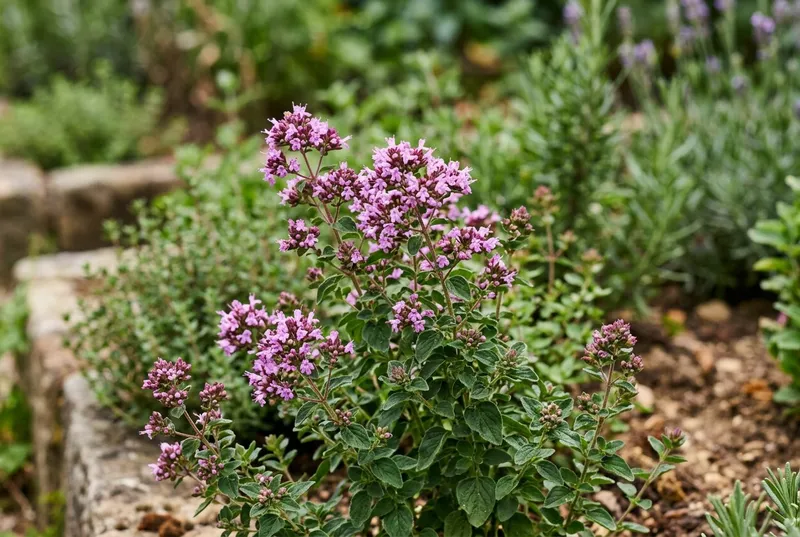
Wild marjoram is a hardy perennial herb native to the UK, producing warm, peppery leaves essential to Italian and Greek cooking. Dense clusters of small pink-purple flowers appear from July to September, attracting bees and butterflies in large numbers. It grows wild on chalky grasslands and dry banks across southern England. The flavour intensifies in hot, dry conditions, making it one of the few herbs that tastes better dried than fresh.
How to grow oregano
Plant in a sunny position with well-drained, preferably poor soil. Oregano produces the most intensely flavoured leaves when grown in lean, dry conditions in full sun. Avoid rich soil and heavy feeding — this produces lush but flavourless foliage. Water sparingly once established. In containers, use gritty, loam-based compost and do not overwater. Harvest leaves regularly throughout the growing season by cutting stems back to a leaf pair. For drying, harvest just as flower buds begin to open — this is when essential oil levels peak. Hang bunches upside down in a warm, dry place. Divide established clumps every three to four years in spring to maintain vigour. Oregano self-seeds freely in favourable conditions. Golden oregano (O. vulgare 'Aureum') provides bright yellow foliage but needs some shade to prevent leaf scorch.
Pruning
Cut the whole plant back to near ground level in early spring before new growth starts. This prevents legginess and encourages a fresh flush of aromatic leaves. Trim lightly after flowering to keep plants compact.
Propagation
- Division in spring
- Seed (sow indoors March-April)
- Semi-ripe cuttings in summer
- Self-seeding
Common problems
- Aphids
- Spider mites in dry conditions
- Root rot in wet soil
- Leafhoppers
Good companions
Related guides
How to Grow Herbs in the UK
Complete guide to growing herbs in UK gardens. Covers the best herbs, growing from seed, container growing, harvesting, and preserving herbs year-round.
How to Create a Herb Garden in the UK
Plan and build a herb garden that suits your space and budget. Covers raised beds, containers, formal designs, and the best herbs for every UK position.
How to Dry and Store Herbs at Home
Practical guide to drying and storing herbs from your garden. Covers air drying, oven drying, freezing, and making herb salts, oils, and vinegars.