Thyme
Thymus vulgaris
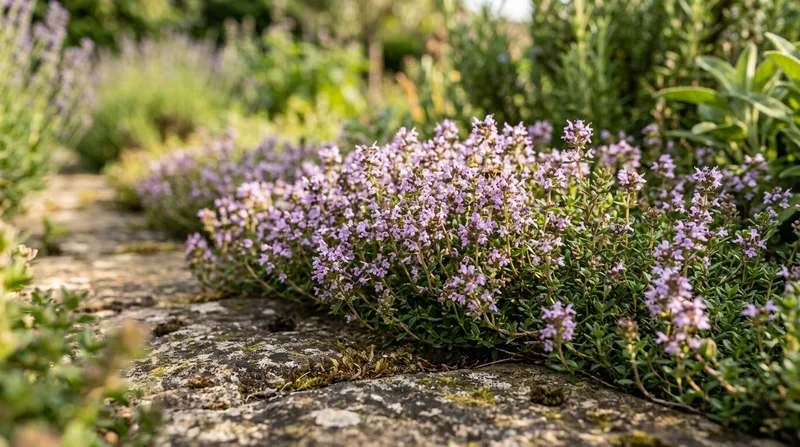
Common thyme is a compact, woody evergreen subshrub producing intensely aromatic leaves used in stocks, stews, stuffings, and bouquet garni. Tiny lilac-pink flowers smother the plant from May to July, attracting large numbers of bees and butterflies. Native to the western Mediterranean, it is fully hardy in the UK and thrives in hot, dry conditions. Excellent for edging paths, filling gaps in paving, and planting in gravel gardens where the scent is released underfoot.
How to grow thyme
Plant in a sunny position with very well-drained, even poor soil. Thyme dislikes rich, moist conditions — lean soil produces the most aromatic leaves. A south-facing raised bed or gravel garden is ideal. Space plants 20-30 cm apart. Water only during prolonged drought. Do not feed or mulch. In containers, use a gritty, loam-based compost mixed with extra perlite for drainage. Harvest sprigs regularly throughout the growing season — this keeps plants compact and encourages fresh growth. Thyme is at its most flavourful just before flowering. Pick in the morning once the dew has dried for the strongest essential oil content. Plants become leggy and woody after three to four years, so take cuttings and replace them regularly.
Pruning
Cut back hard after flowering in late summer, removing about one third of the growth but never cutting into bare, woody stems. This prevents the plant from becoming leggy. Lightly trim in spring to tidy up any winter damage.
Propagation
- Semi-ripe cuttings in summer
- Division in spring
- Seed (sow indoors March-April)
- Layering
Common problems
- Root rot in wet soil
- Leggy growth in shade
- Fungal die-back in damp winters
Good companions
Related guides
How to Grow Thyme in the UK
Grow thyme in UK gardens with this practical guide covering 12 varieties, propagation from cuttings, pruning tips and a month-by-month care calendar.
How to Grow Herbs in the UK
Complete guide to growing herbs in UK gardens. Covers the best herbs, growing from seed, container growing, harvesting, and preserving herbs year-round.
How to Create a Herb Garden in the UK
Plan and build a herb garden that suits your space and budget. Covers raised beds, containers, formal designs, and the best herbs for every UK position.