Ranunculus
Ranunculus asiaticus
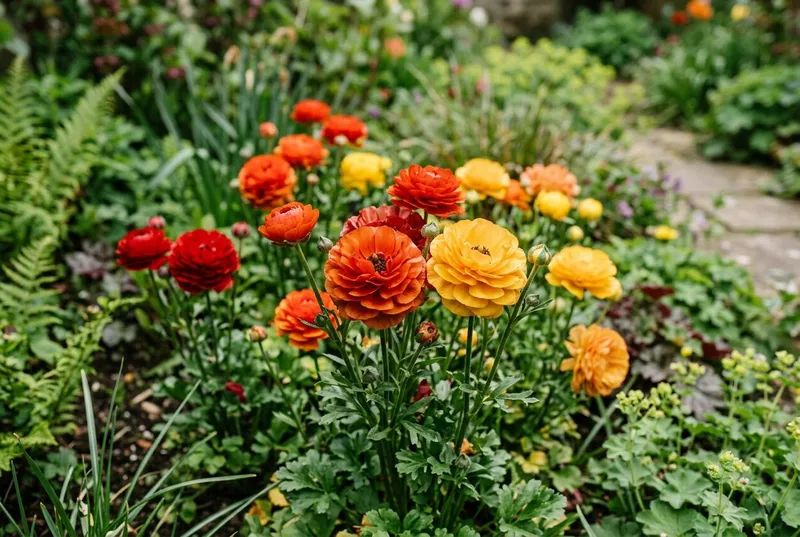
Persian buttercups produce exquisite, multi-petalled flowers resembling tiny roses or peonies, in vivid shades of red, orange, yellow, pink, and white. Each tuber sends up multiple wiry stems from April to June, with blooms lasting well in the vase. Native to the eastern Mediterranean, they are half-hardy in the UK and perform best in mild, sheltered gardens or cool greenhouses. Popular with florists for their layered, papery petals.
How to grow ranunculus
Soak the claw-like tubers in tepid water for three to four hours before planting. Plant with the claws pointing downwards, 5 cm deep and 10-15 cm apart, in fertile, well-drained soil. In mild areas of southern England, plant outdoors in October for spring flowers. In colder regions, start tubers in pots under glass in February and plant out after the last frost. Choose a sunny, sheltered position. Water moderately — overwatering causes rot. Feed fortnightly with a high-potash liquid fertiliser once flower buds appear. Deadhead regularly to prolong flowering. After the foliage dies back in summer, lift tubers and store in a cool, dry place over winter. In very mild coastal gardens, tubers can be left in the ground with a thick mulch for protection.
Pruning
No pruning required. Remove spent flower stems to encourage further blooms. Let foliage die back naturally before lifting tubers.
Propagation
- Division of tuber clumps in autumn
- Seed (sow in autumn under glass, slow to establish)
Common problems
- Tuber rot in wet conditions
- Powdery mildew
- Aphids
- Slugs on young shoots
Good companions
Related guides
How to Grow Ranunculus in the UK
How to grow ranunculus in the UK. Plant corms in autumn or spring, soak 4 hours before planting, and enjoy April-June blooms with a vase life of 7-10 days.
Flower Planting Calendar: Month by Month
Month-by-month flower planting calendar for UK gardens. Covers sowing times for annuals, perennials, biennials, and bulbs across all regions.