Rosemary
Salvia rosmarinus
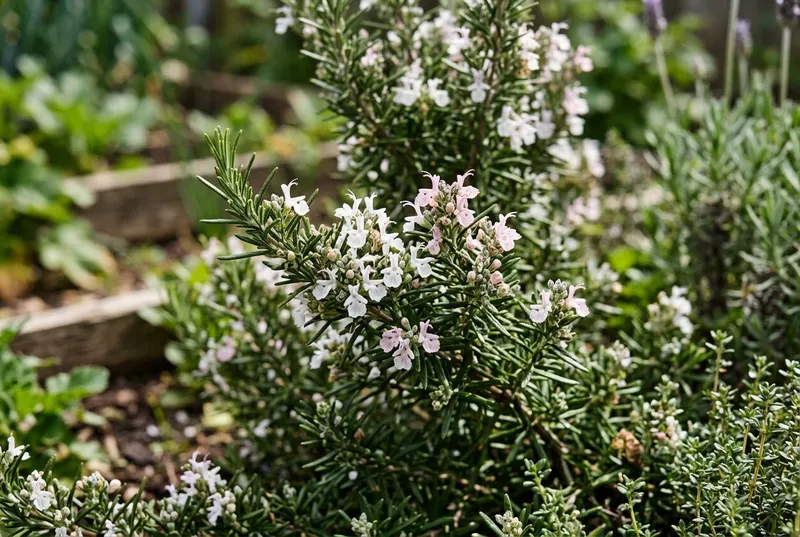
Rosemary is an evergreen Mediterranean shrub with aromatic, needle-like leaves used extensively in British cooking, particularly with roast lamb, chicken, and potatoes. Small blue, pink, or white flowers appear from March to May, providing valuable early nectar for bees. Fully hardy in most of the UK, it thrives in poor, well-drained soil and full sun. Mature plants form handsome bushes reaching up to 1.5 metres. The prostrate form makes excellent ground cover.
How to grow rosemary
Plant in a sunny, sheltered spot with well-drained soil. Rosemary thrives on neglect and resents rich, fertile ground or waterlogging. A south-facing wall provides the warmth it craves. Do not improve the soil with compost — poor soil produces more aromatic foliage. Water only during the first summer after planting, then leave it alone. Established plants are very drought-tolerant. Do not feed — excess nitrogen reduces the essential oil content. In exposed or northern gardens, grow in a large terracotta pot with gritty, loam-based compost and provide winter protection by moving against a house wall. Rosemary makes an attractive informal hedge if plants are spaced 45-60 cm apart. Harvest sprigs year-round, cutting from the current season's growth.
Pruning
Prune lightly after flowering in late spring. Cut back new growth by up to one third to keep the plant compact and bushy. Never cut into old, bare wood — rosemary rarely regenerates from hard pruning. Replace leggy plants every 5-7 years.
Propagation
- Semi-ripe cuttings in late summer
- Layering in autumn
Common problems
- Root rot in wet soil
- Rosemary beetle
- Die-back in severe winters
- Leafhoppers
Good companions
Related guides
How to Grow Rosemary in the UK
Rosemary thrives on neglect in UK gardens. Covers best varieties, propagation from cuttings, pruning, and the common mistake that kills most plants.
How to Grow Herbs in the UK
Complete guide to growing herbs in UK gardens. Covers the best herbs, growing from seed, container growing, harvesting, and preserving herbs year-round.
How to Create a Herb Garden in the UK
Plan and build a herb garden that suits your space and budget. Covers raised beds, containers, formal designs, and the best herbs for every UK position.