Sage
Salvia officinalis
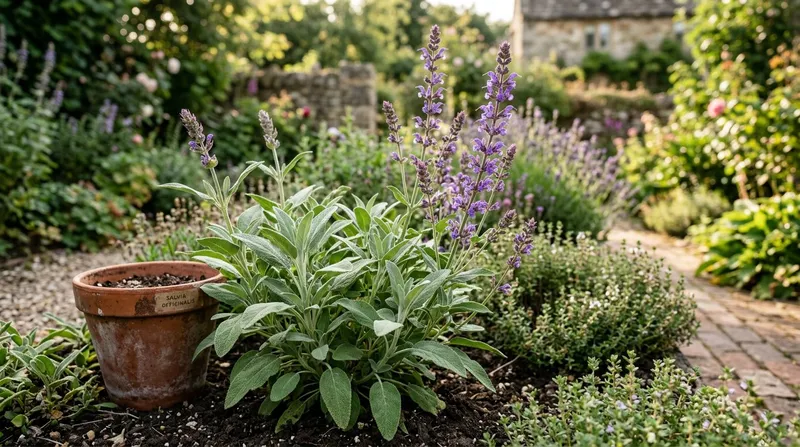
Common sage is a hardy evergreen subshrub with velvety, grey-green aromatic leaves used in stuffings, sausages, and butter sauces. Spikes of violet-blue flowers appear from June to July, providing a rich nectar source for bees. Native to the Mediterranean, it is fully hardy in most UK gardens and thrives in hot, dry positions. Purple, golden, and tricolour cultivars are available, adding year-round foliage interest to herb gardens and borders.
How to grow sage
Plant in a sunny, sheltered position with well-drained, even poor soil. Sage thrives on neglect and produces more aromatic leaves in lean conditions. Avoid rich, moist soil — this encourages soft, disease-prone growth. Water sparingly once established; sage is very drought-tolerant. Do not mulch around the base, as this traps moisture and causes stem rot. In containers, use a gritty, loam-based compost. Harvest leaves throughout the year, picking young shoots for the best flavour. Sage leaves can be dried or frozen for winter use. The coloured cultivars (purple sage, golden sage) are slightly less hardy and benefit from a sheltered position and winter protection with fleece in cold regions. Replace plants every four to five years when they become woody and unproductive.
Pruning
Prune lightly in spring after the last frost, cutting back the previous year's growth by about half. Never cut into old bare wood — sage rarely regrows from it. After flowering, remove spent flower spikes. Regular light pruning keeps plants compact.
Propagation
- Semi-ripe cuttings in late summer
- Softwood cuttings in spring
- Seed (sow indoors March-April)
- Layering
Common problems
- Root rot in wet soil
- Rosemary beetle
- Powdery mildew
- Leafhoppers
- Woody, unproductive growth in old plants
Good companions
Related guides
How to Grow Sage in the UK
Grow sage in UK gardens with this expert guide covering five varieties, pruning, propagation from cuttings, pot growing, and when to replace woody plants.
How to Grow Herbs in the UK
Complete guide to growing herbs in UK gardens. Covers the best herbs, growing from seed, container growing, harvesting, and preserving herbs year-round.
How to Create a Herb Garden in the UK
Plan and build a herb garden that suits your space and budget. Covers raised beds, containers, formal designs, and the best herbs for every UK position.