Verbena
Verbena bonariensis
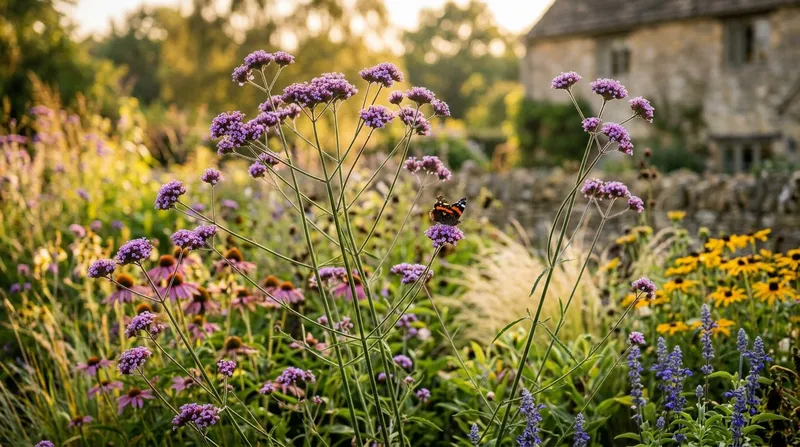
A tall, airy perennial producing clusters of tiny purple flowers on slender, wiry stems from July until the first frosts. Verbena bonariensis has transformed UK garden design since the 1990s, offering height without bulk and a transparent, see-through quality that works beautifully woven through lower planting. It self-seeds freely and is one of the best butterfly-attracting plants available.
How to grow verbena
Plant in late spring after the last frost risk has passed, in full sun with well-drained soil. Verbena bonariensis is technically half-hardy and can be killed by prolonged freezing, but self-seeds so prolifically in UK gardens that it behaves as a permanent fixture. Leave seedlings undisturbed where they germinate — they develop deep taproots that dislike transplanting. Space plants 30 cm apart at the front or middle of borders, as the see-through stems allow views past them. Water sparingly once established. In colder regions of the UK, mulch the crown with bark in late autumn and leave old stems standing through winter to protect the base from frost.
Pruning
Leave spent flower heads standing through winter for seed dispersal and frost interest. Cut all old stems back to ground level in mid-March once new growth is visible at the base. Thin self-sown seedlings in spring, keeping only those in positions where you want them.
Propagation
- Self-seeding freely
- Seed sown under cover in March
- Basal cuttings in spring
Common problems
- Root death in cold, wet winters
- Powdery mildew in dry summers
- Excessive self-seeding in light soils
Good companions
Related guides
Best Plants for Butterflies in the UK
Top nectar and caterpillar food plants for UK butterflies. Covers 59 species, seasonal planting, host plants, and garden design for butterflies.
Best Bee-Friendly Plants for UK Gardens
Attract bees and pollinators with plants that thrive in British conditions. Covers spring, summer, and autumn flowering for year-round forage.
Drought-Tolerant Plants for UK Gardens
Best drought-tolerant plants for UK gardens. Covers perennials, shrubs, grasses, ground cover, and Mediterranean species that thrive without watering.