Yew
Taxus baccata
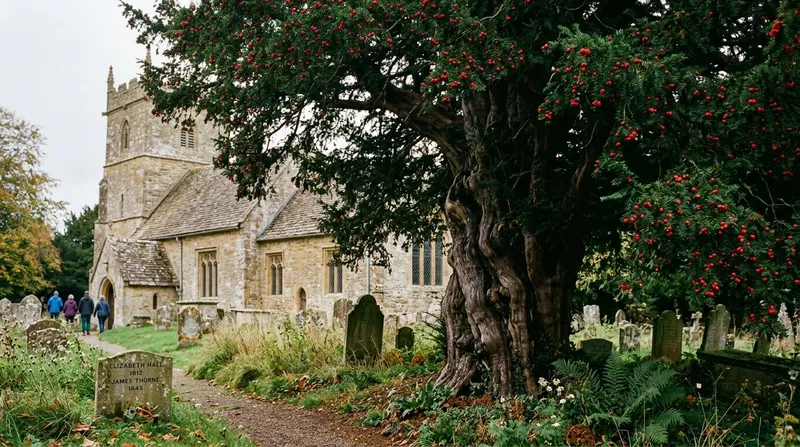
Yew is a long-lived native evergreen conifer that has grown in Britain for thousands of years. It produces dense, dark green foliage that makes the finest formal hedging and topiary in the UK. Despite its reputation as slow-growing, yew puts on 20-30 cm per year in good conditions. All parts are toxic to livestock and humans, but the red arils provide essential winter food for birds.
How to grow yew
Plant container-grown yew at any time, or bare-root plants from October to March. Yew thrives in almost any soil except waterlogged ground, and grows equally well in sun, partial shade, or full shade. For hedging, plant 60 cm apart. Water regularly during the first two years and mulch with compost annually. Yew is surprisingly drought-tolerant once established. It is one of very few conifers that regenerates from old wood, making it ideal for renovation pruning. All parts (except the fleshy red aril) are poisonous, so avoid planting where livestock graze.
Pruning
Clip hedges and topiary twice a year, in June and late August, for a dense, crisp finish. Yew tolerates hard pruning and can be cut back into old wood to renovate overgrown hedges. Prune specimen trees lightly in late summer to maintain shape. Always wear gloves when handling clippings.
Propagation
- Semi-ripe cuttings
- Seed
Common problems
- Phytophthora root rot
- Scale insects
- Vine weevil
- Toxicity to animals
Good companions
Related guides
Hedge Planting Guide for the UK
Step-by-step UK hedge planting guide covering species selection, bare-root vs container plants, spacing, planting method, first-year care, and trimming.
Best Trees for Privacy in UK Gardens
Top evergreen and deciduous trees for garden privacy in the UK. Covers screening species, planting distances, hedge law, and pleaching techniques.
Best Evergreen Shrubs for UK Gardens
Ten best evergreen shrubs for year-round interest in UK gardens. Covers Mahonia, Viburnum tinus, Sarcococca, and more with planting and care advice.