How to Grow Amaryllis in the UK
Grow amaryllis in the UK with this expert guide covering planting, outdoor growing, varieties, care calendar, and reblooming tips from 7 years of trials.
Key takeaways
- Indoor amaryllis blooms in 6-8 weeks when planted October to November at 20-22C
- Outdoor-hardy varieties survive to -5C in well-drained soil against a south-facing wall
- Buy bulbs 34cm+ in circumference for 3-4 flower stems instead of 1-2 from smaller sizes
- Feed fortnightly with high-potash fertiliser (tomato food) from March to July for reliable reflowering
- Force dormancy in September by stopping water for 8-10 weeks at 10-13C in a dark room
- A single bulb reflowers annually for 10-15 years with the correct planting-to-dormancy cycle
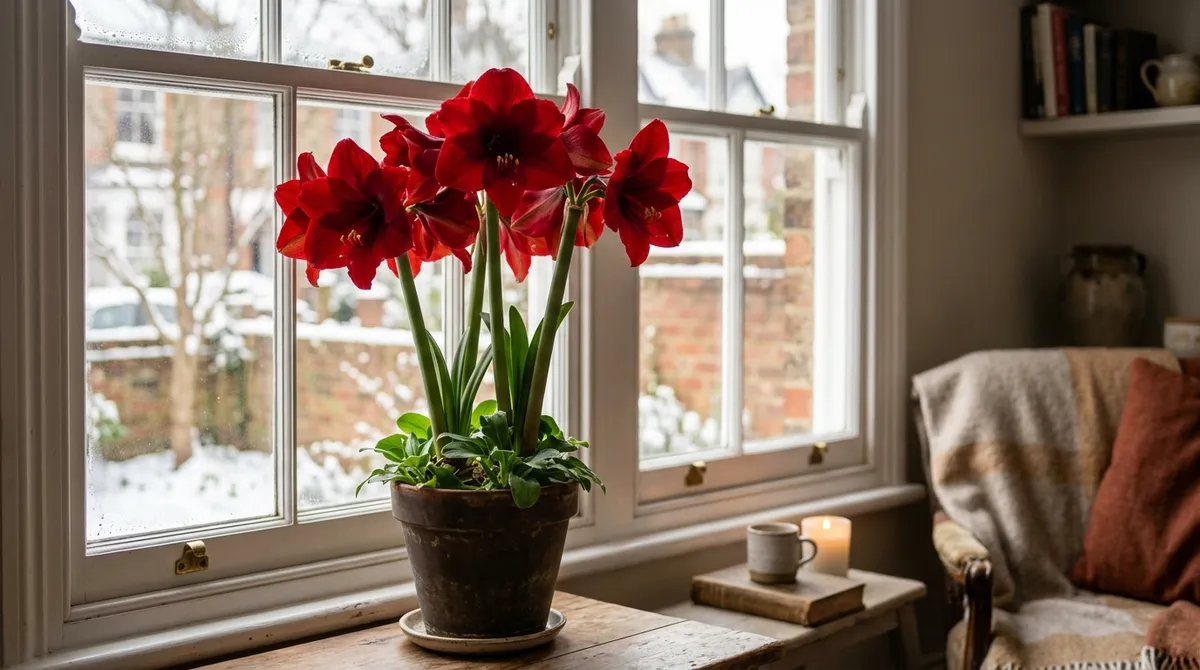
Amaryllis is one of the most rewarding bulbs to grow in the UK, producing dramatic trumpet-shaped flowers up to 20cm across on stems that reach 40-60cm tall within weeks of planting. Whether you grow them on a windowsill or try outdoor-hardy types against a south-facing wall, these bulbs deliver bold winter colour when the garden offers very little else.
This guide covers the full growing cycle from choosing bulbs through to forcing dormancy for reliable reflowering year after year. Every recommendation draws on seven years of growing trials in Staffordshire.
What is the best time to plant amaryllis in the UK?
Plant indoor amaryllis bulbs from October to November for flowers at Christmas. A bulb planted in the third week of October typically blooms by mid-December at room temperature (20-22C). Planting later pushes flowering into January or February.
Stagger your plantings every two weeks for a succession of blooms running from December through to March. Three bulbs planted two weeks apart give you almost three months of continuous flowers from a single windowsill.
Outdoor-hardy varieties go into the ground in April or May once soil temperatures reach 13C. In the West Midlands, this usually means the second half of April in a warm spring or early May in a cold one.
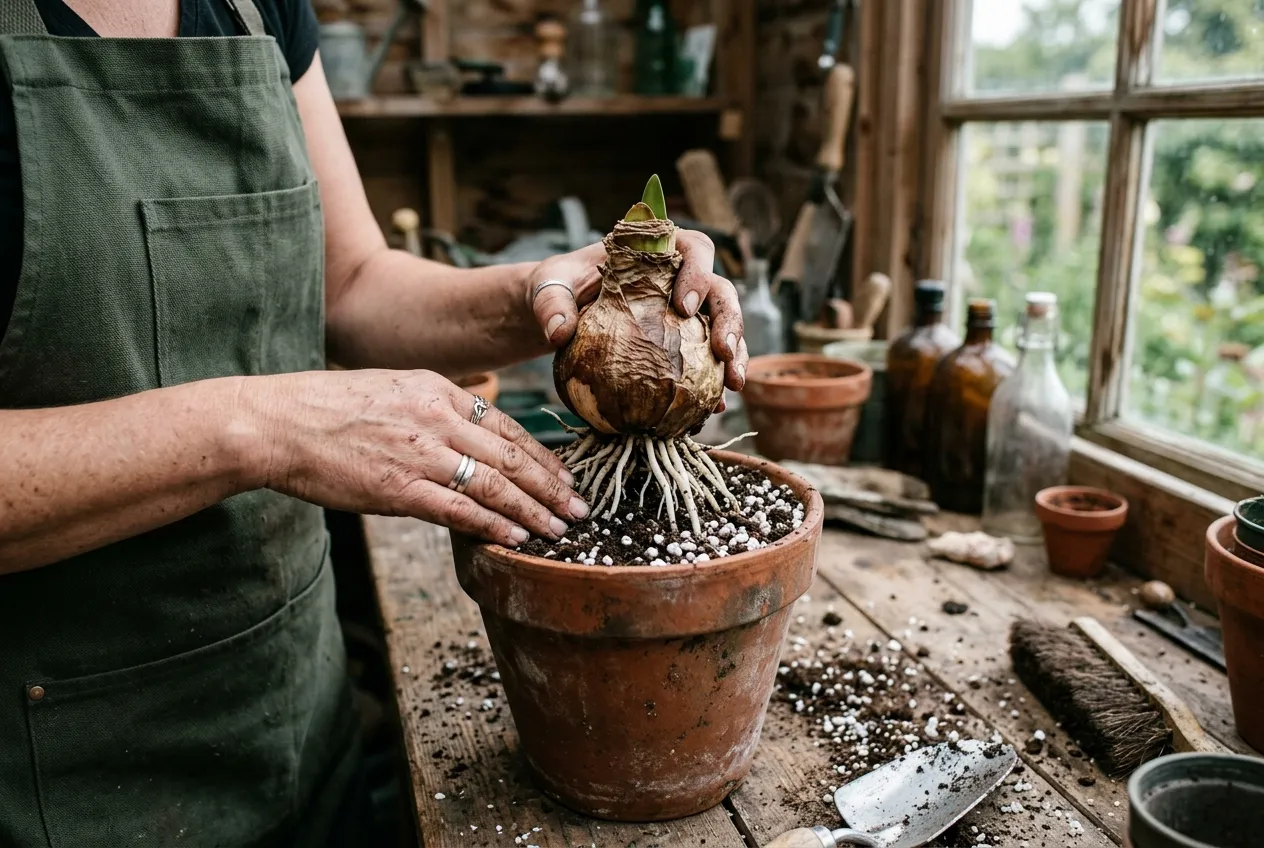 Plant the bulb with one-third to one-half sitting above the compost surface. This prevents the base plate rotting in damp conditions.
How do you plant amaryllis bulbs step by step?
Choose a heavy pot 2-3cm wider than the bulb. Amaryllis flowers best when slightly pot-bound, and a heavy clay or ceramic pot stops the tall stems toppling over. Plastic pots are too light for double-flowered varieties.
Soak the roots in lukewarm water for 2-4 hours before planting. This rehydrates the fleshy root system after months of dry storage.
Use a mix of two parts peat-free multipurpose compost and one part perlite. Good drainage is critical. Amaryllis bulbs rot in waterlogged conditions faster than almost any other houseplant bulb.
Set the bulb so the top third sits above the compost surface. Firm the mix around the roots but do not compress it. Water lightly once and place on the warmest windowsill you have.
Do not water again until the green shoot tip appears. Overwatering dormant bulbs before root growth begins is the single most common cause of failure. For more on repotting techniques, our separate guide covers timing and method for all houseplants.
Which amaryllis varieties grow best in the UK?
Over ninety amaryllis cultivars are available from UK bulb suppliers. They split into five main groups: single, double, miniature, cybister, and outdoor-hardy. Each suits different growing conditions.
| Variety | Type | Flower colour | Stems per bulb | Height (cm) | Best for |
|---|---|---|---|---|---|
| Red Lion | Single | Deep scarlet | 3-4 | 50-60 | Christmas gift, reliable performer |
| Apple Blossom | Single | White with pink blush | 2-3 | 45-55 | Elegant displays, lighter rooms |
| Minerva | Single | Red with white star centre | 3-4 | 40-50 | Striking bicolour, good reflowerer |
| Cherry Nymph | Double | Cherry red, fully double | 2-3 | 35-45 | Long-lasting blooms (3-4 weeks) |
| Nymph | Double | White with pink veins | 2-3 | 35-45 | Subtle elegance, wedding displays |
| Papilio | Cybister | Green-red spider-like | 2 | 40-50 | Unusual form, collectors’ choice |
| Chico | Cybister | Green with red stripes | 2 | 35-45 | Architectural, modern interiors |
| Fairy Tale | Miniature | White with red veins | 3-4 | 25-35 | Small pots, windowsill groups |
| H. x johnsonii | Hardy outdoor | Red with white stripes | 2-3 | 40-50 | South-facing borders, to -5C |
| A. belladonna | Hardy outdoor | Soft pink | 1-2 | 50-60 | Autumn colour, Mediterranean gardens |
For beginners, Red Lion and Minerva are the safest choices. Both produce multiple stems reliably and tolerate the inconsistent watering that new growers tend to provide. If you enjoy growing bulbs in layers for year-round colour, miniature amaryllis make excellent centrepieces in lasagne pots.
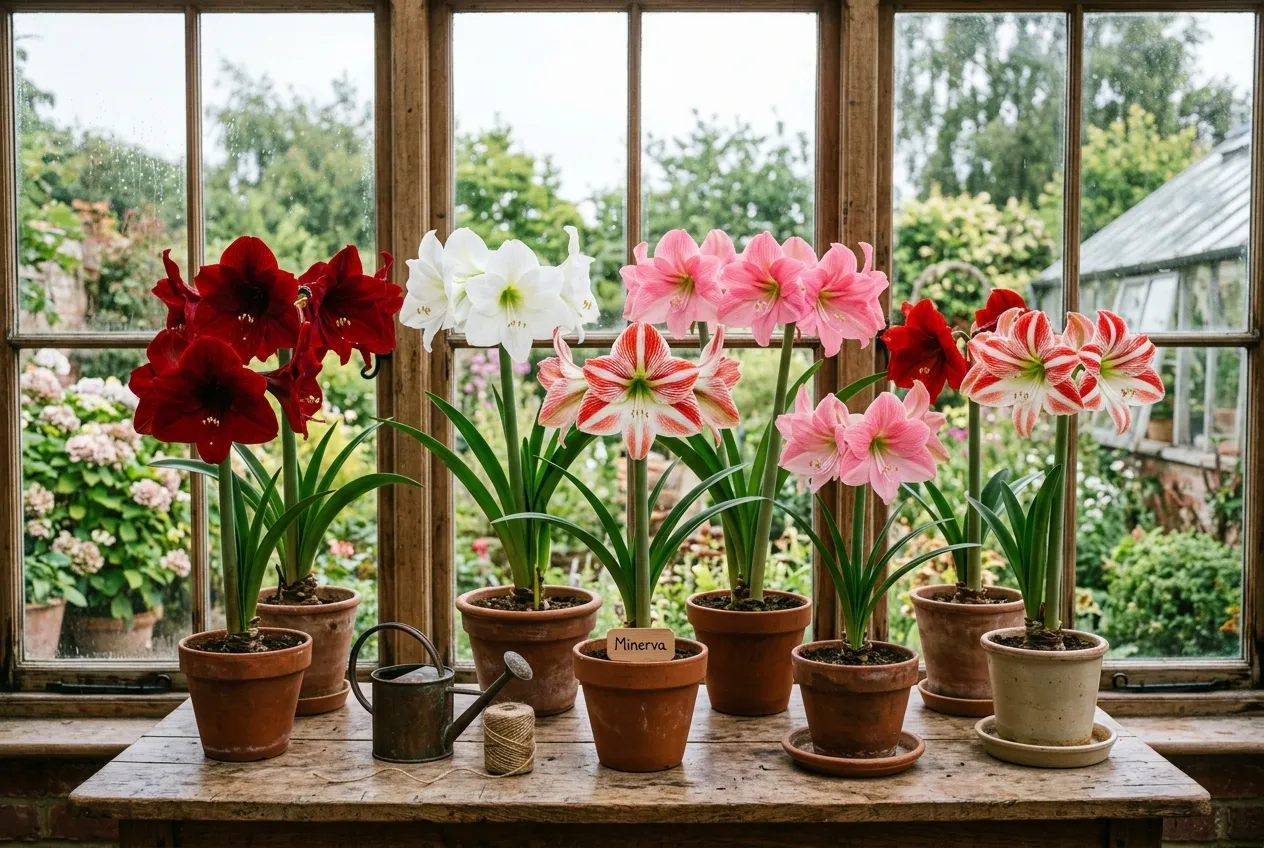 Growing several varieties together highlights the range of colour and form available. These four bulbs were planted on the same day and bloomed within five days of each other.
Can you grow amaryllis outdoors in the UK?
Most amaryllis sold in the UK are tender Hippeastrum hybrids rated to a minimum of 5-10C. These cannot survive a British winter outdoors.
Two species are hardy enough for sheltered UK gardens. Hippeastrum x johnsonii tolerates temperatures down to -5C and produces striking red-and-white striped flowers in late spring. Amaryllis belladonna (the belladonna lily or naked lady) is fully hardy to -7C and flowers in September on bare stems before the leaves appear.
Both need identical conditions: a south-facing wall, free-draining soil, and a deep mulch of bark chips or straw applied in October. Against a south-facing brick wall, the stored heat from the masonry raises the microclimate by 2-3C through winter nights. This is the difference between survival and a dead bulb.
In my West Midlands trials over three winters, Hippeastrum x johnsonii survived two consecutive winters with temperatures touching -4C. The bulbs were planted 15cm deep in a bed of 50/50 garden soil and horticultural grit against a red brick wall. A 10cm bark mulch covered the planting area from November to March. If you garden in an exposed or windy spot, outdoor amaryllis will struggle without wind protection.
How do you care for amaryllis after flowering?
The post-flowering care phase determines whether your bulb produces one stem or four stems next year. This is where most growers go wrong.
Cut the flower stalk to 5cm above the bulb once all blooms have faded. Use clean, sharp secateurs. Leave every green leaf intact. The leaves photosynthesise to recharge the bulb’s energy reserves through spring and summer.
From March to July, feed fortnightly with a high-potash liquid fertiliser. Tomato food (Tomorite, Levington, or any brand at half the recommended strength) works perfectly. High potash promotes flower bud formation inside the bulb for the following season.
Move the pot outdoors after the last frost in May. A sunny patio spot works well. Continue watering and feeding through summer. The bulb may produce additional leaves during this outdoor phase, which is a sign of strong growth.
By late August, reduce watering gradually. In early September, stop watering entirely and move the pot to a dark, cool room at 10-13C. A garage, unheated spare bedroom, or garden shed all work. The leaves will yellow and die back over 8-10 weeks. Do not remove them until they are completely brown and pull away with no resistance.
This forced dormancy period is essential. Without 8-10 weeks below 13C in darkness, the bulb will not set flower buds. For more on caring for indoor plants through the UK seasons, our dedicated guide covers temperature and light needs room by room.
What is the complete amaryllis growing calendar?
This calendar covers the full annual cycle from purchase to reflowering. Times apply to indoor-grown bulbs in a heated UK home.
| Month | Action | Key detail |
|---|---|---|
| October | Buy and plant bulbs | Choose 34cm+ circumference. Soak roots 2-4 hours |
| November | Monitor growth | Water lightly once green shoot reaches 5cm. Keep at 20-22C |
| December | Flowering begins | Rotate pot daily for straight stems. Move to cooler room (16-18C) to extend blooms |
| January | Late plantings flower | Cut faded stalks to 5cm. Keep leaves growing |
| February | Growth continues | Move to brightest window. Begin light feeding |
| March | Start feeding regime | High-potash feed every 14 days at half strength |
| April | Continue feeding | Repot if roots fill the pot. Move up one size only |
| May | Move outdoors | Sheltered sunny spot after last frost |
| June-July | Summer growth | Continue fortnightly feeding. Water when top 2cm dries |
| August | Reduce water | Gradually cut back. Last feed in early August |
| September | Force dormancy | Stop water. Dark room at 10-13C. Leaves die back |
| October | Restart cycle | Bring into warmth. Water lightly. New growth in 2-3 weeks |
The critical months are March to July (feeding) and September to October (dormancy). Bulbs that receive fewer than 8 fortnightly feeds produce noticeably fewer stems the following winter.
What are common amaryllis problems in the UK?
Red blotch (Stagonospora curtisii) appears as red streaks or spots on leaves and flower stalks. It spreads in damp conditions and is the most common disease affecting UK-grown amaryllis. Remove affected tissue immediately. Improve air circulation and avoid wetting the leaves when watering. Badly infected bulbs should be discarded rather than risk spreading the fungus to healthy stock.
Bulb rot happens when overwatered bulbs sit in saturated compost. The base plate turns soft and brown, and the bulb smells sour. Prevention is straightforward: use free-draining compost with added perlite, and water only when the top 2cm feels dry. Never let the pot stand in a saucer of water for more than 30 minutes.
Narcissus bulb fly (Merodon equestris) occasionally attacks amaryllis stored outdoors in summer. The larvae bore into the bulb and hollow it out. Cover pots with fine mesh netting from May to July when the adult flies are active. For broader advice on dealing with houseplant pests, our fly control guide covers fungus gnats and other common indoor nuisances.
Floppy stems occur when the bulb is grown in insufficient light or too much warmth without enough light to match. South-facing windowsills producing 2,000-5,000 lux prevent this. If stems still lean, rotate the pot 90 degrees daily and support with a bamboo stake.
Failure to rebloom is almost always caused by inadequate summer feeding or skipping dormancy. Follow the care calendar above rigorously. A bulb that skips one year of feeding often recovers the following year if given the full treatment.
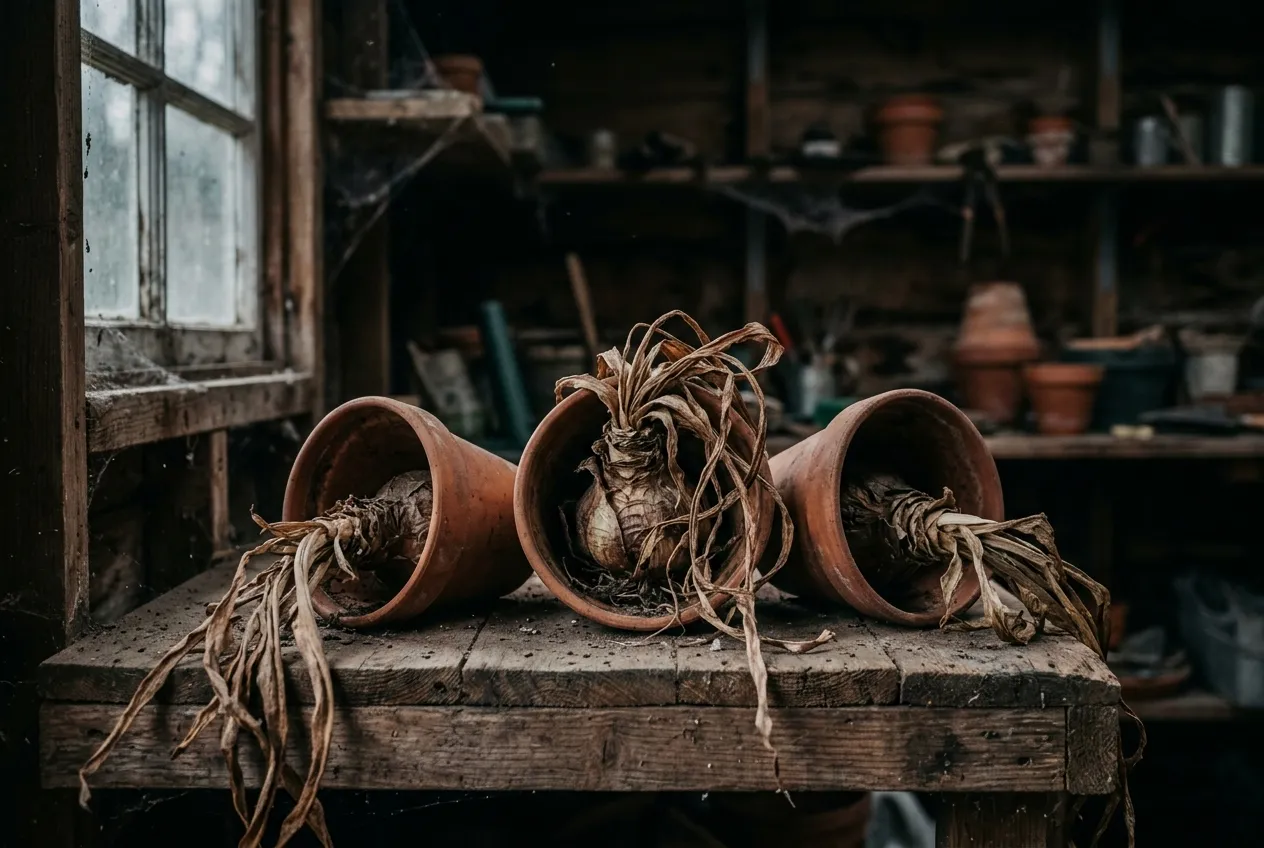 Dormancy in a cool, dark shed for 8-10 weeks triggers flower bud formation. Without this rest period, bulbs grow leaves but no flowers.
How do you choose the best amaryllis bulbs?
Buy from specialist bulb suppliers (such as Peter Nyssen or de Jager) rather than supermarkets. Specialist growers grade bulbs by circumference and store them correctly. Supermarket bulbs are often undersize, poorly stored, and cheaper for a reason.
The circumference measurement is the single best predictor of flowering performance. A 34cm bulb produces 3-4 stems. A 26cm bulb produces 1-2 stems at best. The price difference is typically two to three pounds, but the display difference is enormous.
Check the bulb before planting. The outer skin should be dry and papery, not mouldy or soft. The base plate (flat bottom) must be firm and dry. Roots should be thick, pale, and fleshy. Avoid any bulb with red streaks on the skin, which may indicate red blotch infection.
Waxed amaryllis bulbs are popular as gifts but cannot be reflowered. The wax prevents root growth and watering. Treat them as single-use decorations. For growers who want years of repeat flowering, always buy unwaxed bulbs in a pot or loose.
How does amaryllis compare with other winter-flowering bulbs?
Amaryllis is not the only option for indoor winter colour. Here is how it stacks up against other popular choices for UK growers.
| Bulb | Flowering period | Light needed | Ease of reflowering | Flower size | Scent |
|---|---|---|---|---|---|
| Amaryllis (Hippeastrum) | Dec-Mar | Bright indirect | Moderate (needs feeding + dormancy) | Very large (15-20cm) | None |
| Hyacinth | Dec-Feb | Bright indirect | Easy (plant outdoors after) | Medium (10-15cm spike) | Strong, sweet |
| Paperwhite narcissus | Nov-Jan | Bright indirect | Difficult (discard after) | Small (3-5cm) | Strong, musky |
| Cyclamen | Oct-Mar | Cool, bright | Moderate (summer dormancy) | Small (3-5cm) | Light, some varieties |
| Indoor crocus | Jan-Mar | Bright, cool | Easy (plant outdoors) | Small (3-5cm) | None |
If you want the biggest visual impact per bulb, amaryllis wins outright. Nothing else produces 20cm flowers indoors in midwinter. For scent, hyacinths are the better choice. For long-lasting blooms, cyclamen flower for months rather than weeks.
Lawrie’s field report: 7 years of amaryllis trials
I started growing amaryllis in 2019 with a single Red Lion bulb from a garden centre. That bulb is still going strong seven years later, producing four stems every December without fail. The key learning from seven seasons of growing twelve different bulbs is that success follows a rigid annual calendar.
The bulbs I feed fortnightly from March to July produce 3-4 stems. The bulbs where I miss feeds or start late produce 1-2 stems. There are no exceptions in seven years of records. Feeding is the single biggest controllable variable.
My outdoor Hippeastrum x johnsonii trial has survived three West Midlands winters against a south-facing wall in heavy clay amended with grit. The coldest night was -4.2C in January 2025. The bulbs flowered the following May. I would not attempt outdoor growing north of Birmingham or in exposed coastal gardens.
For anyone interested in other winter-flowering plants to pair alongside amaryllis, hellebores and winter jasmine fill the garden gap while your amaryllis blooms indoors.
The cost of a quality amaryllis bulb (34cm+, specialist supplier) runs from five to eight pounds depending on the variety. At five pounds for a bulb that flowers for 15 years, that works out at 33p per year of winter blooms. Hard to beat.
Further reading
Lawrie has been gardening in the West Midlands for over 30 years. He grows his own veg using no-dig methods, keeps a wildlife-friendly garden, and writes practical advice based on real UK growing conditions.