Deutzia: The Forgotten Flowering Shrub
Grow deutzia in UK gardens with this expert guide. Covers best species, pruning after flowering, compact varieties for small gardens, and propagation tips.
Key takeaways
- Deutzia flowers in June with masses of white or pink blooms, filling the gap between spring and midsummer
- D. gracilis is a compact 60cm shrub ideal for small gardens, path edges, and low informal hedging
- All deutzia species are pest-free and disease-free in UK conditions — no spraying or treatment needed
- Prune immediately after flowering in July, cutting flowered stems back to strong young shoots
- Hardy to -20C and tolerant of clay, chalk, and urban pollution across all UK regions
- 'Strawberry Fields' produces the best pink flowers of any deutzia, reaching 1.5m tall
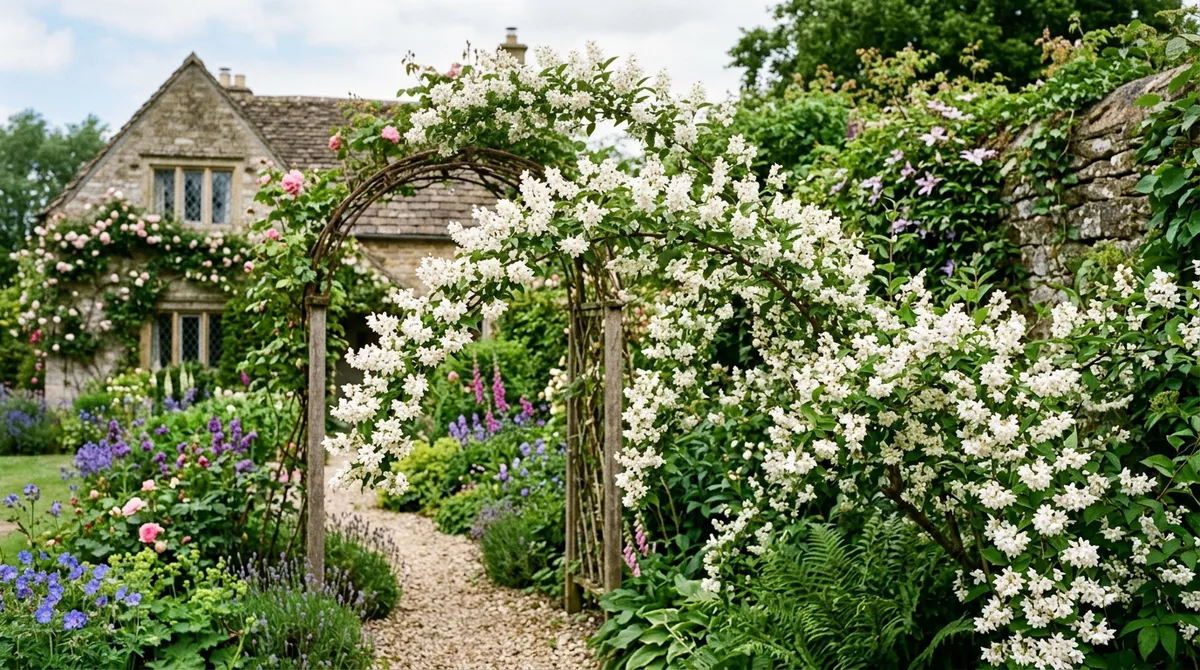
Deutzia is one of the most overlooked flowering shrubs in British gardens. Walk through any garden centre in spring and you will see shelves of hydrangeas, forsythia, and buddleja. Deutzia is rarely stocked, rarely recommended, and almost never discussed in mainstream gardening media. This is a mistake.
The shrub produces masses of white or pink flowers in June — a period when few other deciduous shrubs are in bloom. It has zero pest problems and zero disease problems in UK conditions. It grows on clay, chalk, sand, and everything in between. It needs no feeding, no spraying, and no winter protection. The only maintenance is a single prune after flowering.
Which deutzia species are best for UK gardens?
Over 60 deutzia species exist in the wild, mostly native to East Asia. Around 8-10 are commonly grown in British gardens. The differences between them come down to size, flower colour, and vigour.
Deutzia gracilis is the compact species that deserves the widest planting. White flowers smother the 60cm plant in late May and June. The arching habit is graceful and the scale suits small gardens, path edges, and the front of mixed borders. It makes an excellent low informal hedge at 60-80cm when planted at 40cm spacings. This is the deutzia to start with if you have never grown one. For other shrubs that work at the front of a border, see our guide to the best flowering shrubs for UK gardens.
Deutzia x hybrida ‘Strawberry Fields’ produces the best pink flowers in the genus. Deep pink buds open to rose-pink flowers in large clusters during June. Height reaches 1.5m. The flower colour is strong enough to stand out in a mixed border at 20 metres. This is the variety for anyone who wants colour impact.
Deutzia scabra is the largest species, reaching 2.5-3m tall and wide. White or pale pink flowers in July — later than most deutzia species. Vigorous and upright. Useful at the back of a large border or as a specimen shrub in a larger garden. The double-flowered form ‘Plena’ has longer-lasting blooms.
Deutzia ‘Mont Rose’ carries large clusters of rose-pink flowers on arching branches at 1.2m tall. It flowers in June and has a graceful, weeping habit that looks beautiful against a wall or fence.
Deutzia x rosea is a compact hybrid at 90cm with pale pink flowers in June. It bridges the gap between the small D. gracilis and the medium-sized varieties. Useful where you need something slightly taller than D. gracilis but smaller than ‘Strawberry Fields’.
Deutzia variety comparison table
| Species / Variety | Height | Flower Colour | Flowering Time | Habit | Best For |
|---|---|---|---|---|---|
| D. gracilis | 60cm | White | Late May-June | Arching, compact | Small gardens, low hedging |
| D. x hybrida ‘Strawberry Fields’ | 1.5m | Deep pink | June | Upright, bushy | Colour impact in borders |
| D. scabra | 2.5-3m | White/pale pink | July | Upright, vigorous | Back of large borders |
| D. ‘Mont Rose’ | 1.2m | Rose pink | June | Arching, graceful | Against walls and fences |
| D. x rosea | 90cm | Pale pink | June | Rounded, compact | Medium borders, mixed planting |
Where should I plant deutzia?
Deutzia is flexible on position but flowers most heavily in a spot receiving 4-5 hours of direct sun. West-facing and south-facing borders produce the best displays. East-facing positions work well in most of England and Wales.
Soil tolerance is broad. Clay, chalk, sand, and loam all suit deutzia. The shrub thrives on the heavy clay in our West Midlands trial garden without any soil improvement. It handles the chalky alkaline soils of the Chilterns and the acid sands of Surrey equally well. For more plants that thrive on difficult clay, see our clay soil planting guide.
Urban pollution causes no problems. Deutzia grows well in city gardens, along busy roads, and in industrial areas. This tolerance, combined with its compact size and pest-free nature, makes it one of the best shrubs for urban gardens.
Planting distance from walls and fences should be at least 60cm for compact varieties and 1m for larger species. In mixed borders, allow 1-1.5m between deutzia and neighbouring shrubs. For a D. gracilis hedge, plant at 40cm intervals.
Position deutzia where you can see it from a window or sitting area during June. The flowering period is relatively short at 3-4 weeks, so you want to enjoy every day of it.
How to plant and establish deutzia
Plant deutzia from October to March for bare-root plants, or year-round for container-grown stock. Autumn planting (October-November) gives the best establishment because roots grow through winter while the plant is dormant.
Dig a planting hole twice the width of the root ball and the same depth. Deutzia should sit at the same depth it was growing in its pot — do not bury the stem. Backfill with the excavated soil. On heavy clay, mix a handful of grit into the backfill to help initial drainage around the roots.
Water thoroughly after planting. Apply a 5cm mulch of bark or garden compost around the base, keeping it clear of the stems. Water during dry spells in the first summer. Established deutzia (after one full growing season) rarely needs watering — the root system copes with drought on all but the driest sandy soils.
Feeding is unnecessary on most soils. On very poor sandy ground, a single handful of general-purpose fertiliser in March helps. On clay and loam, deutzia extracts everything it needs from the soil without supplemental feeding.
How to prune deutzia for the best display
Deutzia flowers on the previous year’s wood — the same pruning rule as weigela, philadelphus, and other early summer shrubs. The timing must be right.
Annual pruning happens immediately after flowering, typically in late June or early July. Cut each flowered stem back to a strong young side shoot lower on the branch. This young shoot will grow through summer and autumn, forming next year’s flower buds.
Renewal pruning keeps the plant vigorous long-term. Each year, cut one-quarter of the oldest, thickest stems right down to 15cm from ground level. New shoots emerge from the base and reach flowering size within two seasons. This gradual renewal prevents the plant becoming a thicket of old, unproductive wood.
Renovation of neglected plants works well. If you inherit an overgrown deutzia that has not been pruned for years, cut one-third of the stems to ground level immediately after flowering. Repeat for the next two years. Within three seasons, the plant is completely renewed with vigorous young growth.
Never prune deutzia in spring. Spring pruning removes the flower buds that formed on last year’s growth. This is the only way to fail with deutzia — cut it at the wrong time.
How to propagate deutzia from cuttings
Deutzia roots easily from both softwood and hardwood cuttings. Both methods work without specialist equipment, and success rates exceed 75%.
Softwood cuttings in June produce the fastest results. Take 10cm cuttings of soft new growth, remove the lower leaves, dip the cut end in rooting hormone, and insert into a pot of gritty compost. Cover with a clear plastic bag to maintain humidity. Place in a bright spot out of direct sun. Roots form in 4-6 weeks. Pot on individually once rooted and grow on through summer before planting out the following autumn.
Hardwood cuttings in November are the lower-effort method. Cut 20cm lengths of pencil-thick dormant wood. Push two-thirds into a slit trench of gritty soil in a sheltered outdoor spot. Firm in and leave alone. Cuttings root over winter and produce shoots in spring. Transplant the following autumn. For more detail on both methods, see our propagation guide.
Deutzia can also be layered. Peg a low-growing branch to the ground in autumn, wound the underside slightly, and cover with soil. The branch roots within a year and can be severed from the parent plant the following autumn.
What to plant with deutzia
Deutzia fits naturally into mixed borders alongside other flowering shrubs and perennials. Its June flowering time slots neatly between spring and midsummer displays.
With late spring shrubs: Plant deutzia behind lilac or alongside mock orange. Lilac finishes in late May as deutzia starts. Mock orange overlaps with deutzia in June and carries into early July. Together, these three shrubs provide continuous flower from late April to mid-July.
With roses: The June flowering of deutzia coincides with the first flush of roses. White-flowered D. gracilis at the front of a border with shrub roses behind creates a layered display. The deutzia finishes as the roses hit full stride.
With summer perennials: Underplant deutzia with hardy geraniums, catmint, or alchemilla. These perennials flower from June onwards, masking the base of the deutzia after its flowers finish and extending the border’s interest into autumn.
As a specimen: In a small garden, a single D. gracilis or ‘Strawberry Fields’ can serve as a focal point in a lawn or at the corner of a path. The June display is dramatic enough to justify the space even when the plant is out of flower.
Why is deutzia so rarely grown?
Deutzia suffers from a marketing problem, not a horticultural one. Garden centres prioritise shrubs with name recognition — hydrangeas, roses, buddleja — and deutzia has never had a media moment. No television presenter has championed it. No garden designer has made it fashionable.
The Royal Horticultural Society lists over 20 deutzia varieties with the AGM (Award of Garden Merit), which is their highest recommendation. This means the RHS considers deutzia to have proven garden performance across the UK. Yet it remains absent from most garden centres’ main display areas.
For gardeners willing to order from specialist nurseries, deutzia is a revelation. A shrub that flowers beautifully, grows anywhere, tolerates anything, and never gets sick. It is the definition of a plant that deserves wider planting.
Frequently asked questions
When does deutzia flower in the UK?
Deutzia flowers in June in most UK gardens. The display lasts 3-4 weeks. Early varieties like D. gracilis can start in late May in southern England. Late varieties like D. scabra flower into early July. The flowers open on stems that grew the previous summer, making post-flowering pruning essential for the following year’s display.
How do I prune deutzia?
Prune deutzia immediately after flowering in late June or July. Cut flowered stems back to a strong young side shoot lower on the branch. Remove one-quarter of the oldest, thickest stems at ground level each year to encourage new growth from the base. Never prune in spring — this removes the flower buds formed on last year’s wood.
Is deutzia easy to grow?
Yes, deutzia is one of the easiest flowering shrubs for UK gardens. It tolerates clay, chalk, sand, partial shade, and urban pollution. No pests or diseases affect it in British conditions. It requires no feeding, no staking, and no winter protection. The only task is annual pruning after flowering.
Can deutzia grow in shade?
Deutzia tolerates partial shade but flowers best in 4-5 hours of direct sun. In deeper shade, flowering is reduced and growth becomes more open. A west-facing border that catches afternoon sun is ideal. For shady gardens, combine deutzia with shade-tolerant underplanting like hardy geraniums and ferns.
How big does deutzia get?
Size varies widely by species, from 60cm to 3m tall. D. gracilis stays compact at 60cm. D. x hybrida ‘Strawberry Fields’ reaches 1.5m. D. scabra is the largest at 2.5-3m. Most garden varieties reach their full size within 4-5 years. Choose the right species for your space and you avoid the need for hard pruning.
Can I take cuttings from deutzia?
Yes, deutzia roots easily from both softwood and hardwood cuttings. Take softwood cuttings of new growth in June, dip in rooting hormone, and insert into gritty compost. Hardwood cuttings taken in November root outdoors over winter. Success rates for both methods exceed 75% without specialist equipment.
Lawrie has been gardening in the West Midlands for over 30 years. He grows his own veg using no-dig methods, keeps a wildlife-friendly garden, and writes practical advice based on real UK growing conditions.