How to Grow Gypsophila in the UK
How to grow gypsophila (baby's breath) in UK gardens. Covers perennial and annual types, soil needs, cutting, drying, and the best varieties.
Key takeaways
- Perennial G. paniculata flowers June to August and reaches 90cm tall in full sun
- Annual G. elegans flowers just 8 weeks after sowing, ideal for quick cut-flower crops
- Gypsophila demands alkaline or chalky soil with sharp drainage and full sun
- Staking perennial types is essential as the cloud of stems collapses in wind and rain
- Cut stems for drying when 50% of flowers are open for the longest-lasting arrangements
- The name gypsophila means 'chalk-loving' and plants genuinely fail on acid soils
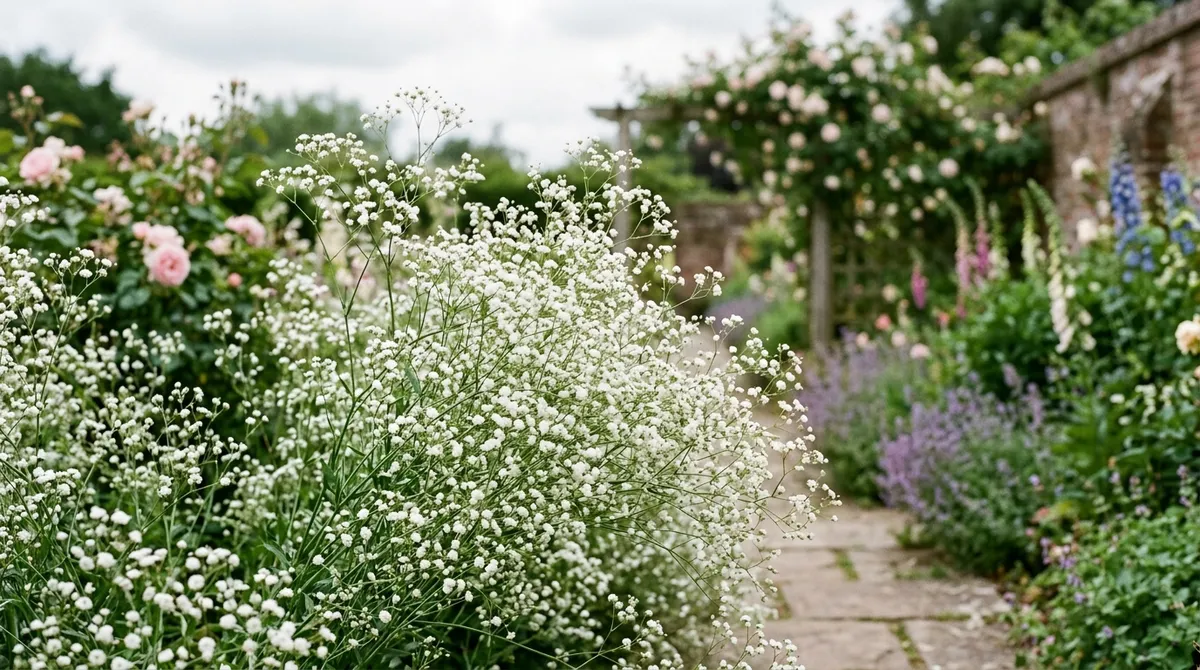
Gypsophila produces some of the most ethereal effects in any flower border. Those billowing clouds of tiny white or pink flowers seem to float above the ground, softening hard edges and filling gaps between bolder plants. It is the ultimate filler, both in the garden and in a vase.
The genus name tells you everything about what this plant needs. Gypsophila comes from the Greek gypsos (chalk) and philos (loving). These plants evolved on limestone cliffs and chalky grasslands across Europe and Central Asia. Give them alkaline soil, sharp drainage, and full sun, and they will thrive for years.
What are the main types of gypsophila?
Two species dominate UK gardens. Understanding the difference helps you choose the right one for your purpose.
Gypsophila paniculata is the perennial species. It forms a deep-rooted, long-lived plant that reaches 90cm tall and 120cm wide at maturity. From June to August, it erupts into a dense cloud of tiny flowers, each only 6mm across but produced in their thousands. Individual plants can carry over 10,000 flowers at peak bloom. It is fully hardy to -20C and thrives across all UK regions.
Gypsophila elegans is the annual species. It grows to 45cm tall and flowers just 8 weeks after sowing. This speed makes it invaluable for cut flower growers who need a quick crop. Plants flower for 4-6 weeks then set seed and die. Successive sowings every 3-4 weeks provide continuous blooms from June to October.
There are also alpine species like G. repens, which forms a low mat of pink or white flowers 15cm tall. This is the one for rockeries and wall tops. It is as tough as the larger types and equally chalk-loving.
How do I grow gypsophila from seed?
Annual gypsophila is one of the simplest flowers to grow from seed. Perennial types are slower but equally straightforward with patience.
Annual G. elegans: Sow directly outdoors from March to May once soil temperature reaches 10C. Make shallow drills 1cm deep and scatter seeds thinly. Cover lightly and water gently. Germination takes 10-14 days. Thin seedlings to 20-25cm apart. For continuous flowers, make successive sowings every 3-4 weeks through to early June.
Perennial G. paniculata: Sow seeds indoors in February or March. Use small pots filled with a free-draining seed compost mixed with extra perlite. Sow on the surface and press lightly. Seeds need light to germinate. Keep at 18-20C and expect germination in 10-21 days. Grow seedlings on in individual 9cm pots.
Plant perennial types in their final position from May onwards when the risk of late frost has passed. Space plants 90-120cm apart. They resent root disturbance once established, so choose the position carefully. The taproot system makes transplanting mature plants nearly impossible.
What soil conditions does gypsophila need?
Gypsophila is specific about soil. Get this right and the plant thrives. Get it wrong and it dies, usually in winter.
pH matters most. Gypsophila needs alkaline to neutral soil with a pH between 7.0 and 8.5. On naturally chalky soil, it grows with zero effort. On neutral soil (pH 7.0), it performs well. On acid soil below pH 6.5, it fails. Test your soil with a simple kit and add garden lime if the reading is below 7.0.
Drainage is the second critical factor. Gypsophila will not survive winter in waterlogged ground. The deep taproots of perennial types rot when sitting in cold, wet soil. On heavy clay, dig deep planting holes and backfill with grit-rich compost. Better still, grow in raised beds filled with a gritty, alkaline mix.
Fertility should be low to moderate. Rich, heavily composted soil produces excessive leafy growth and fewer flowers. Poor, stony, chalky ground actually produces the best displays. Do not add manure or garden compost to the planting area. A light dressing of bonemeal at planting time is sufficient.
Full sun is essential. Gypsophila will not flower properly in shade. Choose the sunniest, most open position in your garden. South-facing gravel gardens and the base of sun-baked walls are ideal spots.
How do I stake perennial gypsophila?
Staking is non-negotiable for perennial gypsophila. The billowing mass of slender stems looks weightless in fine weather, but collapses flat after the first heavy rain or strong wind. Once stems flop outward, they snap rather than straighten.
Install supports in April, before growth begins. Two methods work well.
Pea sticks: Push twiggy hazel or birch branches into the ground around the plant in a ring. Position them at 40-50cm height. As the gypsophila grows, stems weave through the twigs and hide them completely. This is the most natural-looking method and costs nothing if you have access to prunings.
Grow-through grids: Metal ring supports with grid tops, placed on legs at 40-50cm height. Set the grid over the plant crown in early spring. Stems grow through the squares and are held upright. This method is more reliable in windy exposed gardens but the grid may remain slightly visible through the thinner outer stems.
Do not try to stake after the plant has flopped. The hollow stems kink and break rather than bending back into position. This is a lesson you only need to learn once.
How do I cut and condition gypsophila?
Gypsophila is one of the top five cut flowers for British gardens. Its airy stems fill arrangements, soften bold blooms, and last well in water.
Harvest timing: Cut when approximately 50-60% of flowers on the stem are open. This gives the best balance of immediate display and continued opening in the vase. Stems cut with too few flowers open will not fully develop indoors.
Conditioning: Cut stems in the early morning. Place immediately in a bucket of clean water with a splash of flower food. Strip any leaves that would sit below the waterline. Allow stems to drink for at least 4 hours before arranging. Change the vase water every 2-3 days.
Vase life: Properly conditioned gypsophila lasts 7-10 days in a vase. The tiny flowers gradually open over the first 3-4 days, giving an expanding cloud effect. Remove individual spent florets to keep the arrangement looking fresh.
For wedding flowers, cut stems 2 days before the event and keep in a cool room at 8-12C. This slows opening and ensures flowers are at their peak on the day.
How do I dry gypsophila?
Dried gypsophila retains its delicate structure for 6-12 months, making it one of the most popular flowers for permanent arrangements and wedding decor.
Harvest for drying when 50% of flowers are open. Cut stems 40-50cm long. Strip all leaves. Tie in small bundles of 5-6 stems using elastic bands, which tighten as stems shrink.
Hang upside down in a warm, dry, dark room with good air circulation. A spare bedroom, airing cupboard, or garden shed works well. Avoid garages, which are often damp. Drying takes 2-3 weeks depending on humidity.
Avoid direct sunlight during drying. UV light bleaches the white flowers to a dull grey and makes pink varieties fade unevenly. Darkness preserves the natural colour.
For dyed gypsophila (popular for events), stand freshly cut stems upright in a vase of water mixed with food colouring. The flowers absorb the dye as they drink. Blue, pink, and lavender dyes produce the most natural-looking results. Allow 24-48 hours for colour uptake before drying.
Dried stems are brittle. Handle finished bunches gently and spray with hairspray to reduce shedding of tiny florets.
Best gypsophila varieties for UK gardens
| Variety | Type | Height | Flower | Colour | Best For | RHS AGM |
|---|---|---|---|---|---|---|
| ’Bristol Fairy’ | Perennial | 90cm | Double, 8mm | Pure white | Cutting, borders | Yes |
| ’Flamingo’ | Perennial | 80cm | Double, 8mm | Pale pink | Cutting, borders | No |
| ’Compacta Plena’ | Perennial | 45cm | Double, 6mm | White | Small gardens, pots | No |
| ’Covent Garden’ | Annual | 50cm | Single, 10mm | White | Quick cut flowers | No |
| ’Rosea’ | Annual | 40cm | Single, 8mm | Soft pink | Borders, cutting | No |
‘Bristol Fairy’ is the classic double-flowered perennial and carries the RHS Award of Garden Merit. Its tiny double white flowers create the densest cloud effect of any variety. It is the most widely grown gypsophila in UK gardens and the standard choice for florists. Plants are long-lived, often exceeding 8 years on well-drained chalk.
‘Flamingo’ is the pink equivalent of Bristol Fairy. The soft shell-pink double flowers are beautiful in pastel planting schemes and cottage garden borders. It reaches 80cm and needs the same staking as its white cousin.
‘Covent Garden’ is the annual variety of choice for cutting garden growers. It has larger individual flowers than the perennial doubles and produces long, straight stems ideal for arranging. Sow in March for flowers by late May.
Can I grow gypsophila in pots?
Yes, but choose the right variety. The smaller perennial cultivar ‘Compacta Plena’ at 45cm is the best choice for containers. The full-sized Bristol Fairy at 90cm with a 120cm spread is simply too large for most pots.
Use a loam-based compost such as John Innes No. 2 mixed with extra grit at a 2:1 ratio. The alkalinity of the loam suits gypsophila perfectly. Avoid peat-based multipurpose composts, which tend to be slightly acid and hold too much moisture.
Choose a pot at least 40cm in diameter with generous drainage holes. Stand on pot feet through winter. Water when the top 3cm of compost feels dry but never let the pot sit in a saucer of water.
Annual G. elegans also works well in pots and window boxes. Sow seeds directly into the container in April for flowers by mid-June. The smaller stature of annuals means they need no staking in containers.
Common gypsophila problems
Crown rot is the number one killer, especially on heavy or poorly drained soil. The crown turns brown and mushy at soil level during wet winters. Prevention is the only cure: ensure perfect drainage, avoid mulching over the crown, and plant on a slight mound to shed surface water.
Botrytis (grey mould) affects flowers in prolonged wet weather. Clusters of grey fungal growth appear on flower heads. Remove affected stems promptly. Improve air circulation by thinning overcrowded plants in spring. Avoid wetting flowers when watering.
Slugs attack young perennial gypsophila shoots in spring. A ring of grit around the crown deters casual visitors. Nematode biological control applied in March provides longer-term protection.
Aphids occasionally cluster on stem tips in June. Hose them off with a strong jet of water. Avoid insecticidal sprays that also kill the hoverflies and ladybirds that provide natural control.
Poor flowering almost always traces back to one of three causes: acid soil, insufficient sun, or planting the crown too deep. Check all three before looking for other explanations.
Gypsophila in the wedding flower industry
Gypsophila has been the UK wedding flower industry’s best-selling filler for decades. Its cloud-like sprays soften bridal bouquets, fill table arrangements, and create dramatic hanging installations. A single plant of Bristol Fairy produces enough stems for several arrangements.
Growing your own wedding gypsophila is entirely practical. Annual ‘Covent Garden’ sown in March produces cutting-ready stems by late May. For a July wedding, sow in early April. Each plant yields 8-12 usable stems over its flowering period.
The revival of dried flower trends has boosted gypsophila’s popularity further. Dried sprays dyed in pastel shades are now a standard feature at wedding venues across the UK. The natural white form remains the most popular.
For large quantities, grow in a dedicated cutting garden bed with plants spaced 30cm apart in rows 45cm apart. This closer spacing produces more upright stems that are easier to harvest. A bed measuring 3m x 1m yields approximately 100-150 usable stems from annual ‘Covent Garden’.
Frequently asked questions
Can I grow gypsophila on clay soil?
Gypsophila struggles on heavy clay without significant soil amendment. Clay holds too much winter moisture around the roots, causing rot. Dig 45cm-deep planting holes and backfill with a 50:50 mix of sharp grit and garden compost. Alternatively, grow in raised beds filled with gritty, alkaline compost. Annual G. elegans tolerates clay better than perennial types but still benefits from improved drainage.
When should I sow annual gypsophila seeds?
Sow annual gypsophila seeds directly outdoors from March to May. Make successive sowings every 3-4 weeks for continuous flowers. Seeds germinate in 10-14 days at soil temperatures above 10C. Cover lightly with 3mm of fine soil or vermiculite. Thin seedlings to 20-25cm apart. For autumn weddings, sow a final batch in early June. Annual gypsophila flowers approximately 8 weeks after sowing.
How do I dry gypsophila for arrangements?
Cut stems when approximately 50% of flowers are open. Harvest in the morning after dew has dried. Strip lower leaves and tie stems in small bundles of 5-6. Hang upside down in a warm, dry, dark room with good air circulation for 2-3 weeks. Dried gypsophila retains its shape for 6-12 months. Avoid drying in direct sunlight, which bleaches the white flowers to a dull grey.
Why is my gypsophila not flowering?
The most common cause is acid soil below pH 6.5. Gypsophila literally means chalk-loving and it will not flower properly on acid ground. Test your soil pH and lime if needed to raise it above 7.0. Other causes include too much shade, over-rich soil producing leaves instead of flowers, and planting perennial types too deep. The crown must sit at soil level, never buried.
Does gypsophila come back every year?
Perennial gypsophila comes back reliably for 5-10 years. G. paniculata and its cultivars like Bristol Fairy and Flamingo are long-lived perennials in well-drained alkaline soil. Annual G. elegans completes its lifecycle in one season and dies after flowering. Some annual types self-seed, but germination is less reliable than with perennial regrowth.
How do I stake gypsophila?
Install pea sticks or a grow-through grid support in April before growth begins. Perennial gypsophila produces a billowing mass of slender stems that collapses outward in heavy rain or wind. Once flopped, the stems cannot be repositioned without snapping. Place the support at 40-50cm height. The stems grow through and hide the framework completely by June.
Lawrie has been gardening in the West Midlands for over 30 years. He grows his own veg using no-dig methods, keeps a wildlife-friendly garden, and writes practical advice based on real UK growing conditions.