Fritillaria meleagris
Fritillaria meleagris
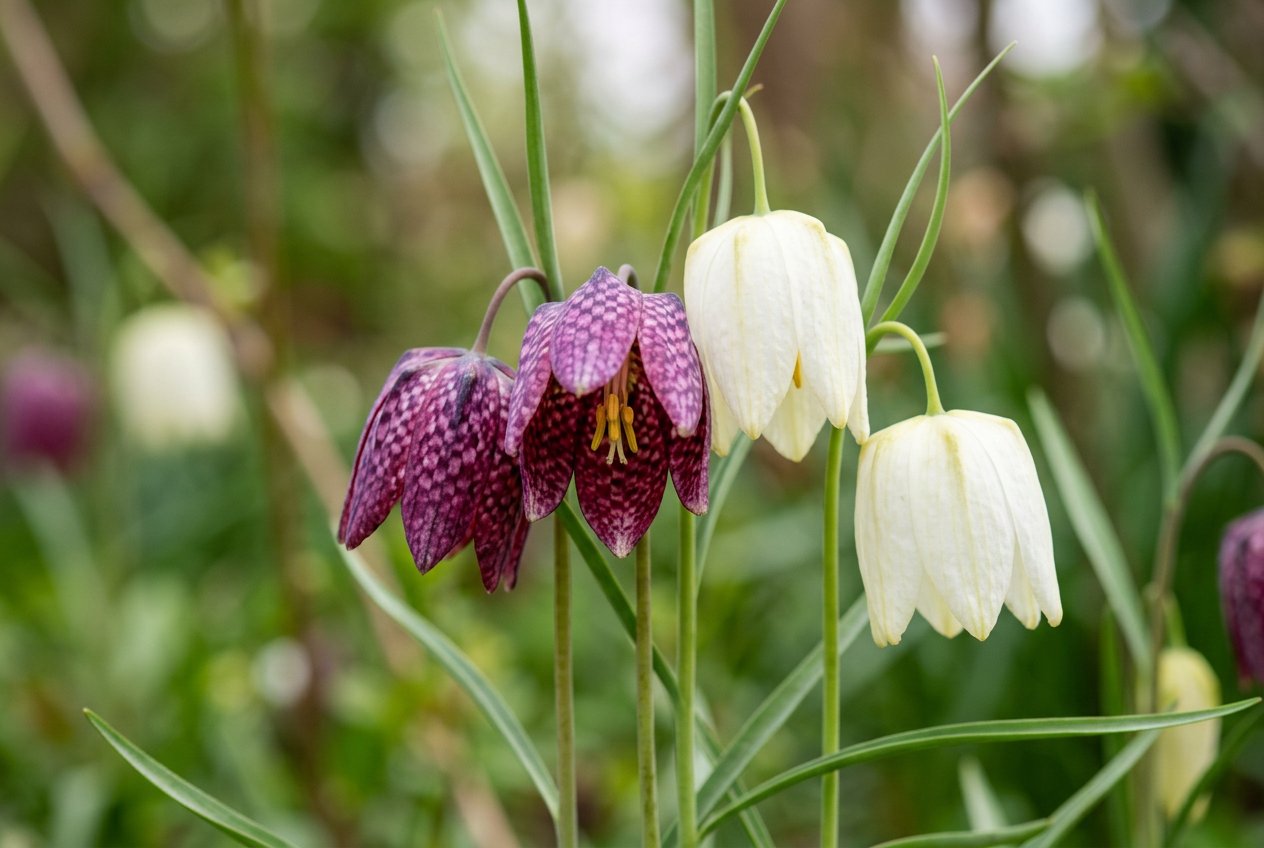
Snake's head fritillary produces exquisite nodding bell-shaped flowers with a distinctive chequered pattern in purple-pink and white. One of Britain's most beautiful native wildflowers, found in damp meadows. Naturalises well in moist grass. Flowers in April and May. A must-grow for wildlife and wildflower gardens.
Where to plant
Best aspect
Border position
When to plant and expect flowers
Plant
Flowers
How to grow fritillaria meleagris
Plant 8cm deep in September in moist but not waterlogged soil. Perfect for naturalising in damp meadow grass. Do not mow until seed has set in late June. Add leaf mould to planting holes. Available in purple and white forms.
Soil requirements
Soil type
loam, clay
Moisture
moist
pH
neutral
Aftercare
Allow foliage to die back naturally after flowering. Remove spent flower heads to prevent self-seeding.
Propagation
- Offsets in autumn
- Seed
Wildlife value
Toxicity
All parts toxic. Contains steroidal alkaloids causing nausea and cardiac irregularities.
Common problems
- Lily beetle
- Slugs
- Bulb rot in dry soil
Similar bulbs to grow
Related guides
How to Attract Birds to Your Garden
Practical guide to attracting wild birds to UK gardens. Covers feeders, food types, bird baths, nest boxes, planting, and seasonal feeding.
Autumn Gardening Jobs: Complete UK Checklist
Month-by-month autumn gardening checklist for UK gardens. Covers planting, bulbs, lawn care, pruning, composting, and wildlife tasks for Sep to November.
Balcony Gardening Ideas for the UK
Practical balcony gardening ideas for UK flats and apartments. Container choices, weight limits, wind protection, and the best plants for exposed spaces.