Jasmine
Jasminum polyanthum
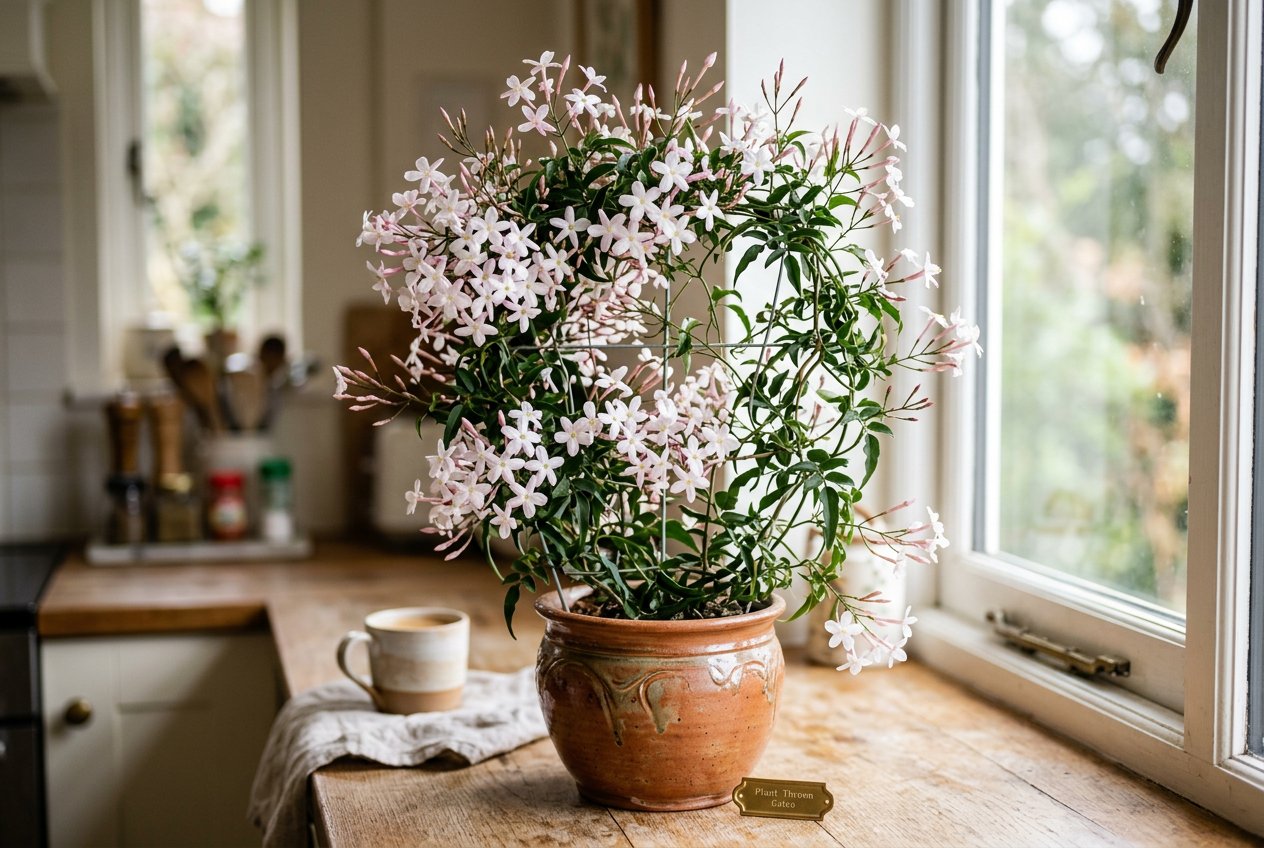
Twining climber smothered in intensely fragrant white-pink star flowers from late winter into spring. The scent is strongest in the evening. Grows vigorously and needs a support or small trellis.
Best rooms for jasmine
Light requirements
Best near a window with filtered light — avoid harsh direct rays.
Thrives on a sunny windowsill with several hours of direct sunlight.
How to care for jasmine
Bright light with some direct sun. Keep compost moist during the growing and flowering season. A cool autumn rest (10-13°C for 6 weeks) is essential to trigger flower buds. Train stems around a hoop or trellis. Feed fortnightly spring-summer. Prune after flowering to control size.
Watering
Water when the top 2–3cm of compost feels dry. Roughly weekly.
Propagation
- Semi-ripe cuttings in summer
- Layering
Toxicity
This plant is not known to be toxic to cats or dogs.
Common problems
- No flowers without a cool rest period
- Aphids on new growth
- Leggy growth in low light
Similar houseplants
Related guides
Air-Purifying Houseplants: What They Really Do
Do air-purifying houseplants work? The honest answer, the ten easiest plants to grow anyway, which are pet-safe, and what actually freshens indoor air.
Anthurium Care: Why Yours Stopped Flowering
Anthurium care for UK homes: the bright spot it needs to flower, how to water by weight, a chunky bark mix, a 15°C minimum, and why the blooms turn green.
Autumn Bee Plants: 13 Late Nectar Stars
Autumn flowering plants for bees: 13 late nectar plants from ivy and sedum to mahonia, plus how to keep something in flower from September into winter.