Moth Orchid
Phalaenopsis spp.
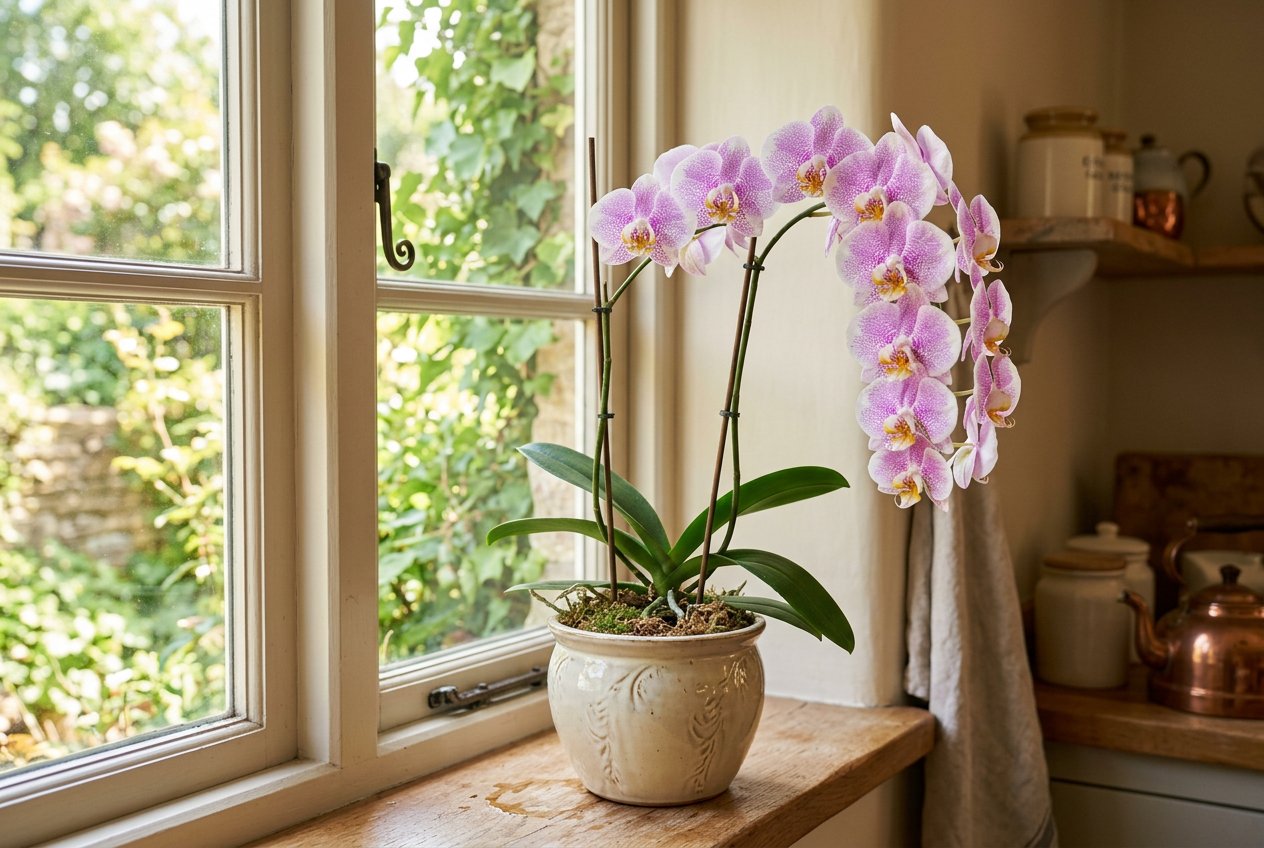
The world's most popular orchid, with arching sprays of butterfly-like flowers that last 2-3 months. Available in white, pink, purple, yellow, and spotted varieties. Far easier to grow than its exotic appearance suggests.
Best rooms for moth orchid
Light requirements
Best near a window with filtered light — avoid harsh direct rays.
How to care for moth orchid
Bright indirect light — an east-facing windowsill is ideal. Water weekly by soaking the clear pot in tepid water for 10 minutes, then drain. Never leave water sitting in the crown. Feed with orchid fertiliser fortnightly spring-autumn. After flowers drop, cut the spike above a node to encourage a secondary bloom. Minimum 15°C.
Watering
Let the compost dry out completely between waterings. Roughly every 2–4 weeks.
Propagation
- Keikis (baby plants from flower spikes)
- Division of mature multi-stemmed plants
Toxicity
This plant is not known to be toxic to cats or dogs.
Common problems
- Overwatering causing root rot (roots should be green or silvery, not brown)
- Crown rot from water pooling between leaves
- No re-flowering in low light
Similar houseplants
Related guides
Best Bee-Friendly Plants for UK Gardens
Attract bees and pollinators with plants that thrive in British conditions. Covers spring, summer, and autumn flowering for year-round forage.
Best Flowering Shrubs for UK Gardens
Discover the best flowering shrubs for UK gardens. Covers hydrangea, lavender, buddleja, philadelphus and more with pruning groups and soil needs.
Best Hanging Houseplants UK
The best hanging houseplants for UK homes ranked by trail length, light needs, and care. Covers 10 trailing species with room-by-room placement advice.