Calendula
Calendula officinalis
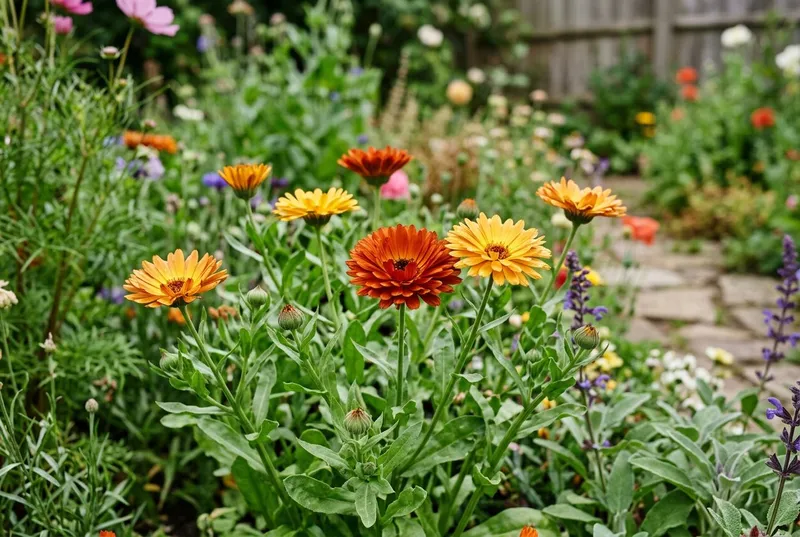
Pot marigold is a tough, cheerful hardy annual producing bright orange and yellow daisy-like flowers from June to November. One of the easiest flowers to grow from seed, it has been cultivated in British gardens since the Middle Ages for culinary, medicinal, and ornamental use. The petals are edible, adding colour to salads and rice dishes. Calendula self-seeds prolifically, returning year after year with no effort. The dried petals are used in natural skincare for their soothing properties.
How to grow calendula
Sow seed directly outdoors from March to May, or in September for early flowers the following year. Plant 1 cm deep and thin seedlings to 20-25 cm apart. Calendula is genuinely unfussy — it tolerates poor soil, partial shade, and considerable neglect. Choose any reasonable garden position with decent drainage. Water only during very dry spells. No feeding is required. Deadhead regularly to prolong flowering well into autumn. Calendula is an excellent companion plant in the vegetable garden, attracting hoverflies whose larvae eat aphids. It also lures blackfly away from beans. Save seed easily by collecting the curved, ridged seeds from dried flower heads. Allow a few plants to self-seed for effortless displays in future years. The sticky green leaves have a distinctive resinous scent.
Pruning
No pruning required. Deadhead spent flowers to extend the season. Pinch out growing tips on young plants to encourage bushier growth. Pull up spent plants in late autumn.
Propagation
- Seed (sow directly March-May or September)
- Self-seeding (very reliable)
Common problems
- Powdery mildew
- Aphids
- Cucumber mosaic virus
- Excessive self-seeding
Good companions
Related guides
Companion Planting Guide UK
Companion planting guide for UK gardens. Covers the best plant pairings, what to avoid, pest control combos, and a planting chart for vegetables.
Flower Planting Calendar: Month by Month
Month-by-month flower planting calendar for UK gardens. Covers sowing times for annuals, perennials, biennials, and bulbs across all regions.
Best Bee-Friendly Plants for UK Gardens
Attract bees and pollinators with plants that thrive in British conditions. Covers spring, summer, and autumn flowering for year-round forage.