Cornflower
Centaurea cyanus
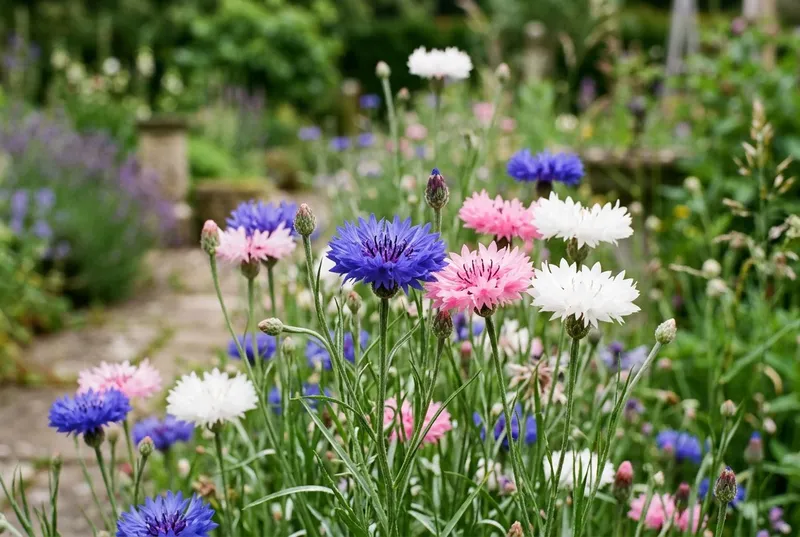
The cornflower is a hardy annual wildflower native to the UK, once a common sight in cereal fields before modern agriculture nearly eradicated it. Its vivid, true-blue flowers bloom from June to August and are a magnet for bees, butterflies, and hoverflies. Modern garden varieties come in pink, white, maroon, and bicolour forms. Easy to grow from seed, cornflowers are perfect for cottage gardens, wildflower meadows, and naturalistic planting schemes.
How to grow cornflower
Sow seed directly outdoors from March to May for summer flowers, or in September for earlier blooms the following year. Scatter seed thinly and rake in lightly — cover with no more than 1 cm of soil. Thin seedlings to 20-25 cm apart. Choose a sunny spot with poor to average, well-drained soil. Like many wildflowers, cornflowers flower best in lean conditions. Do not feed. Water only during prolonged dry spells. Tall varieties may need support from twiggy sticks. Deadhead spent flowers to extend the blooming period. Alternatively, leave some heads to set seed for self-sowing — cornflowers naturalise freely and will reappear year after year. The flowers are edible and can be dried for tea or used as a garnish.
Pruning
No pruning required. Deadhead to prolong flowering or leave seed heads for birds and self-sowing. Pull up spent plants in autumn.
Propagation
- Seed (sow directly March-May or September)
- Self-seeding
Common problems
- Powdery mildew
- Rust
- Aphids
- Lodging in exposed sites
Good companions
Related guides
How to Create a Wildflower Lawn
Turn your lawn into a wildflower meadow with native UK species. Soil preparation, seed mixes, sowing rates, yellow rattle, and mowing.
UK Flower Planting Calendar: 40+ Flowers
When to sow UK flowers month by month, covering 40+ annuals, perennials, biennials and bulbs with frost-aware planting guidance.
Best Bee-Friendly Plants for UK Gardens
Attract bees and pollinators with plants that thrive in British conditions. Covers spring, summer, and autumn flowering for year-round forage.