Field Maple
Acer campestre
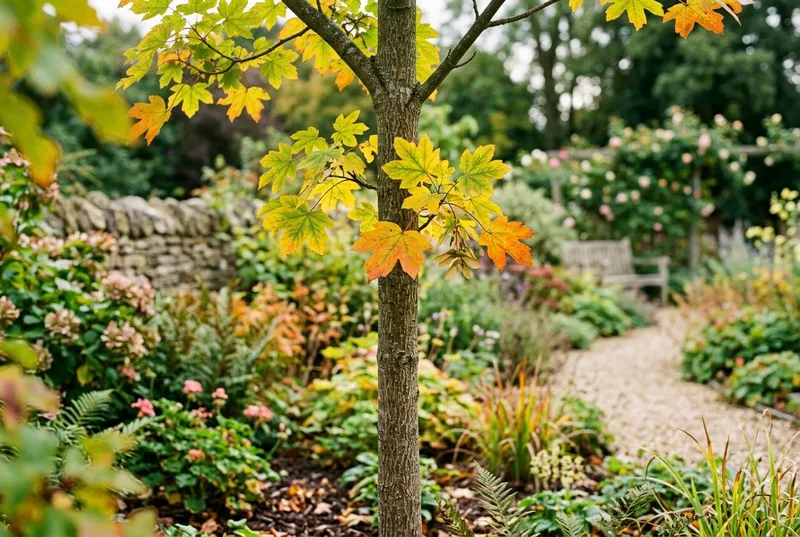
Field maple is Britain's only native maple, found throughout English hedgerows and woodland edges. It produces golden-yellow autumn colour rivalling any imported species. Tough, compact, and tolerant of pollution and poor soils, it makes an excellent hedge, small specimen tree, or urban street planting. Field maple supports a wide range of insects and provides autumn seeds for birds and small mammals.
How to grow field maple
Plant bare-root trees from November to March in sun or partial shade. Field maple is one of the most adaptable UK native trees, thriving in chalk, clay, loam, and sandy soils. It tolerates exposed sites, coastal conditions, and urban pollution. For hedging, plant bare-root whips 30 cm apart and trim annually. As a specimen tree, it develops a rounded, dense crown with minimal training. Water during dry spells in the first year only. Mulch annually in spring. The cultivar 'Elsrijk' has a compact, columnar habit suited to restricted spaces and small front gardens.
Pruning
Trim hedges in late summer (August to September). Prune specimen trees in late autumn or early winter when fully dormant to avoid sap bleeding. Remove dead or crossing branches and thin the crown if needed. Field maple responds well to hard pruning and coppicing.
Propagation
- Seed
Common problems
- Tar spot fungus
- Aphids
- Verticillium wilt
- Coral spot
Good companions
Related guides
Hedge Planting Guide for the UK
Step-by-step UK hedge planting guide covering species selection, bare-root vs container plants, spacing, planting method, first-year care, and trimming.
Best Trees for Small Gardens in the UK
Top trees for small UK gardens with ultimate heights under 8m. Covers Amelanchier, crab apple, Japanese maple, birch, magnolia, rowan, and cherry.
How to Create a Wildlife Garden UK
Turn any UK garden into a wildlife haven. Covers ponds, native planting, hedgehog access, bird feeding, bug hotels, and seasonal wildlife tasks.