Rowan
Sorbus aucuparia
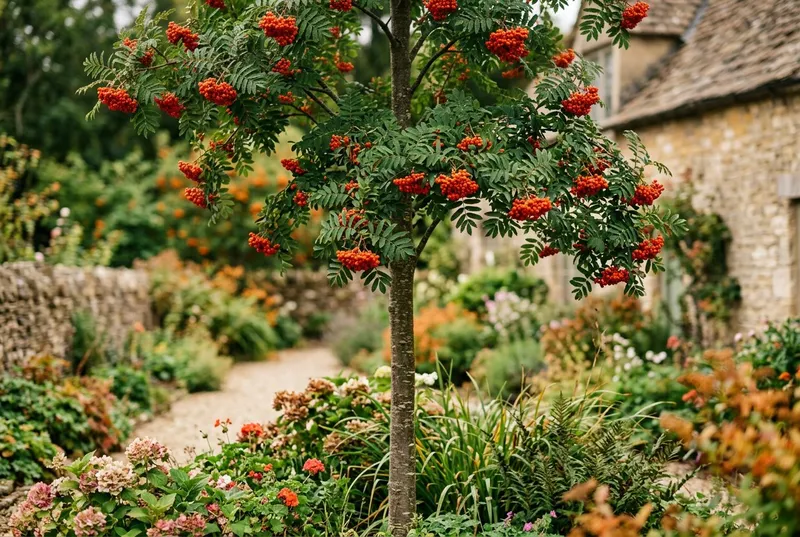
Rowan, or mountain ash, is a hardy native tree found throughout the UK from lowland hedgerows to Highland mountainsides. It produces clusters of creamy-white flowers in late spring, followed by heavy bunches of bright orange-red berries in autumn that are a vital food source for thrushes, blackbirds, and waxwings. Compact and fast-growing, it suits even the smallest gardens.
How to grow rowan
Plant bare-root trees between November and March in sun or partial shade. Rowan thrives in most soils but prefers slightly acidic, well-drained ground. It copes with exposed, windy sites and is an excellent choice for northern and upland gardens. Water during dry spells in the first growing season. Mulch annually with bark or compost. Rowan is one of the best small native trees for wildlife, attracting over 150 insect species and providing autumn berries that draw migrating birds. Compact cultivars such as 'Sheerwater Seedling' suit narrow spaces.
Pruning
Prune between November and February while fully dormant. Remove crossing, dead, or diseased branches to maintain an open, balanced crown. Rowan responds well to formative pruning in its early years to establish a clear central leader. Avoid heavy pruning of mature trees.
Propagation
- Seed
Common problems
- Fireblight
- Silver leaf disease
- Rowan berry moth
- Aphids
Good companions
Related guides
Best Trees for Small Gardens in the UK
Top trees for small UK gardens with ultimate heights under 8m. Covers Amelanchier, crab apple, Japanese maple, birch, magnolia, rowan, and cherry.
How to Create a Wildlife Garden UK
Turn any UK garden into a wildlife haven. Covers ponds, native planting, hedgehog access, bird feeding, bug hotels, and seasonal wildlife tasks.
How to Attract Birds to Your Garden
Practical guide to attracting wild birds to UK gardens. Covers feeders, food types, bird baths, nest boxes, planting, and seasonal feeding.