Nigella
Nigella damascena
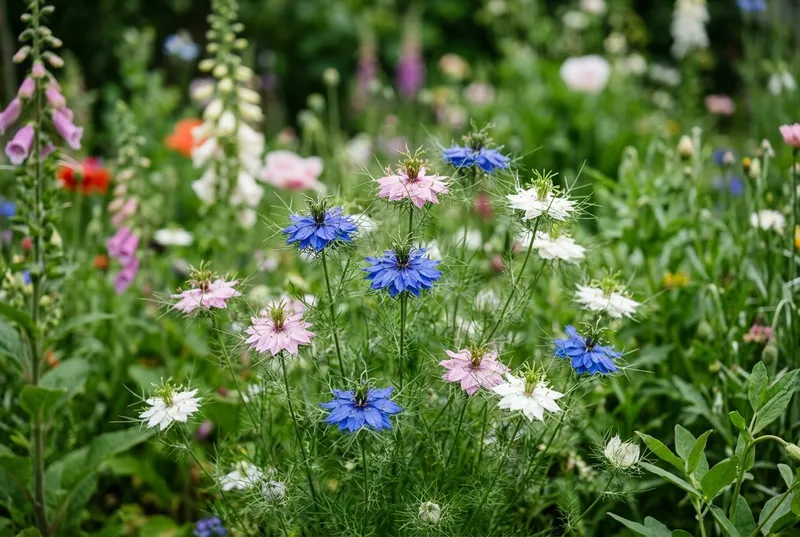
Love-in-a-mist is a charming hardy annual producing delicate blue, pink, or white flowers surrounded by a ruff of fine, thread-like foliage from June to August. The ornamental inflated seed pods that follow are highly valued by florists for dried flower arrangements. Native to southern Europe, it self-seeds so reliably that a single packet often provides flowers for years. The hazy, romantic quality of the foliage makes it a cottage garden essential.
How to grow nigella
Sow seed directly outdoors from March to May, or in September for earlier flowers the following year. Scatter thinly and rake in lightly — cover with no more than 5 mm of soil. Thin seedlings to 15-20 cm apart. Nigella has a delicate taproot and resents transplanting, so always sow where it is to grow. Choose a sunny or lightly shaded spot with well-drained soil. Water only during prolonged dry spells. No feeding is needed. The flowering period is relatively short — about four to five weeks — so make successional sowings at monthly intervals for a longer display. For dried seed pods, cut stems when the pods are fully formed but still green. Hang upside down in a cool, dry place. Allow some pods to remain on the plant for self-seeding. Nigella naturalises beautifully, reappearing year after year once established.
Pruning
No pruning required. Leave attractive seed pods for dried arrangements and self-sowing. Pull up spent plants once they look untidy.
Propagation
- Seed (sow directly March-May or September)
- Self-seeding (reliable)
Common problems
- Aphids
- Powdery mildew in dry conditions
- Short flowering season
Good companions
Related guides
Cottage Garden Planting Plan for the UK
How to plan and plant a cottage garden in the UK. Covers classic plants, colour schemes, seasonal structure, and a ready-to-use planting plan.
Flower Planting Calendar: Month by Month
Month-by-month flower planting calendar for UK gardens. Covers sowing times for annuals, perennials, biennials, and bulbs across all regions.
How to Create a Wildflower Lawn
Turn your lawn into a wildflower meadow with native UK species. Soil preparation, seed mixes, sowing rates, yellow rattle, and mowing.