Poppy
Papaver rhoeas
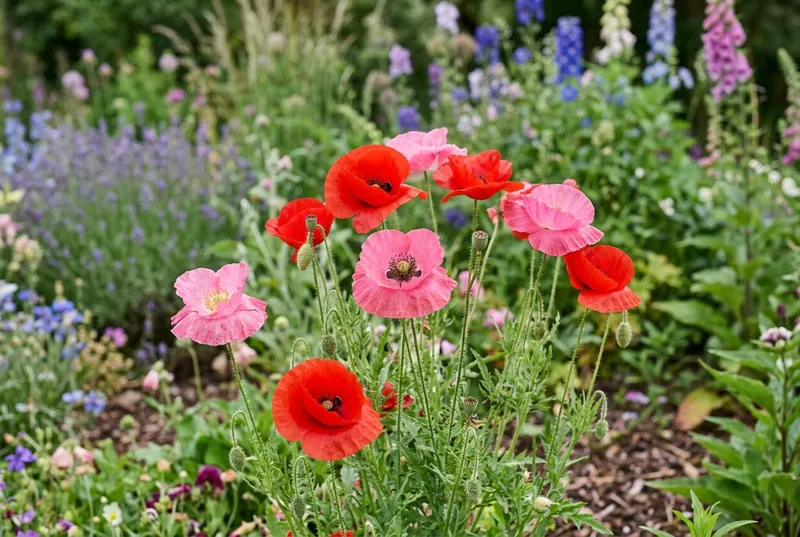
The common field poppy is one of Britain's most recognisable wildflowers, producing papery scarlet blooms with a black centre from June to August. Native to the UK, it once covered arable fields and became a symbol of remembrance after the First World War. Seeds can lie dormant in soil for decades, germinating whenever the ground is disturbed. Modern Shirley cultivars offer pastel shades of pink, salmon, and white alongside the classic red.
How to grow poppy
Sow seed directly outdoors from March to May, or in September for earlier flowers the following year. Scatter seed thinly on the surface and press in lightly — poppy seed needs light to germinate, so do not cover with soil. Thin seedlings to 15-20 cm apart. Choose a sunny position with poor, well-drained soil. Poppies thrive on neglect and flower best in nutrient-poor ground. Do not feed. Water is rarely needed. Each flower lasts only a day or two, but plants produce buds continuously for weeks. Allow seed heads to ripen and scatter naturally for self-sowing — each capsule contains thousands of tiny seeds. Poppies resent transplanting due to their delicate taproot, so always sow where they are to grow.
Pruning
No pruning needed. Leave attractive seed pods for ornamental value and self-sowing. Clear spent plants in autumn once seeds have dispersed.
Propagation
- Seed (sow directly March-May or September)
- Self-seeding (prolific)
Common problems
- Downy mildew
- Aphids
- Self-sowing can be excessive
- Short-lived individual flowers
Good companions
Related guides
How to Create a Wildflower Lawn
Turn your lawn into a wildflower meadow with native UK species. Soil preparation, seed mixes, sowing rates, yellow rattle, and mowing.
Flower Planting Calendar: Month by Month
Month-by-month flower planting calendar for UK gardens. Covers sowing times for annuals, perennials, biennials, and bulbs across all regions.
How to Create a Wildlife Garden UK
Turn any UK garden into a wildlife haven. Covers ponds, native planting, hedgehog access, bird feeding, bug hotels, and seasonal wildlife tasks.