Rhododendron
Rhododendron ponticum
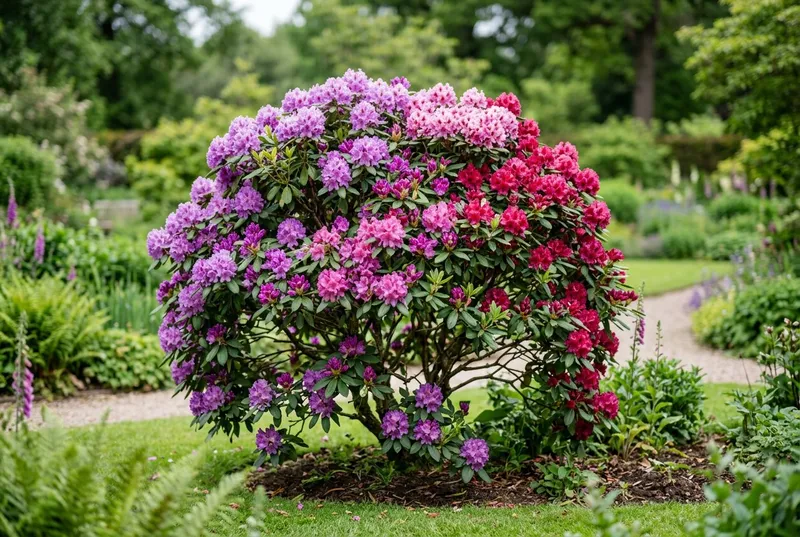
A large evergreen shrub producing spectacular trusses of mauve-purple flowers in late spring. Rhododendron ponticum is naturalised across much of the UK, particularly in acid-soil areas of Scotland, Wales and western England. Requires acid soil and shelter from cold winds. While invasive in the wild, garden cultivars offer a wide range of colours and sizes for borders and woodland plantings.
How to grow rhododendron
Plant in autumn or spring in acid soil with a pH below 5.5. Dig in generous amounts of ericaceous compost and leaf mould before planting. Choose a sheltered, partially shaded position under a light tree canopy — the dappled shade of birch or oak is ideal. Water with rainwater during dry spells, especially in the first two growing seasons. Mulch thickly each spring with composted bark or pine needles to keep roots cool and moist. Feed annually in spring with a slow-release ericaceous fertiliser. Avoid planting too deeply — set the root ball so the top sits level with the surrounding soil. In hard water areas, grow compact varieties in large containers of ericaceous compost.
Pruning
Deadhead faded flower trusses carefully by snapping them off just above the growth buds — this channels energy into next year's blooms rather than seed production. Overgrown rhododendrons tolerate hard renovation pruning in late winter, cutting stems back to 60cm. Spread renovation over two to three years to reduce stress. Remove dead or diseased wood at any time of year.
Propagation
- Layering in spring
- Semi-ripe cuttings in late summer
- Air layering in spring
Common problems
- Yellowing leaves from alkaline soil
- Vine weevil larvae eating roots
- Rhododendron powdery mildew
- Bud blast causing brown, unopened buds