Silver Birch
Betula pendula
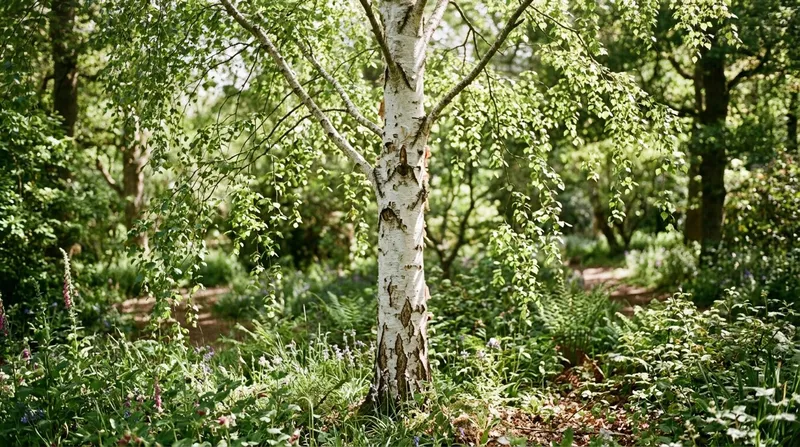
Silver birch is one of Britain's most recognisable native trees, prized for its striking white bark and graceful weeping habit. It supports over 300 insect species and is a keystone tree for UK wildlife. Fast-growing and tolerant of poor soils, it thrives in most UK conditions. The delicate canopy casts light, dappled shade, making it ideal for underplanting.
How to grow silver birch
Plant bare-root trees between November and March in an open, sunny position. Silver birch tolerates most soils but performs best in well-drained, slightly acidic ground. It establishes quickly and rarely needs supplementary watering after the first year. Mulch around the base in spring to suppress weeds and retain moisture. This tree has a shallow root system, so avoid planting within 5 metres of foundations or drains. Compact cultivars such as 'Youngii' suit smaller gardens and reach only 6-8 metres. Silver birch works well in small groups of three for a naturalistic copse effect.
Pruning
Prune only when necessary, between late summer and early autumn. Avoid winter or spring pruning as birch bleeds sap heavily when cut during dormancy. Remove dead or crossing branches and any suckers from the base. Keep the lower trunk clear of branches to showcase the white bark.
Propagation
- Seed
Common problems
- Birch dieback
- Bronze birch borer
- Bracket fungus
- Aphids
Good companions
Related guides
Best Trees for Small Gardens in the UK
Top trees for small UK gardens with ultimate heights under 8m. Covers Amelanchier, crab apple, Japanese maple, birch, magnolia, rowan, and cherry.
Best Trees for Privacy in UK Gardens
Top evergreen and deciduous trees for garden privacy in the UK. Covers screening species, planting distances, hedge law, and pleaching techniques.
How to Create a Wildlife Garden UK
Turn any UK garden into a wildlife haven. Covers ponds, native planting, hedgehog access, bird feeding, bug hotels, and seasonal wildlife tasks.