Sweet William
Dianthus barbatus
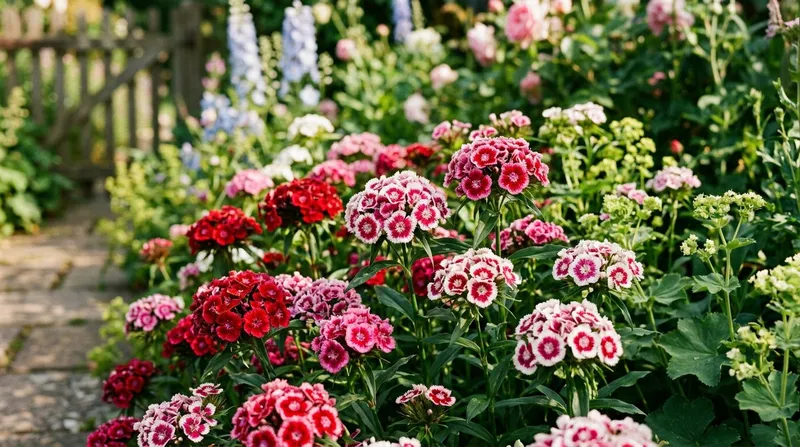
Sweet William is a traditional cottage garden favourite producing dense, flat-topped clusters of richly coloured, clove-scented flowers from May to July. Technically a short-lived perennial or biennial, it is usually grown as an annual or biennial in UK gardens. Flowers come in shades of red, pink, white, and bicolour, often with distinctive concentric rings or 'eyes'. A staple of Victorian gardens, it remains popular for borders, cutting, and container displays.
How to grow sweet william
For biennial growing, sow seed outdoors in a nursery bed from May to June. Transplant seedlings to their flowering positions in September or October, spacing 25-30 cm apart. They will flower the following May. For annual growing, sow indoors in February at 18 degrees Celsius and plant out after hardening off in April. Choose a sunny position with fertile, well-drained soil — sweet William performs best on neutral to alkaline ground. Water during dry spells. Feed with a balanced liquid fertiliser in spring. Deadhead spent flower clusters to encourage side shoots and a second flush. Sweet William self-seeds freely if some heads are left to mature. Modern annual varieties such as Dash and Amazon flower in the first year from a spring sowing. Excellent as a cut flower, lasting 7-10 days in water.
Pruning
Deadhead spent flower clusters promptly to encourage a second flush of blooms from side shoots. Cut back to ground level in autumn after flowering has finished.
Propagation
- Seed (biennial: sow May-June for flowers next year; annual: sow indoors February)
- Self-seeding
- Basal cuttings in spring
Common problems
- Rust
- Aphids
- Slugs on young plants
- Crown rot in wet soil
Good companions
Related guides
Cottage Garden Planting Plan for the UK
How to plan and plant a cottage garden in the UK. Covers classic plants, colour schemes, seasonal structure, and a ready-to-use planting plan.
UK Flower Planting Calendar: 40+ Flowers
When to sow UK flowers month by month, covering 40+ annuals, perennials, biennials and bulbs with frost-aware planting guidance.
Best Bee-Friendly Plants for UK Gardens
Attract bees and pollinators with plants that thrive in British conditions. Covers spring, summer, and autumn flowering for year-round forage.