How to Grow Cornflowers in the UK
How to grow cornflowers in UK gardens. Covers sowing times, best varieties, cut flower use, wildflower meadows, edible petals, and self-seeding.
Key takeaways
- Hardy annual — sow direct in March-May or September-October for earlier, stronger plants
- Classic blue flower but varieties now include pink, white, purple, maroon, and near-black
- Outstanding cut flower lasting 7-10 days in a vase when cut at the right stage
- Edible petals used for decorating cakes, salads, and drinks — only the petals, not the calyx
- Self-seeds freely once established, returning year after year without resowing
- Valuable pollinator plant providing nectar for bumblebees, butterflies, and hoverflies
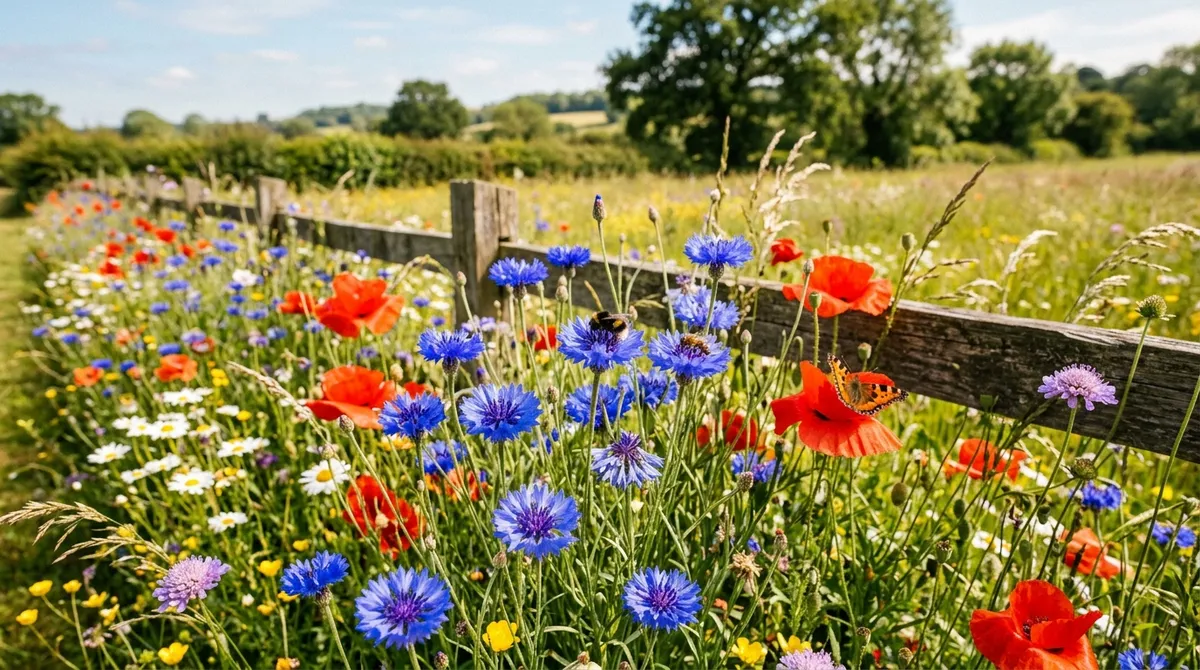
Cornflowers are one of the defining flowers of the British summer. That particular shade of blue, intense, saturated, and almost electric, is unmistakable in a garden border, cutting patch, or wildflower meadow. No other hardy annual delivers colour with such purity.
Centaurea cyanus was once a common weed of British cornfields. Intensive farming, herbicides, and clean seed practices have made wild cornflowers rare across most of England and Wales. In gardens, they thrive with minimal effort. Scatter seed on bare ground, wait two months, and you have flowers that outperform anything sold in a florist at a fraction of the cost.
What types of cornflowers can I grow?
The wild species produces single flowers in that famous clear blue. Breeding has expanded the palette dramatically. Modern varieties offer double flowers, shorter stems, and colours from deep maroon to pure white.
Tall varieties for cutting
The classic cornflower stands 60-90cm tall on wiry stems. These are the best for cut flower use and back-of-border planting. Blue Boy remains the benchmark. Its double, deep blue flowers on 75cm stems are perfect for vases and have a 7-10 day vase life when cut at the right stage.
Black Ball is a striking variety with deep maroon-purple flowers that appear almost black in certain light. It is exceptionally popular with florists and flower arrangers. Classic Romantic mix combines blue, pink, white, and purple in a single packet. It produces a more relaxed, cottage garden effect than single-colour plantings.
Dwarf varieties for containers and borders
Dwarf cornflowers grow 25-40cm tall and suit containers, window boxes, and front-of-border positions. Florence is a popular dwarf series available in blue, pink, white, and a mix. Tom Pouce reaches just 25cm and works in hanging baskets and small pots.
Variety comparison table
| Variety | Height (cm) | Colour | Flower type | Best use |
|---|---|---|---|---|
| Blue Boy | 75-90 | Deep blue | Double | Cut flowers, borders |
| Black Ball | 70-80 | Deep maroon-black | Double | Cut flowers, florist work |
| Classic Romantic | 70-85 | Blue, pink, white mix | Double | Cottage borders, cutting |
| Polka Dot Mix | 40-50 | Blue, pink, red, white | Double | Mid-border, containers |
| Florence Blue | 30-40 | Clear blue | Double | Containers, edging |
| Tom Pouce | 20-25 | Mixed colours | Semi-double | Windowsills, small pots |
For cutting gardens, tall varieties are the clear choice. Our guide to creating a cutting garden covers layout and companion plants that work alongside cornflowers.
When and how do I sow cornflower seeds?
Cornflowers are hardy annuals. They germinate at low temperatures, tolerate frost as seedlings, and flower within 12-16 weeks of sowing. This flexibility allows both spring and autumn sowing.
Autumn sowing (recommended)
Sow in September or early October, direct into prepared ground. Scatter seed thinly in shallow drills 1cm deep or broadcast over a raked area. Cover lightly and water if the soil is dry. Seedlings emerge within 10-14 days and form low rosettes before winter. These rosettes survive frost, snow, and prolonged cold without damage.
Autumn-sown plants produce stems 20-30cm taller and significantly sturdier than spring sowings. They flower 3-4 weeks earlier, from early June rather than late June. The deeper root system established over winter also makes them more drought-tolerant in summer.
Spring sowing
Sow from March to May, direct into the ground where they are to flower. The soil needs to be workable but does not need to be warm. Cornflowers germinate at soil temperatures as low as 8C. Thin seedlings to 20-25cm apart when they are large enough to handle.
Spring sowing is simpler and suits beginners or gardens with very wet winter soil where autumn seedlings might rot. Succession sowing every 3 weeks from March to May extends the flowering season into October.
Starting in pots
Sow 3-4 seeds per 9cm pot in multipurpose compost. Thin to the strongest seedling. Harden off and plant out from April. This gives more control over spacing and avoids slug damage to young seedlings, but cornflowers transplant reluctantly. Move them before the taproot develops, ideally at the 4-6 leaf stage.
Where should I plant cornflowers?
Cornflowers demand full sun and lean soil. Give them these two things and they perform brilliantly. Rich soil and shade produce tall, floppy growth and fewer flowers.
Light
Full sun is essential. A minimum of 6 hours of direct sun produces the best flowering and strongest stems. In partial shade, plants stretch towards the light, producing weak stems that flop under the weight of the flowers. North-facing positions are unsuitable.
Soil
Poor to average soil produces the best results. Cornflowers evolved as weeds of thin, chalky cornfield soils and grow leggy on fertile, nitrogen-rich ground. Sandy, gravelly, and chalky soils are ideal. On heavier clay, add grit to improve drainage. Do not add manure or rich compost.
This preference for lean ground makes cornflowers excellent companions for wildflower lawns and gravel gardens. They thrive where many garden plants struggle.
Spacing
Thin or plant at 20-25cm apart for individual plants or closer at 10-15cm for a dense mass effect. In a cutting patch, rows 30cm apart with plants at 15cm within the row gives easy access for picking. In a meadow or border drift, closer spacing creates the classic cornfield carpet.
How do I care for cornflowers through the season?
Cornflowers are among the lowest-maintenance flowers you can grow. Once established, they need very little attention beyond deadheading.
Watering
Water newly sown or transplanted cornflowers until they are established. Once growing strongly, cornflowers are drought-tolerant and rarely need supplementary watering in most UK summers. Overwatering on heavy soil causes root rot. In containers, water when the top 3cm of compost dries out.
Feeding
Do not feed cornflowers. Fertiliser produces lush foliage, weak stems, and fewer flowers. The exception is container-grown plants, which benefit from a half-strength liquid feed every 3 weeks during peak flowering.
Deadheading
Remove spent flowers regularly to prolong the flowering season. Cornflowers respond strongly to deadheading. A plant stripped of dead heads every 3-4 days continues producing new buds for 8-12 weeks. Leave some heads to set seed in late August if you want self-sown plants next year.
Staking
Autumn-sown plants on lean soil rarely need staking. Spring-sown plants on richer ground often do. Push twiggy pea sticks into the ground around plants when they reach 30cm tall. The foliage grows through and hides the supports. Garden twine around three bamboo canes also works for small groups.
How do I use cornflowers as cut flowers?
Cornflowers are among the finest hardy annuals for cutting. The stems are strong, the flowers long-lasting, and the blue is unmatched by any other garden flower.
When to cut
Cut when the flower bud is half to three-quarters open. Fully open flowers have a shorter vase life. Cut early in the morning before the sun heats the stems. Use sharp scissors or secateurs and cut stems as long as possible.
Conditioning
Strip all foliage below the waterline. Place stems immediately in a bucket of cool, clean water and leave in a cool, dark place for at least 2 hours before arranging. This conditioning step adds 2-3 days to vase life. For the full process, see our guide to conditioning cut flowers.
Vase life
Properly conditioned cornflowers last 7-10 days in a clean vase. Change the water every 2 days. The blue varieties hold their colour well. Pink and white varieties also perform strongly. Black Ball fades slightly to a rich plum shade, which many arrangers find equally attractive.
Arranging
Cornflowers mix beautifully with sweet peas, cosmos, and gypsophila in loose, cottage-style arrangements. A simple jam jar of blue cornflowers with a few stems of white ammi is one of the most photographed summer arrangements.
Are cornflower petals edible?
Yes. Cornflower petals have been used in food and drink for centuries. They are one of the most popular edible flowers in UK gardening, alongside nasturtiums and calendula.
Which parts to eat
Only eat the coloured petals. Pull them from the flower head and discard the green calyx and the centre. The petals are thin and delicate with a very mild flavour, slightly sweet with a faint hint of clove and spice.
Uses
Scatter fresh blue petals over salads for colour contrast. Press into soft cheese or butter. Float in gin and tonic or champagne. Decorate cakes and cupcakes. The blue colour holds when dried, making cornflower petals valuable for herbal tea blends. Earl Grey tea is sometimes decorated with dried cornflower petals.
Drying petals
Pick fully open flowers on a dry morning. Pull the petals from the head and spread on a baking tray lined with parchment. Dry in a very low oven (50C) for 2-3 hours or in a dehydrator until crisp. Store in an airtight jar away from light. Dried petals retain their blue colour for 6-12 months, as noted by Garden Organic.
Safety
Only eat flowers grown without pesticides or fungicides. Never eat cornflowers from florists, garden centres, or roadside verges. Grow your own specifically for eating and keep them separate from any treated plants.
How do I grow cornflowers in a wildflower meadow?
Cornflowers were once among the commonest wildflowers in British arable fields. Plantlife now lists them as endangered in the wild across much of England. Growing them in a garden meadow contributes to their conservation while creating one of the most beautiful summer displays possible.
Soil preparation
Wildflower meadows need poor soil. If your ground is fertile, strip the top 5-10cm of topsoil or grow yellow rattle (Rhinanthus minor) for two seasons first to weaken the grass. Cornflowers cannot compete with vigorous grasses on rich soil.
Sowing
Scatter seed on bare, raked soil in September at a rate of 2-3g per square metre. Mix with other wildflower seed such as field poppies, ox-eye daisies, and red campion. Press the seed into the soil surface with a board or by walking over it. Do not cover.
Management
Mow the meadow in late August or September after seeds have dropped. Remove the cuttings. Do not fertilise. Cornflowers re-establish from self-sown seed each autumn. The Wildlife Trusts provide additional guidance on meadow management for wildlife.
In borders
Cornflowers also self-seed effectively in gravel paths, between paving slabs, and along the base of sunny walls. Allow a few plants to set seed each year and let the self-sown seedlings establish where they appear. Thin out unwanted plants in spring.
Common problems growing cornflowers
Cornflowers are pest and disease resistant by garden standards. Very few issues affect them seriously.
Powdery mildew
A white coating on leaves appears in late summer, especially in crowded plantings with poor air circulation. It is cosmetic and does not kill the plant. Improve spacing, avoid overhead watering, and remove badly affected plants. Our guide to powdery mildew treatment covers preventive measures.
Aphids
Greenfly occasionally colonise stem tips in June. A strong jet of water dislodges them. Ladybirds and hoverfly larvae provide natural control within days. Cornflowers actually attract hoverflies, which means the pest and its predator arrive together. Chemical sprays are unnecessary and would harm the pollinators visiting the flowers.
Lodging (falling over)
The most common complaint. Plants grown in rich soil, shade, or at too-close spacing produce weak stems that collapse under flower weight. The solution is cultural, not chemical. Grow on lean soil in full sun. Sow in autumn for stronger root anchorage. Thin properly. Support with pea sticks if necessary.
Slugs
Young seedlings are vulnerable, especially spring-sown plants in wet weather. Beer traps and nematode biological controls protect seedlings in the early stages. Established plants are not troubled.
Frequently asked questions
When is the best time to sow cornflower seeds?
Sow cornflower seeds in September or October for the strongest plants and earliest flowers. Autumn-sown seedlings overwinter as rosettes and produce taller, sturdier stems than spring sowings. They flower 3-4 weeks earlier, starting in early June rather than late June or July. Spring sowing in March to May also works well and is the safer option in very cold or waterlogged gardens.
Do cornflowers come back every year?
Cornflowers are annual but self-seed so freely that they return year after year without replanting. Allow some flowers to set seed in late summer and the plants drop seed around the parent. Seedlings emerge in autumn or early spring. On disturbed ground, self-sown cornflowers can appear for decades. They are one of the most reliable self-seeding annuals for UK gardens.
How do I grow cornflowers for cut flowers?
Sow in autumn for the tallest, strongest stems and cut when the bud is half open. Choose tall varieties like Blue Boy or Classic Romantic mix. Succession sow every 3 weeks from March for continuous cutting through summer. Cut stems early in the morning and place immediately in water. Remove all foliage below the waterline. Vase life is 7-10 days.
Are cornflower petals edible?
Yes, cornflower petals are edible and widely used to decorate cakes, salads, and drinks. Only eat the coloured petals, not the green calyx or centre. The flavour is very mild, slightly sweet with a faint clove note. Blue petals retain their colour when dried, making them popular for tea blends and as a natural food colouring. Only eat flowers from plants that have not been treated with pesticides.
Can I grow cornflowers in a wildflower meadow?
Yes, cornflowers are a traditional component of UK wildflower meadow seed mixes. They thrive on poor, well-drained soil with minimal competition from vigorous grasses. Scatter seed on bare or lightly raked ground in September. Do not add fertiliser, as rich soil favours grasses over wildflowers. Cornflowers were once common in British cornfields but are now rare in the wild.
Why are my cornflowers falling over?
Cornflowers flop when grown in rich soil, shade, or overcrowded conditions. Rich soil produces tall, soft stems that cannot support the flower heads. Thin plants to 20-25cm apart and grow in full sun on lean soil. Autumn-sown plants develop stronger root systems and resist lodging better than spring sowings. Staking with twiggy pea sticks at 30cm height prevents flopping in exposed gardens.
Lawrie has been gardening in the West Midlands for over 30 years. He grows his own veg using no-dig methods, keeps a wildlife-friendly garden, and writes practical advice based on real UK growing conditions.