Key takeaways
- Nasturtiums are half-hardy annuals that flower from June to the first frost
- Sow seed directly outdoors from late April, or start indoors from March
- Both the flowers and leaves are edible with a peppery, watercress-like taste
- One of the best companion plants for vegetables, acting as a trap crop for blackfly
- Three main types: climbing (1.8m), trailing (for baskets), and dwarf (under 30cm)
- Prefer poor soil and full sun, producing more flowers when not overfed
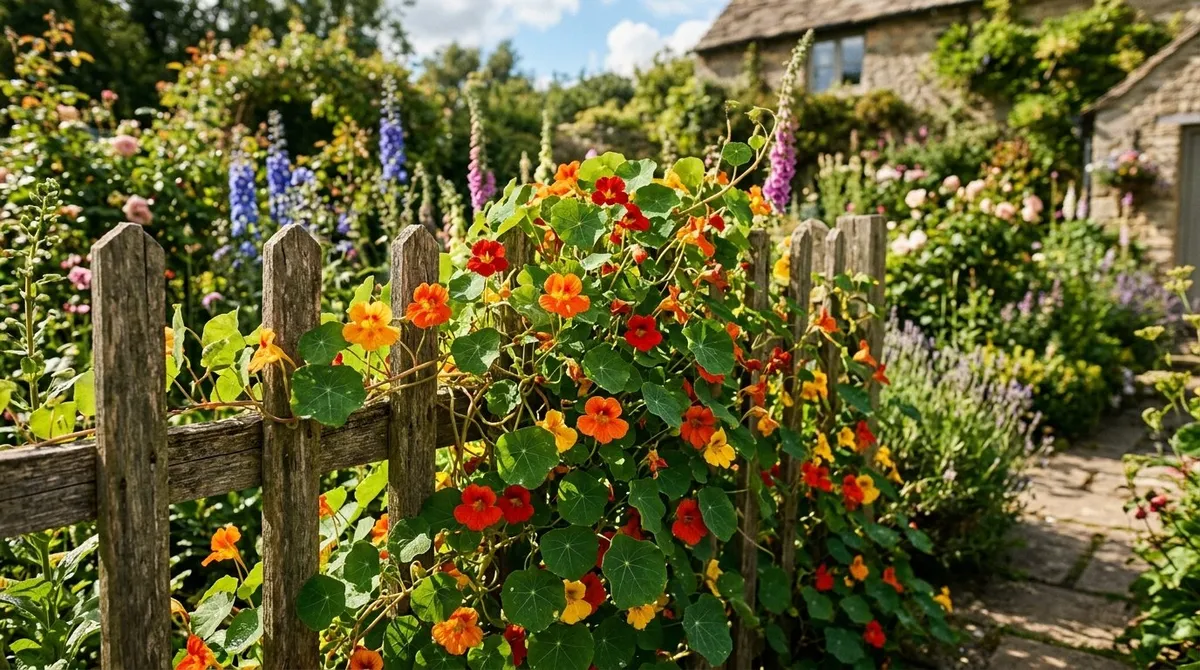
Nasturtiums are one of the most useful annuals you can grow in a UK garden. They produce bright orange, red, and yellow flowers from June until the first frost, the flowers and leaves are edible with a peppery kick, and they work as a trap crop that draws blackfly away from your vegetable patch.
This guide covers sowing, growing, eating, and companion planting nasturtiums in UK conditions. Whether you have a large allotment or a single pot on a balcony, nasturtiums earn their place.
When and how to sow nasturtium seeds
Sow nasturtium seeds directly outdoors from late April, after the last frost date for your area. In southern England, mid-April is usually safe. In Scotland and northern England, wait until early May.
Push each seed 2cm deep into the soil and space them 20-30cm apart. Nasturtium seeds are large enough to handle individually. Water gently and keep the soil moist until germination, which takes 10-14 days at soil temperatures above 12 degrees Celsius.
For an earlier start, sow indoors from mid-March. Use 9cm pots filled with multipurpose compost and sow one seed per pot. Place on a bright windowsill at 15-20 degrees Celsius. Nasturtiums dislike root disturbance, so sow into individual pots rather than seed trays. Harden off seedlings for a week in late May before planting outside.
Soaking seeds overnight in lukewarm water before sowing softens the hard seed coat and speeds germination by 3-5 days. This is particularly useful for early indoor sowings where you want quick results.
What soil and position do nasturtiums need?
Nasturtiums prefer poor soil. This is their greatest advantage and the mistake most gardeners make. Rich, fertile soil produces masses of round, lily-pad-shaped leaves but far fewer flowers. If you want blooms, do not feed nasturtiums and avoid freshly composted beds.
Full sun is essential for the heaviest flowering. A south or west-facing position gives 6+ hours of direct sunlight and produces the most vibrant colours. Nasturtiums tolerate partial shade but flower less and grow leggy.
Any well-drained soil works. Nasturtiums grow in clay, loam, sand, and chalk. Waterlogged ground is the only condition they genuinely fail in. In heavy clay, add a handful of grit per planting hole to improve drainage.
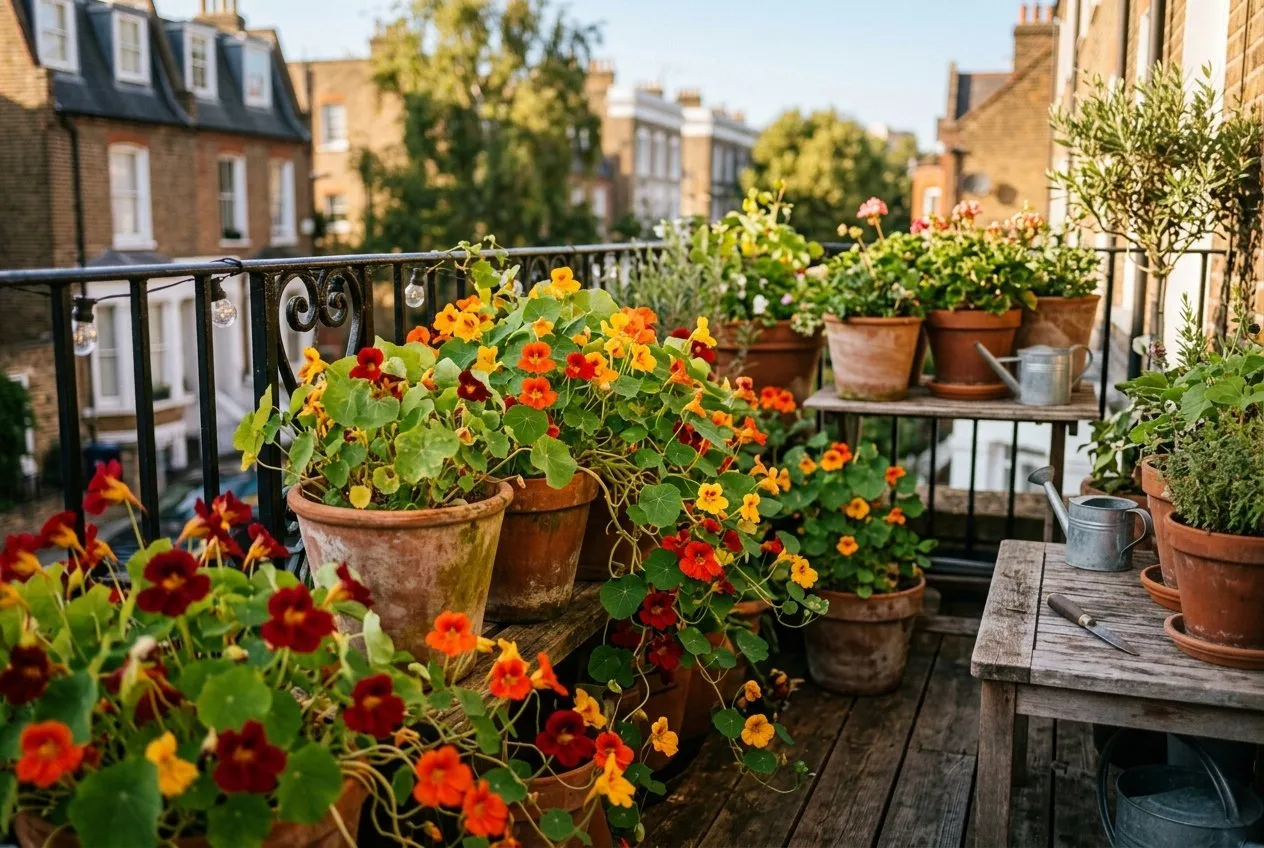 Trailing nasturtiums thrive in containers and bring colour to small spaces
Nasturtiums have a sprawling habit. Climbing types reach 1.8m and need a trellis, fence, or wigwam for support. Even dwarf varieties spread 30-45cm wide. Give them room or use them deliberately to fill gaps in borders and along path edges.
Climbing, trailing, and dwarf varieties compared
There are three main types of nasturtium, and choosing the right one matters. Each suits a different garden situation.
| Variety type | Height | Best for | Top varieties |
|---|---|---|---|
| Climbing | 1.5-1.8m | Fences, trellises, wigwams, covering walls | Tall Trailing Mixed, Flame Thrower |
| Trailing | 30-45cm, spreads 60cm+ | Hanging baskets, window boxes, containers | Gleam Series, Jewel Mixed |
| Dwarf/bush | 15-30cm | Borders, edging, pots, ground cover | Tom Thumb, Alaska, Empress of India |
Climbing varieties are the most vigorous. They scramble up supports using twining leaf stalks. Plant them at the base of a fence or obelisk in a cottage garden planting plan and they will cover it by midsummer.
Trailing varieties suit hanging baskets and containers where stems can cascade over the edges. The Gleam Series is a semi-double type with an RHS Award of Garden Merit that flowers heavily in shades of orange, scarlet, and yellow.
Dwarf varieties are compact and free-flowering. Tom Thumb grows to just 25cm tall and produces single flowers in a range of colours. Alaska has variegated cream-and-green foliage that looks striking even before the flowers open. Empress of India has dark, blue-green leaves and deep crimson flowers.
A packet of any type costs 1.50-3.00 pounds from UK seed suppliers. Each packet contains 20-40 seeds, which is enough to fill a large bed or several containers.
How to use nasturtiums as a companion plant
Nasturtiums are one of the most effective companion plants for UK vegetable gardens. Their primary value is as a trap crop for black bean aphid (blackfly), which colonises nasturtiums in preference to broad beans, runner beans, and brassicas.
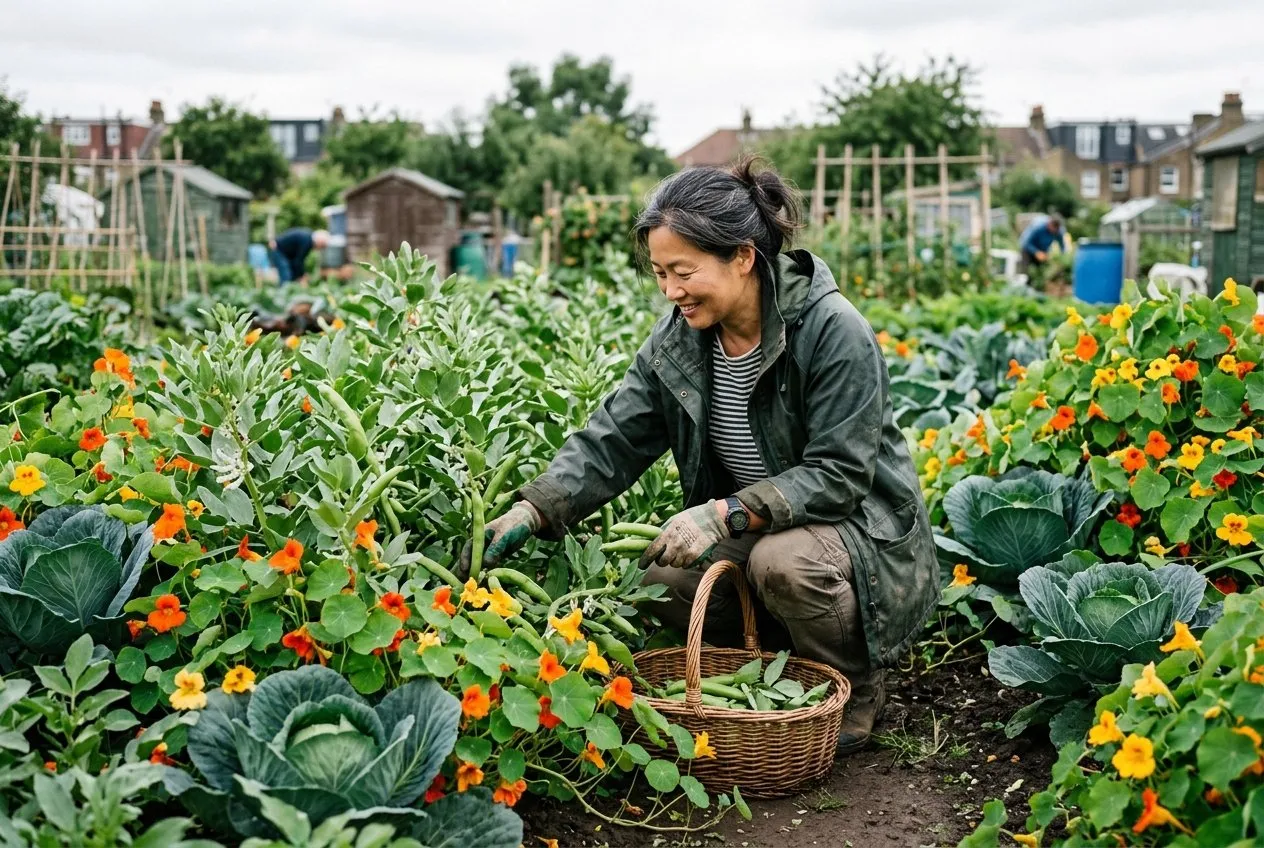 Nasturtiums planted between vegetable rows act as a sacrificial trap crop for blackfly
The science behind this is straightforward. Nasturtiums produce mustard oils and amino acids that aphids find more attractive than most crop plants. Blackfly swarm to the nasturtiums and build colonies there, leaving your vegetables largely untouched. Once the nasturtiums are heavily infested, pull them up and dispose of them in a green waste bin.
Plant nasturtiums at the ends of bean rows or around the perimeter of brassica beds. One nasturtium plant per metre of crop row is enough. Sow the nasturtiums at the same time as your crops so they establish together. For a detailed guide to beneficial pairings, read our companion planting guide.
Nasturtiums also attract hoverflies, whose larvae eat aphids. This makes a double benefit: the nasturtiums trap the aphids and attract the predators that control them. For more ways to manage aphids without chemicals, see our guide on how to get rid of aphids.
Whitefly on brassicas can also be reduced by interplanting with nasturtiums. The bright flowers confuse the whitefly’s host-finding behaviour, making it harder for them to locate cabbage and kale plants.
Eating nasturtium flowers, leaves, and seed pods
Every part of the nasturtium above ground is edible. The flowers, leaves, and unripe seed pods all have a distinctive peppery, watercress-like flavour. The RHS lists nasturtiums as a safe and popular edible flower.
Flowers have the mildest flavour. Pick them in the morning when fully open and use them within a few hours. Add whole flowers to salads, float them in summer drinks, or use as a garnish for canapes and desserts. The different colours taste similar, though darker red flowers tend to be slightly more peppery.
Leaves are more intensely flavoured. Young leaves under 5cm across are tender and excellent in salads. Larger leaves become tougher and more pungent. Use them as a peppery alternative to rocket in sandwiches, wraps, and pasta dishes.
Seed pods can be pickled in vinegar while still green and unripe. The resulting pickled capers have a similar sharpness to true capers and were used as a substitute in British kitchens during the Second World War. Harvest the green pods immediately after the flower drops, before they harden and dry.
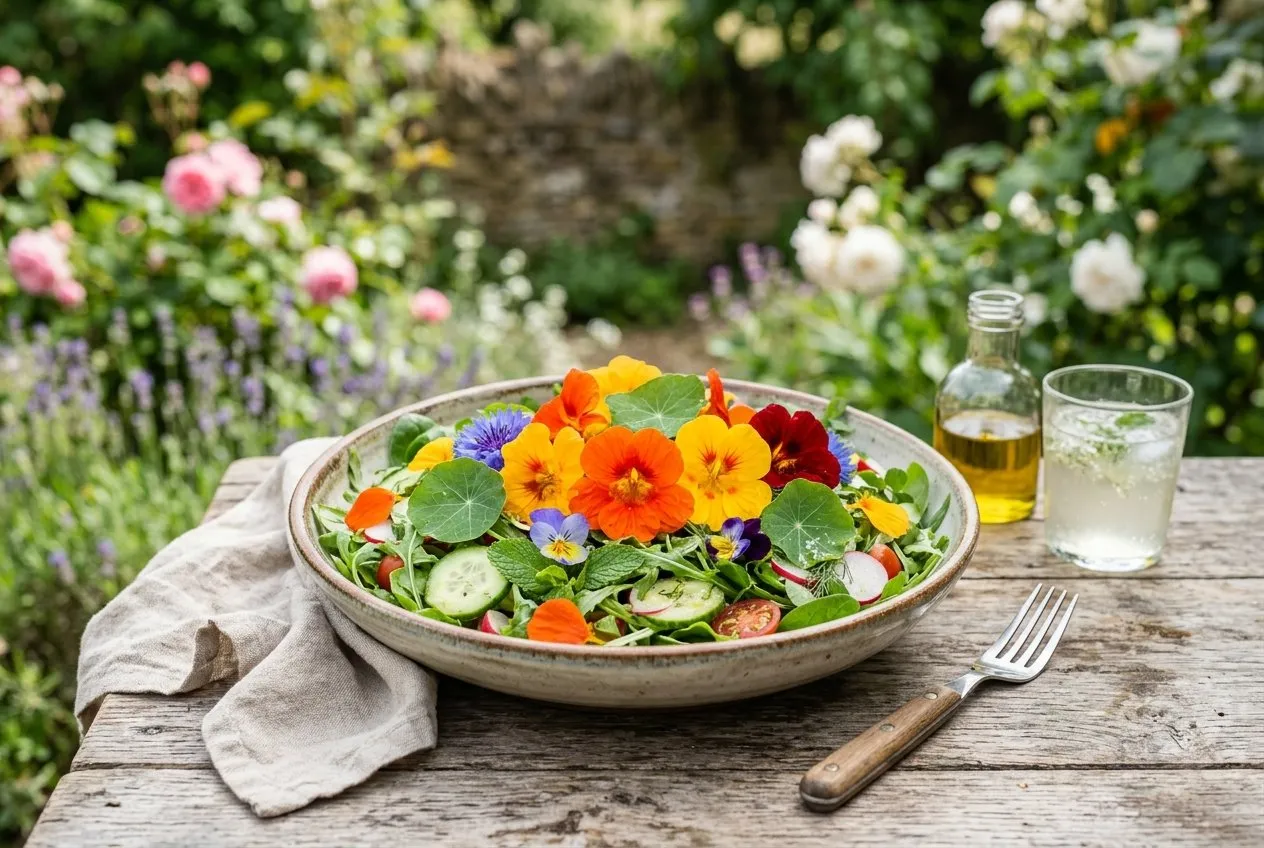 Nasturtium flowers and young leaves add colour and a peppery kick to summer salads
| Edible part | Flavour | How to use | Harvest window |
|---|---|---|---|
| Flowers | Mild peppery, slightly sweet | Salads, garnish, drinks, crystallised | June-October, pick when fully open |
| Young leaves | Strong peppery, watercress-like | Salads, sandwiches, pesto | June-September, pick under 5cm wide |
| Green seed pods | Sharp, caper-like | Pickle in vinegar as “poor man’s capers” | July-September, harvest before hardening |
For more ideas on growing and using flowers in cooking, see our edible flowers guide.
Growing nasturtiums in pots and containers
Nasturtiums are ideal container plants because they prefer poor soil and tolerate dry spells. A pot at least 20cm wide with drainage holes is the minimum. Trailing varieties work best in hanging baskets and window boxes where stems cascade naturally.
Fill containers with standard multipurpose compost. Do not add slow-release fertiliser or extra nutrients. The low fertility encourages flowering over foliage growth.
Water when the top 3cm of compost feels dry. In hot summer weather, containers may need daily watering. Nasturtiums wilt quickly when dry but bounce back fast once watered.
Dwarf varieties such as Tom Thumb and Alaska stay compact in pots at 20-30cm tall. The Gleam Series produces semi-double flowers on trailing stems up to 45cm long, which drape attractively over pot rims and basket edges.
Nasturtiums in containers self-seed less than those in open ground because seeds fall onto hard surfaces. Collect ripe seed pods in autumn and store them dry for next year.
Common problems and how to fix them
Blackfly (black bean aphid) is the most common pest. This is actually a feature, not a bug, when nasturtiums are used as trap crops. On ornamental plantings, a jet of water from a hosepipe dislodges most aphids. Ladybirds and hoverflies usually bring populations under control within two weeks.
Cabbage white caterpillars occasionally feed on nasturtium leaves, leaving ragged holes. Pick caterpillars off by hand. The damage is cosmetic and does not affect flowering.
Large white butterfly also lays eggs on nasturtium leaves. Check the underside of leaves weekly from May to September. Remove yellow egg clusters before they hatch.
Slugs and snails nibble young seedlings. Protect newly sown areas with copper tape, beer traps, or a scattering of sharp grit until plants reach 10cm tall. Established nasturtiums are rarely bothered.
No flowers, just leaves means the soil is too rich. Stop feeding entirely. Move container plants to a sunnier spot. If growing in fertile border soil, either accept the foliage or relocate nasturtiums to a poorer patch.
Powdery mildew appears on leaves in late summer, especially in dry, still conditions. This is usually cosmetic at the end of the season. Remove badly affected leaves and ensure airflow around plants.
Collecting and saving nasturtium seed
Nasturtium seeds are among the easiest to save. The seeds are large, easy to spot, and germinate well after storage. Let seed pods mature on the plant until they turn from green to pale brown and feel hard and dry.
Pick the dried pods and spread them on newspaper indoors for a week to finish drying. Store in a labelled paper envelope in a cool, dry, dark place. Seeds remain viable for 3-5 years when stored correctly.
Each plant produces dozens of seeds, so one season’s crop gives you enough for years of sowing. Share surplus seed with neighbours or save it for next season’s allotment beds.
Nasturtiums also self-seed freely in sheltered spots. Seedlings appear from April onwards and are easy to recognise by their round, shield-shaped first leaves. Thin or transplant them while small if they appear in unwanted places.
Monthly nasturtium growing calendar
| Month | Task |
|---|---|
| March | Sow indoors in 9cm pots on a bright windowsill (15-20C) |
| April | Sow directly outdoors in late April after last frost |
| May | Harden off indoor-sown plants; plant out after last frost |
| June | First flowers appear; begin harvesting for salads |
| July-August | Peak flowering; deadhead for continuous blooms; pickle green seed pods |
| September | Flowers continue; collect ripe seed pods for next year |
| October | First frosts kill plants; clear spent growth; final seed collection |
| November-February | No action; store saved seed in cool, dry conditions |
Frequently asked questions
Our team produces practical UK gardening guidance from source research, contributor records and established horticultural practice. Editorial standards are overseen by Matt W.