How to Grow Yarrow in the UK
How to grow yarrow (Achillea) in UK gardens. Covers native wildflower, garden hybrids, prairie planting, division, cutting, drying, and best varieties.
Key takeaways
- Achillea millefolium is a UK native wildflower growing in grasslands across every county
- Garden hybrids offer colours from yellow and gold to red, pink, orange, and terracotta
- Yarrow tolerates drought, poor soil, and exposed positions but demands full sun
- Divide clumps every 3 years in spring or autumn to prevent die-out in the centre
- Flat flower heads are among the best landing pads for hoverflies, beetles, and butterflies
- Cut and dried yarrow retains its colour for 6-12 months in arrangements
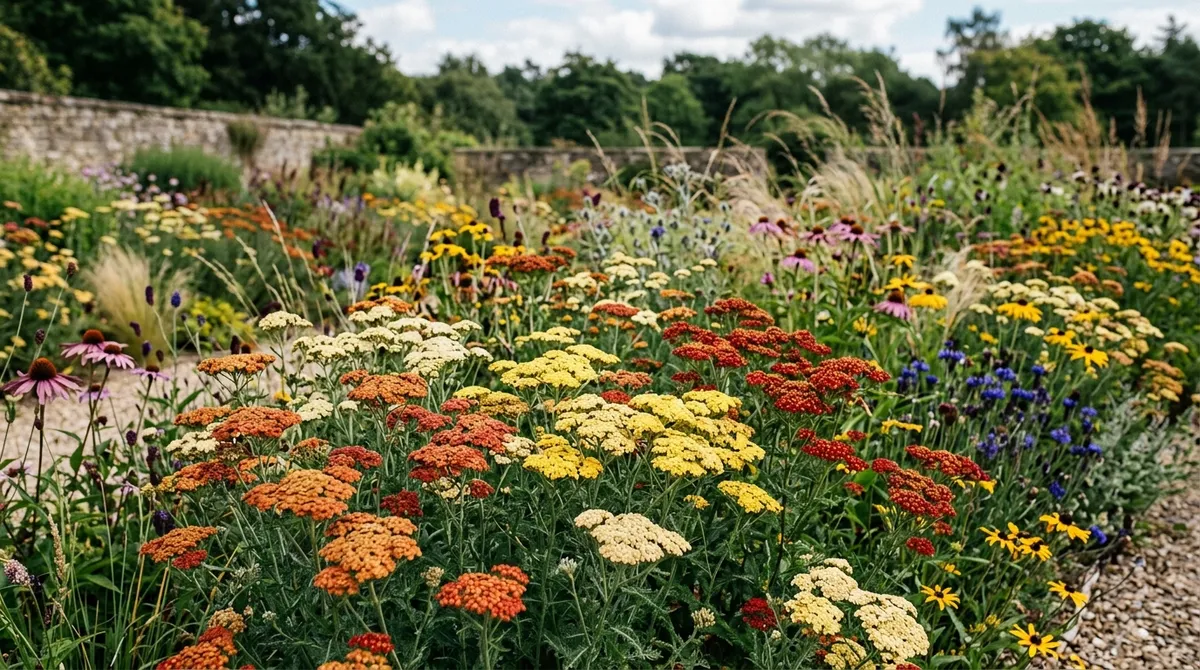
Yarrow is one of the great dual-purpose garden plants. In its wild form, Achillea millefolium carpets British meadows, roadsides, and churchyards with flat heads of white and pink flowers. In its garden hybrids, it delivers some of the warmest, richest colours available to UK growers. From butter yellow to burnt terracotta, deep red to soft salmon, yarrow offers a colour palette no other perennial matches.
The genus is named after Achilles, who according to Greek legend used yarrow to treat soldiers’ wounds at the siege of Troy. That medicinal history is not myth. Yarrow contains genuine anti-inflammatory and antiseptic compounds, and it was used in British folk medicine for centuries.
What types of yarrow can I grow?
Understanding the range of Achillea species and hybrids helps you choose the right plant for your garden. The genus contains around 85 species, but only a handful matter for UK growers.
Achillea millefolium is the native UK wildflower. It grows 30-60cm tall with feathery, finely divided leaves and flat flower heads in white or occasionally pink. It flowers from June to September and spreads by underground rhizomes. This is the species to choose for wildflower meadows and naturalistic planting.
Achillea ‘Moonshine’ is a hybrid with silver-grey foliage and clear lemon-yellow flower heads. It reaches 60cm and is one of the tidiest, most well-behaved garden yarrows. It earned the RHS Award of Garden Merit and thrives in hot, dry positions.
Achillea millefolium cultivars include the stunning colour varieties. ‘Paprika’ opens cherry-red and fades through orange to gold as flowers age. ‘Terracotta’ is a warm burnt orange fading to creamy yellow. ‘Cerise Queen’ is a bright deep pink. These all reach 60-75cm and flower from June to August.
Achillea filipendulina is the tall, architectural species. Varieties like ‘Gold Plate’ reach 120cm with large, flat golden-yellow flower heads 12-15cm across. These are the back-of-border giants, perfect for prairie-style planting alongside grasses.
Where should I plant yarrow?
Yarrow demands full sun. This is the one condition that is non-negotiable. In shade, plants become leggy, floppy, and flower poorly. Choose the most open, sun-baked position you have.
Soil should be well-drained and average to poor in fertility. Rich, moist soil produces lush, soft growth that flops over and needs staking. Poor, stony, sandy, or chalky soil produces compact, self-supporting plants with more intense flower colour.
Yarrow tolerates a wide pH range from slightly acid to strongly alkaline. It grows equally well on chalky soil and sandy soil. It is one of the most adaptable perennials for soil type, though it dislikes waterlogged ground.
Exposed, windy positions are no problem. Yarrow has evolved in open grasslands and shrugs off wind that flattens other perennials. The tall A. filipendulina varieties may need staking in very exposed gardens, but the millefolium hybrids at 60-75cm are generally self-supporting when grown lean.
For gravel gardens, yarrow is one of the essential plants. The sharp drainage and reflected heat of gravel suit it perfectly. Plant alongside lavender, sedums, and stipa grasses for a drought-tolerant display.
How do I plant yarrow?
Plant container-grown yarrow in spring or autumn. Spring planting is preferable on heavy soils because it gives roots time to establish before the following winter.
Dig a hole twice the width of the root ball and the same depth. Do not improve the soil with compost or manure. If the soil is heavy clay, mix sharp grit into the backfill at roughly 50:50. Set the plant so the crown sits at soil level, never below. Firm gently and water in.
Space plants 45-60cm apart for garden hybrids. The tall A. filipendulina varieties need 60-75cm spacing. Native A. millefolium in meadow plantings can be spaced more closely at 30cm, as it fills gaps by rhizome spread.
After planting, apply a 5cm collar of horticultural grit around the crown. This improves drainage at the point where rot is most likely to start and suppresses the weed seedlings that compete with new plants.
Water new plants weekly for the first month. After establishment, yarrow is one of the most drought-tolerant perennials available. Mature plants survive 6 weeks or more without supplementary watering, even in sandy soil.
How do I divide yarrow?
Division is the single most important maintenance task for yarrow. Without it, clumps exhaust the soil in their centre, die out into a hollow ring, and produce fewer flowers each year.
Divide every 3 years, ideally in early March as new growth starts. Lift the entire clump with a garden fork. Shake off excess soil. You will see vigorous, healthy growth around the outer edge and dead, woody material in the centre.
Pull or cut the clump into sections, keeping only the healthy outer divisions with visible new shoots and fresh white roots. Discard the dead centre. Each division should be roughly the size of your fist.
Replant divisions immediately in refreshed soil at the original depth. Add a grit collar around the crown. Water once and then leave them alone. New divisions establish quickly and should flower well in their first summer.
Division also controls spread. The rhizomatous nature of yarrow means clumps expand outward each year. If a plant is encroaching on its neighbours, division lets you reduce its footprint while rejuvenating the remaining portion.
What are the best yarrow varieties?
| Variety | Species/Hybrid | Height | Colour | Flowering | Division Interval | Best For |
|---|---|---|---|---|---|---|
| ’Moonshine’ | Hybrid | 60cm | Lemon-yellow | Jun-Aug | 3 years | Borders, gravel gardens |
| ’Paprika’ | A. millefolium | 60cm | Red fading to gold | Jun-Aug | 2-3 years | Hot borders, prairie |
| ’Terracotta’ | A. millefolium | 60cm | Burnt orange to cream | Jun-Aug | 2-3 years | Warm schemes, cutting |
| ’Cerise Queen’ | A. millefolium | 70cm | Deep pink | Jun-Aug | 3 years | Cottage borders |
| ’Gold Plate’ | A. filipendulina | 120cm | Deep golden yellow | Jul-Sep | 3-4 years | Back of border, drying |
| ’Tutti Frutti Pineapple Mango’ | Hybrid | 50cm | Golden-apricot | Jun-Sep | 3 years | Front of border, pots |
| A. millefolium (wild) | Species | 45cm | White/pale pink | Jun-Sep | Spreads by rhizome | Meadows, wildflower areas |
| ’Cloth of Gold’ | A. filipendulina | 110cm | Bright gold | Jul-Sep | 3-4 years | Borders, drying |
‘Moonshine’ is the most reliable all-round garden yarrow. Its silver foliage is attractive even before flowers open, and the clear yellow heads look fresh all summer. It is compact, tidy, and needs no staking. The AGM status is well earned.
‘Paprika’ delivers the most dramatic colour effect. New flowers open cherry-red, then each successive ring of florets fades through orange to gold as it ages. A single head can show three colours at once. The multicoloured effect is at its best in late July.
‘Gold Plate’ is the variety for making a statement. At 120cm, it towers above most other perennials. The flat, dinner-plate-sized golden heads are architectural from a distance and superb for drying.
The Tutti Frutti series are compact modern hybrids bred for longer flowering and shorter stature. ‘Pineapple Mango’ at 50cm is excellent for the front of borders and containers. It flowers from June into September with deadheading.
How do I use yarrow in prairie and gravel planting?
Yarrow is a cornerstone plant in the prairie and New Perennial planting styles that have transformed UK garden design. Its flat flower heads provide a horizontal contrast to the vertical spires of salvias, the clouds of grasses, and the globes of echinops.
In prairie planting, combine yarrow with ornamental grasses like Stipa gigantea, Molinia, and Miscanthus. Add vertical accents with Verbascum, Salvia, and Echinacea. Plant in drifts of 5-7 plants for naturalistic effect.
In gravel gardens, yarrow’s drought tolerance makes it indispensable. Plant ‘Moonshine’ alongside lavender, Sedum, and native wildflowers for a low-maintenance scheme that thrives on neglect. Water only during establishment. After the first year, rainfall alone is sufficient in most UK regions.
The key principle is plant community. Yarrow performs best surrounded by plants with similar needs: full sun, sharp drainage, and modest fertility. Avoid pairing it with moisture-loving plants that need regular watering, as the extra irrigation will make the yarrow grow soft and floppy.
How do I cut and dry yarrow?
Yarrow is excellent for both fresh-cut and dried flower arrangements. Its flat heads provide structure and its warm colours add depth to mixed bouquets.
For fresh cutting, harvest when flowers are fully open but colours are still vibrant. Cut stems 40-60cm long in the early morning. Place immediately in clean water with flower food. Strip lower leaves below the waterline. Vase life is 7-10 days. The yellow varieties (‘Moonshine’, ‘Gold Plate’) last longest in water.
For drying, timing is slightly different. Cut when flower heads are at full colour peak, before any florets begin to turn brown. Yellow and gold varieties retain their colour best when dried. Red and pink types fade to softer, more muted tones, which has its own charm.
Strip all leaves from the stems. Tie in bundles of 5-6 with elastic bands. Hang upside down in a warm, dry, dark room with good ventilation. Drying takes 2-3 weeks. Avoid damp locations, which cause mould.
Dried yarrow retains its colour and structure for 6-12 months. The flat heads hold up well without shedding. ‘Gold Plate’ and ‘Cloth of Gold’ are the most popular drying varieties, producing large, architectural heads that dominate dried flower arrangements.
What wildlife does yarrow attract?
Yarrow is one of the most valuable pollinator plants available to UK gardeners. Its flat, open flower heads act as landing pads for insects that cannot hover, including many species of beetle, fly, and parasitic wasp.
Hoverflies are the most frequent visitors. Our weekly pollinator counts in Staffordshire recorded more hoverfly visits to Achillea than to any other perennial in the garden, including lavender. Hoverfly larvae are voracious aphid predators, so yarrow provides indirect pest control.
Soldier beetles and pollen beetles are constant presences on yarrow heads through July and August. These insects are important pollinators of wild plants and crops. The wide, flat flower head gives them easy access to pollen.
Butterflies use yarrow for nectaring. Small tortoiseshell, painted lady, and comma butterflies are regular visitors in UK gardens. The flowers also attract day-flying moths, including the six-spot burnet.
Native A. millefolium is a food plant for several moth caterpillars, including the mouse moth and the chamomile shark. Including it in a wildlife garden supports the full insect food chain from larval host to adult nectar source.
Common yarrow problems
Centre die-out is the most common issue. Clumps become woody and bare in the middle after 2-3 years. The solution is regular division every 3 years. This is not a sign of disease but a natural growth pattern of rhizomatous perennials.
Powdery mildew affects yarrow in late summer, especially in humid conditions. A white dusty coating appears on the lower leaves. Remove affected foliage, improve air circulation, and ensure the plant is not being splashed by overhead watering. Most garden varieties shrug off mild mildew without lasting damage.
Aphids occasionally cluster on young stem tips in spring. Yarrow’s own hoverfly visitors usually control aphid populations within a week. Avoid spraying insecticides, which kill the beneficial predators along with the pests. A strong water jet from a hose dislodges heavy infestations if needed.
Flopping stems indicate too much shade, too-rich soil, or overcrowding. Move the plant to full sun, stop feeding, and divide if congested. Well-grown yarrow on poor soil in full sun should not need staking, except for the tallest A. filipendulina varieties in exposed positions.
Excessive spreading of native A. millefolium can become a nuisance in tidy borders. Contain it in a wildflower area or meadow planting where spreading is beneficial. Garden hybrids are less aggressive but still benefit from dividing to control their footprint.
Frequently asked questions
How often should I divide yarrow?
Divide yarrow clumps every 3 years in early spring or autumn. Lift the entire clump with a fork and pull apart the vigorous outer sections. Discard the woody, dead centre. Replant the divisions at the same depth with a collar of grit around the crown. Without regular division, yarrow clumps die out from the centre and become a hollow ring of weak growth. Spring division is preferable on heavy soils.
Does yarrow grow in clay soil?
Yes, yarrow grows in clay soil but needs improved drainage around the crown. Add a 5cm collar of horticultural grit around the base of each plant. On very heavy clay, incorporate sharp grit into the planting hole. Yarrow is more tolerant of clay than many drought-resistant plants because its rhizomatous roots spread horizontally. Winter waterlogging is the main risk. Raised beds or mounded planting reduces losses.
Is yarrow native to the UK?
Yes, Achillea millefolium is native to every county in Britain and Ireland. It grows wild in grasslands, meadows, roadsides, and churchyards throughout the country. It was used in folk medicine for thousands of years, hence its common name ‘nosebleed plant’. The Botanical Society of Britain and Ireland records it as one of the most widespread native wildflowers.
Can I grow yarrow from seed?
Yes, yarrow germinates easily from seed sown in spring. Sow on the surface of moist compost and do not cover, as seeds need light to germinate. Keep at 15-20C and expect germination in 14-21 days. Prick out seedlings into individual pots and plant out after hardening off. Seed-grown plants may take two seasons to reach full flowering size. Named cultivars do not come true from seed, so division is better for specific varieties.
Why has my yarrow stopped flowering?
The most common cause is congested roots needing division. Yarrow clumps exhaust the soil in their centre after 2-3 years, leading to reduced flowering. Dividing and replanting in fresh ground restores vigour. Other causes include too much shade, overly rich soil that promotes leaves over flowers, and cutting stems back too hard before flower buds form.
How do I dry yarrow for flower arrangements?
Cut stems when flowers are fully open but before they start to fade. Strip all leaves and tie in bundles of 5-6 stems. Hang upside down in a warm, dry, dark room for 2-3 weeks. Dried yarrow retains its colour remarkably well, especially the yellow and gold varieties. Red and pink types fade slightly to softer tones. Dried heads last 6-12 months in arrangements.
Is yarrow invasive?
Native Achillea millefolium can spread aggressively by underground rhizomes. It is best kept to wildflower areas and meadow plantings where spreading is welcome. Garden hybrids are less vigorous but still spread gradually. Divide and thin clumps every 3 years to keep them in bounds. Container growing prevents unwanted spreading in small gardens.
Lawrie has been gardening in the West Midlands for over 30 years. He grows his own veg using no-dig methods, keeps a wildlife-friendly garden, and writes practical advice based on real UK growing conditions.