Key takeaways
- Hardy Salvia nemorosa varieties survive minus 15 degrees C and grow in all UK regions without winter protection
- Deadheading spent flower spikes triggers a full second flush within 3-4 weeks, extending bloom into October
- 'Caradonna' is the top-performing UK variety with deep purple spikes on distinctive dark stems reaching 50cm
- Half-hardy salvias like 'Amistad' and 'Hot Lips' need lifting or covering before the first frost north of London
- Free-draining soil and full sun are the two non-negotiable requirements for all salvia types
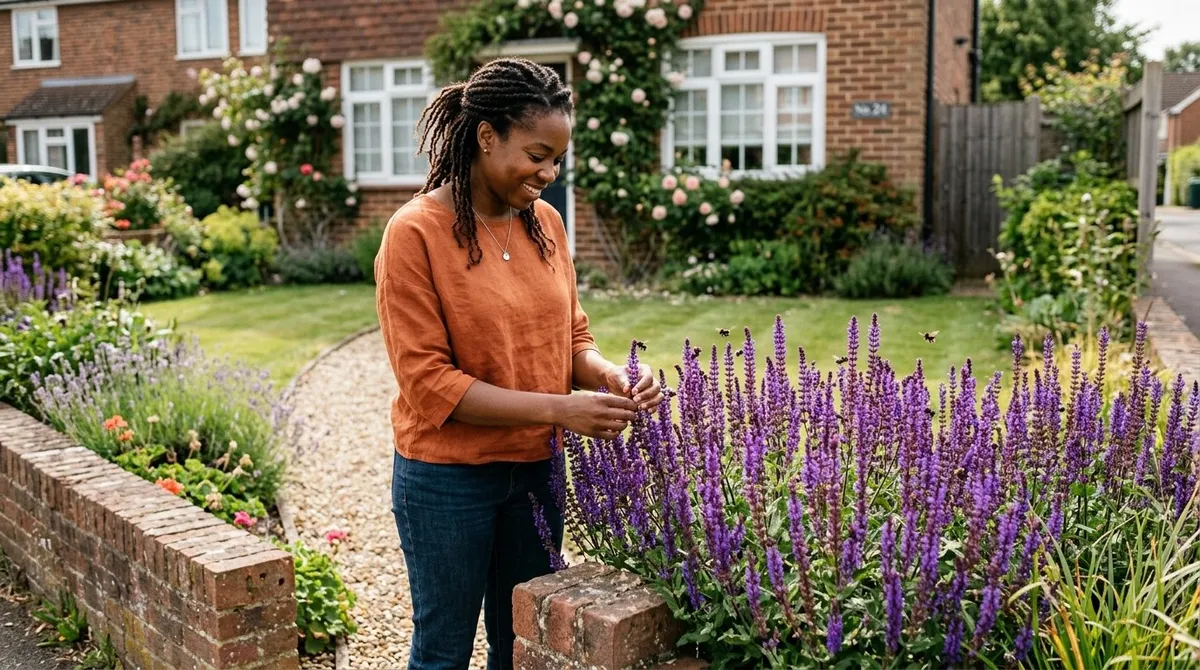
- Salvias attract bees, butterflies, and hoverflies, making them one of the best pollinator plants for UK borders
Salvia is one of the most versatile and long-flowering perennials you can grow in a British garden. From the bullet-proof hardy types that survive minus 15 degrees C to the exotic half-hardy varieties that flower from June until the first frost, there is a salvia for every border, container, and garden style. The genus contains over 900 species worldwide, but only a handful perform reliably in UK conditions.
The key to success with salvia in Britain is choosing the right type for your climate and soil. Hardy perennial salvias like Salvia nemorosa need almost no care once established. Half-hardy types like ‘Amistad’ and ‘Hot Lips’ demand winter protection or annual replacement. This guide covers which types suit UK gardens, the best varieties to grow, and how to keep them flowering from early summer into autumn. For more plants that thrive with minimal fuss, see our guide to drought-tolerant plants for UK gardens.
What types of salvia grow in the UK?
The genus Salvia belongs to the mint family (Lamiaceae) and includes annuals, perennials, and shrubs. For UK gardeners, salvias divide into two practical groups: hardy types that survive winter outdoors and half-hardy types that need protection.
Hardy perennial salvias
Salvia nemorosa is the workhorse of British borders. Native to central Europe, it tolerates temperatures down to minus 15 degrees C. Plants form neat clumps of wrinkled green foliage 40-50cm tall, producing dense spikes of purple, blue, or pink flowers from June to August. Deadheading triggers a second flush that extends flowering into September or October.
Salvia x sylvestris hybrids behave identically to nemorosa types and share the same hardiness. The variety ‘Mainacht’ (May Night) is one of the earliest to flower, starting in late May. These salvias grow in any well-drained soil from pH 6.0 to 8.0. They tolerate clay if drainage is adequate.
Half-hardy and tender salvias
Salvia microphylla (including ‘Hot Lips’) and Salvia ‘Amistad’ are half-hardy, surviving only to minus 5 degrees C. In sheltered gardens across southern England and coastal areas, they often overwinter outdoors with a thick mulch. In the Midlands, the north, Wales, and Scotland, treat them as tender perennials. Lift before the first frost or take cuttings in September as insurance.
Salvia patens produces the most vivid blue flowers of any salvia. The tubers are hardy to around minus 7 degrees C but rot in wet winter soil. Lift and store tubers like dahlias, or mulch heavily and hope for a mild winter. The variety ‘Cambridge Blue’ is a paler, equally striking form.
Best salvia varieties for UK gardens
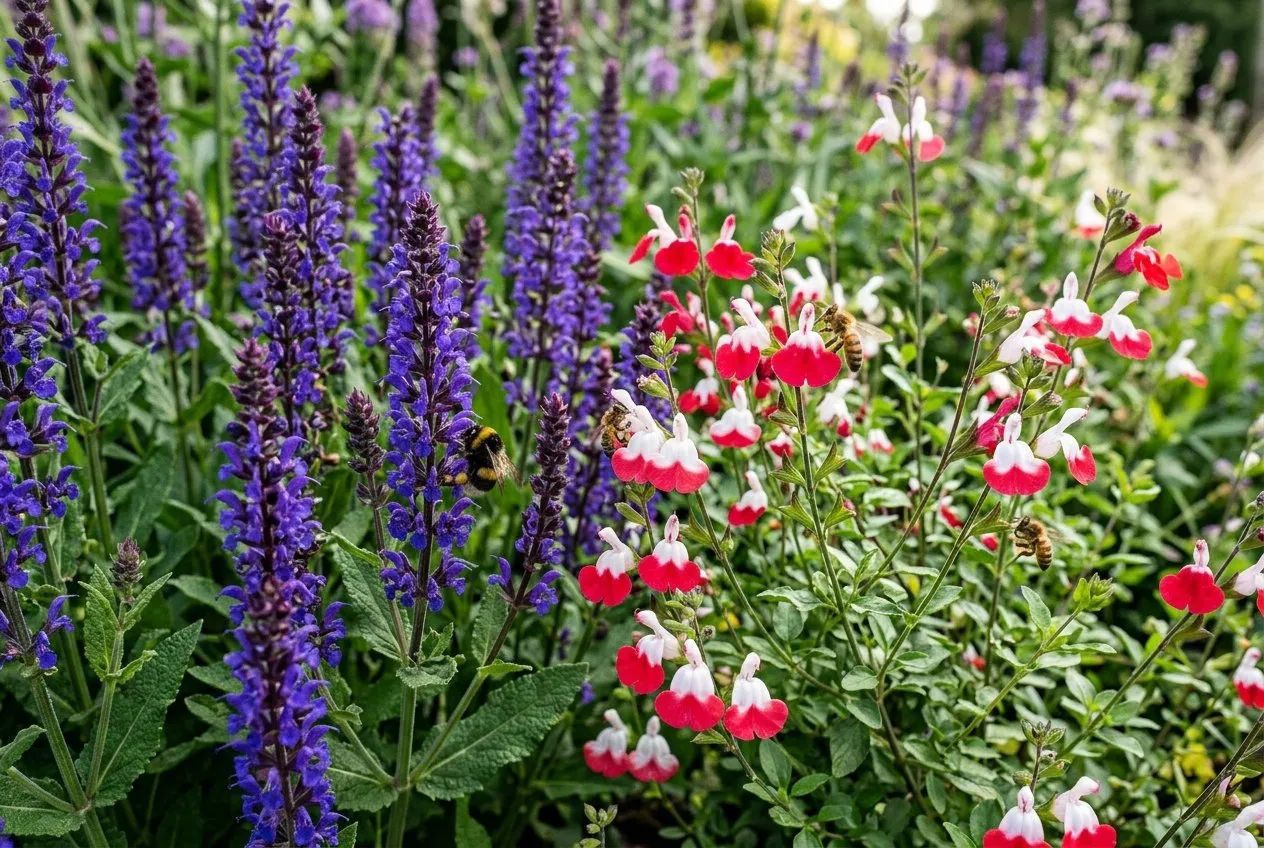 Hardy Salvia nemorosa spikes alongside the bicolour flowers of half-hardy ‘Hot Lips’ in a summer border
Choosing a named variety gives you a plant with known height, colour, hardiness, and habit. These are the most reliable salvias for British conditions, ranked by overall garden performance.
Caradonna
The outstanding salvia for UK gardens. ‘Caradonna’ produces deep purple flower spikes on distinctive near-black stems, reaching 50cm. The dark stems set it apart from every other nemorosa variety and create a stronger visual impact in borders. Fully hardy to minus 15 degrees C. Holds an RHS Award of Garden Merit. Plant 40cm apart.
East Friesland
A compact, reliable nemorosa variety at 45cm tall with violet-purple flowers. ‘East Friesland’ (Ostfriesland) is slightly shorter and more spreading than ‘Caradonna’, making it ideal for the front of borders and path edging. Same hardiness and flowering period. An excellent choice where space is limited.
Hot Lips
Salvia ‘Hot Lips’ produces bicolour red and white flowers that change ratio depending on temperature. Cool weather produces more white; hot weather produces more red. Reaches 70-90cm and flowers from June to November in mild years. Half-hardy to minus 5 degrees C. Needs a sheltered, south-facing spot or winter protection north of London.
Amistad
A striking hybrid reaching 90-120cm with large, deep purple flowers on branching stems. ‘Amistad’ flowers from July until the first hard frost, often into November. Half-hardy to minus 5 degrees C. Best treated as an annual or lifted before winter in most UK regions. Outstanding as a back-of-border plant or in large containers.
Cambridge Blue
Salvia patens ‘Cambridge Blue’ produces the most beautiful pale blue flowers of any border plant. Tuberous roots are hardy to minus 7 degrees C. Reaches 60cm. Lift tubers in November and store frost-free, or mulch with 10cm of bark and accept the risk. Worth the effort for a colour that no other perennial offers.
Variety comparison table
| Variety | Type | Height | Flower colour | Hardiness | Best use |
|---|---|---|---|---|---|
| Caradonna | Nemorosa (hardy) | 50cm | Deep purple | Minus 15C | Borders, massed planting |
| East Friesland | Nemorosa (hardy) | 45cm | Violet-purple | Minus 15C | Edging, small gardens |
| Mainacht | Sylvestris (hardy) | 50cm | Indigo-violet | Minus 15C | Early colour, mixed borders |
| Hot Lips | Microphylla (half-hardy) | 70-90cm | Red and white bicolour | Minus 5C | Sheltered borders, pots |
| Amistad | Hybrid (half-hardy) | 90-120cm | Deep purple | Minus 5C | Back of border, specimen |
| Cambridge Blue | Patens (tender) | 60cm | Pale sky blue | Minus 7C | Borders, cutting garden |
How to plant salvia
Correct planting gives salvias the best start. Full sun and free-draining soil are the two non-negotiable requirements. Get both right and salvias are among the easiest perennials to maintain.
Choosing the right spot
Salvias need a minimum of 6 hours of direct sunlight daily. South and west-facing borders are ideal. Avoid north-facing walls and spots shaded by trees or buildings. Good air circulation around the plants reduces powdery mildew, which is the most common disease on salvia foliage.
Preparing the soil
On free-draining sandy, chalky, or loamy soil, plant straight in with no amendments. Salvias thrive in lean soil and do not need compost or manure added to the planting hole.
On heavy clay, dig in horticultural grit at 30% by volume to improve drainage. Raise the planting area 10-15cm above ground level on very heavy clay. Waterlogged winter soil kills more salvias than frost. If you garden on clay, our guide to the best perennial plants for UK gardens covers which perennials handle clay without amendments.
Planting method
Dig a hole twice the width of the pot but no deeper. Set the plant so the root ball surface sits level with the surrounding soil. Firm gently and water once. After this initial watering, do not water again unless the weather is hot and dry. Space nemorosa types 40cm apart. Space larger half-hardy types like ‘Amistad’ 60cm apart.
When to plant
Late April to June is the best window. Planting after the last spring frost gives roots a full growing season to establish. For half-hardy salvias, wait until all frost risk has passed, typically mid-May in the Midlands, early May in the south. To get a head start, learn how to sow seeds indoors from February.
How to deadhead salvia for repeat flowering
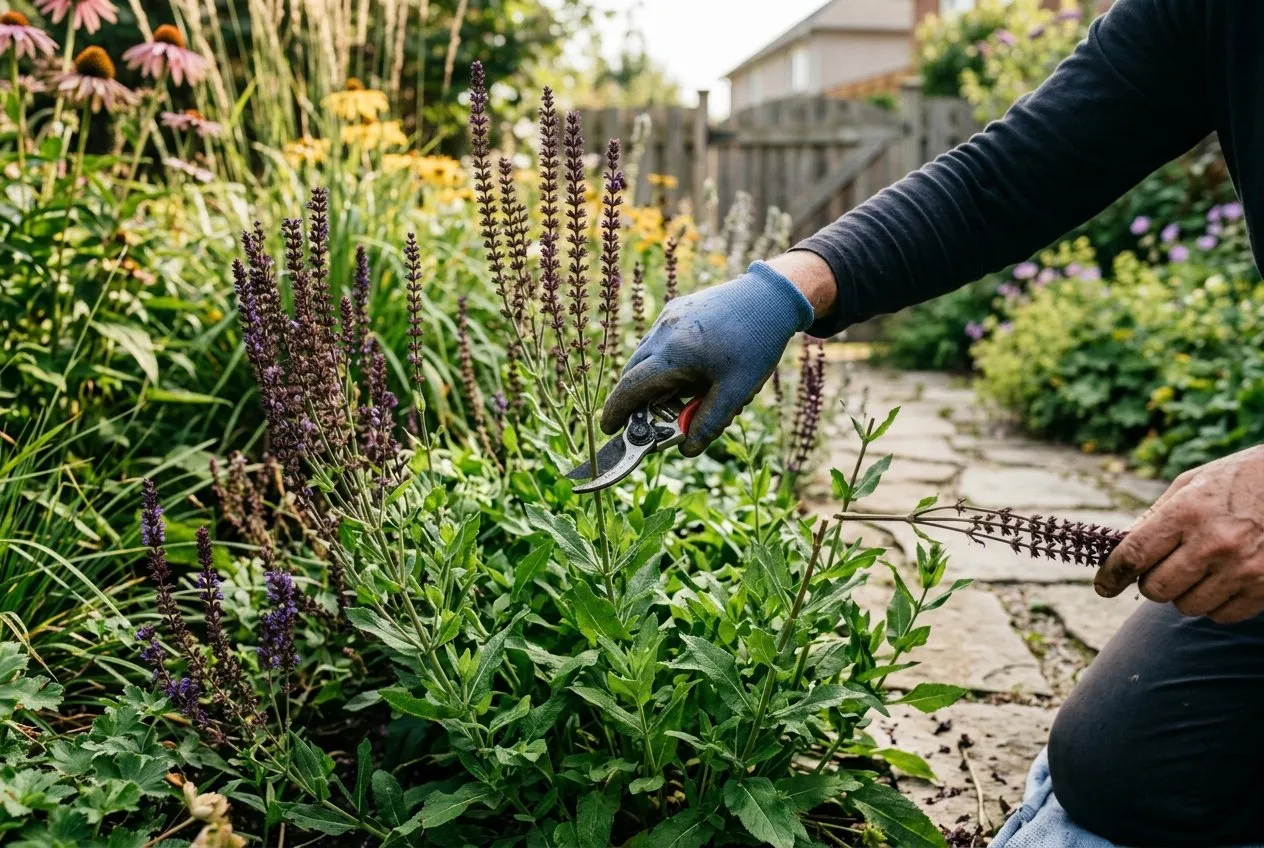 Cutting spent flower spikes down to the next leaf pair triggers a second flush within 3-4 weeks
Deadheading is the single most important maintenance task for salvias. A deadheaded Salvia nemorosa flowers for 4-5 months. An uncut plant stops at 8 weeks. The difference is striking.
The deadheading method
When a flower spike has finished and most blooms have faded, cut the stem down to the first strong pair of leaves below the spent spike. Use sharp secateurs or scissors. Do not just snap off the dead flowers. Cutting to a leaf pair stimulates dormant buds to produce new flowering shoots.
The science behind repeat flowering
Salvia nemorosa flowers on terminal shoots. Once a spike finishes, the plant’s energy shifts to seed production. Removing spent spikes before seeds form redirects energy into lateral buds. These buds produce a second flush of flowers within 3-4 weeks. In warm summers, a third lighter flush is possible by late September.
What deadheading cannot do
Deadheading does not help if the plant is stressed by drought, waterlogging, or deep shade. A healthy, well-sited plant in full sun responds strongly to deadheading. A struggling plant in poor conditions produces weak regrowth regardless of cutting. Address the underlying cause first.
Growing salvia in containers
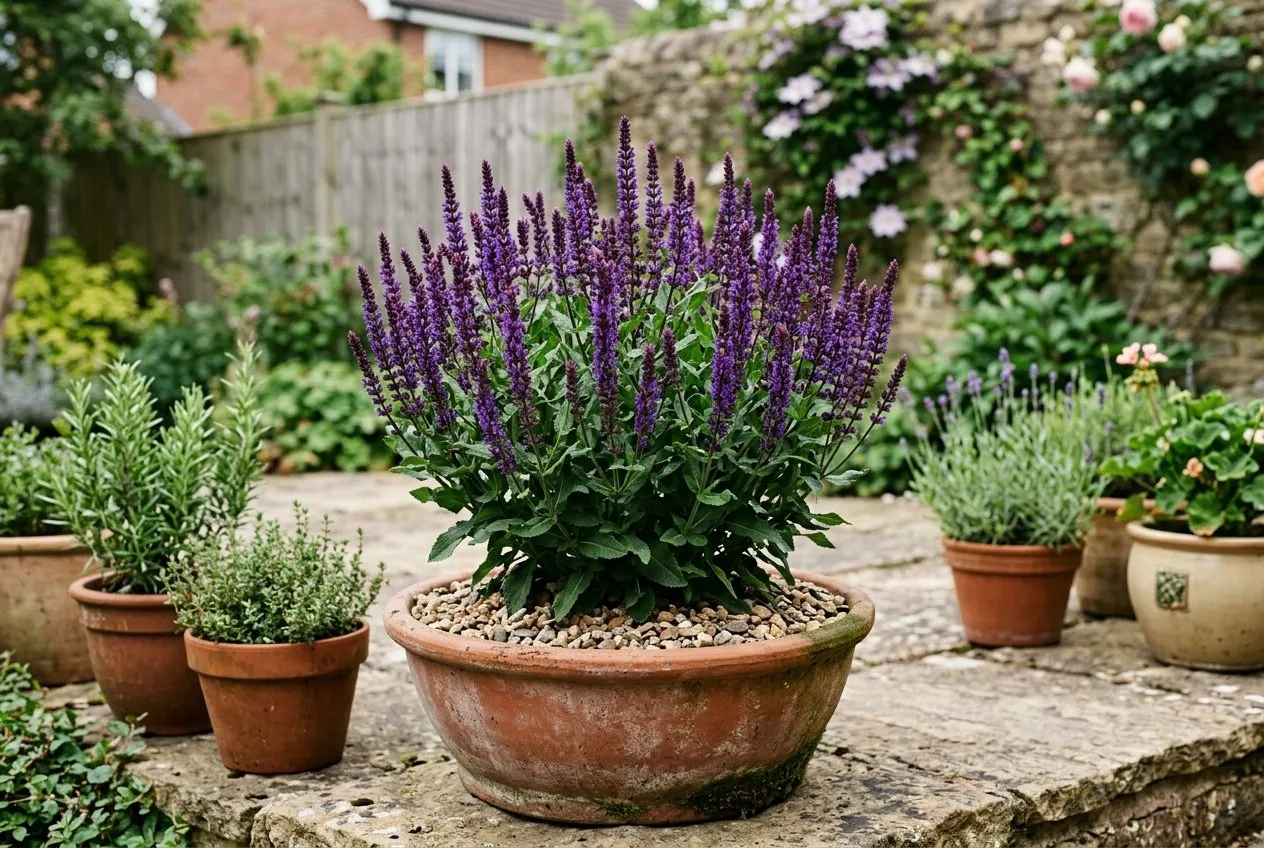 A compact Salvia nemorosa thriving in a terracotta pot with a gravel mulch to improve drainage
Containers suit salvias well, especially half-hardy types that need moving under cover in winter. Hardy nemorosa varieties also perform well in pots for 3-4 years before needing division.
Pot selection
Use terracotta or stone pots of at least 30cm diameter with large drainage holes. Terracotta breathes, reducing the risk of waterlogging. Stand pots on feet to prevent water pooling beneath. Avoid black plastic pots in full sun, as they overheat root zones above 35 degrees C.
Compost and drainage
Mix 70% multipurpose compost with 30% perlite or horticultural grit. Do not use compost straight from the bag. Salvia roots rot quickly in waterlogged substrate. Top-dress with 2cm of gravel or grit around the stem base to keep the crown dry.
Feeding and watering
Feed container salvias fortnightly from June to September with a high-potash liquid fertiliser (tomato feed works well). Water when the top 3cm of compost is dry. Reduce watering from October and keep barely moist through winter. Hardy salvias in pots are more vulnerable to frost than those in the ground because the root ball freezes solid. Wrap pots in bubble wrap from November to March or move into an unheated greenhouse.
Cost breakdown
A 30cm terracotta pot costs around 8-15 pounds. A 9cm salvia plug plant costs 3-5 pounds. Multipurpose compost is roughly 6 pounds per 50L bag. Total setup cost per container: approximately 12-22 pounds. Container salvias last 3-4 years before needing repotting or division.
Overwintering tender salvias
The difference between losing and keeping half-hardy salvias through a UK winter comes down to preparation in October. Wet cold kills faster than dry cold. A salvia that survives minus 5 degrees C in well-drained soil dies at minus 2 degrees C in waterlogged ground.
Mulching method (mild areas)
In sheltered gardens across southern England, coastal Wales, and the south-west, half-hardy salvias often survive outdoors with protection. In November, cut stems back to 15-20cm and pile 10cm of bark mulch or straw over the crown. Remove the mulch in late March when new shoots appear.
Lifting and storing (cold areas)
North of the Midlands, lift half-hardy salvias before the first frost, typically late October. Pot up into barely moist compost and store in a frost-free shed, garage, or cold greenhouse at 3-7 degrees C. Water sparingly, just enough to stop the compost going bone dry. Replant after the last frost in May.
Taking insurance cuttings
The safest strategy is to take softwood cuttings in August or September. Cut 8-10cm non-flowering shoot tips, strip the lower leaves, and insert into a 50/50 mix of perlite and compost. Cover with a clear bag and keep at 15-18 degrees C. Cuttings root in 3-4 weeks. Overwinter young plants on a bright windowsill. This costs nothing and guarantees replacements if the parent plant dies.
Propagation
Salvias propagate easily by division, cuttings, and seed. Each method has its place depending on the type.
Division
Divide established nemorosa clumps every 3-4 years in spring (March to April). Lift the clump, split into sections with a sharp spade, so each piece has 3-5 shoots and a good root mass. Replant immediately at the same depth. Water once and leave alone. Division rejuvenates ageing clumps and produces free plants.
Cuttings
Take softwood cuttings from May to July or semi-ripe cuttings in August to September. Cut 8-10cm non-flowering shoot tips. Remove the lower 2-3 pairs of leaves. Dip the base in hormone rooting powder. Insert into pots of 50/50 perlite and multipurpose compost. Keep moist and warm (15-18 degrees C). Expect rooting in 3-4 weeks. Success rate is typically 80-90%.
Seed
Hardy Salvia nemorosa can be grown from seed sown indoors in February to March at 18-20 degrees C. Germination takes 14-21 days. Prick out seedlings when large enough to handle and grow on in a cool, bright spot. Harden off and plant out after the last frost. Seed-grown plants flower in their first year but may vary in colour and habit. Named varieties do not come true from seed. Our guide on sage growing covers similar propagation techniques for the closely related culinary species.
Month-by-month salvia care calendar
| Month | Task |
|---|---|
| January | No action. Leave old stems standing for frost protection and insect habitat. |
| February | Order plug plants from nurseries. Sow seed indoors at 18-20 degrees C. |
| March | Cut back hardy salvias to 15cm when new basal shoots appear. Divide established clumps. |
| April | Plant out hardy salvias from late April. Prepare containers. |
| May | Plant out half-hardy types after the last frost (mid-May in the Midlands). |
| June | Flowering begins. Enjoy. No feeding needed for border plants. Start fortnightly feeds for containers. |
| July | Peak flowering. Deadhead spent spikes to the first leaf pair. Take softwood cuttings. |
| August | Deadhead the first flush. Second flush begins within 3-4 weeks. Take semi-ripe cuttings. |
| September | Take insurance cuttings of half-hardy types. Continue deadheading. |
| October | Lift half-hardy salvias before the first frost. Mulch hardy types on exposed sites. |
| November | Mulch crowns of borderline-hardy salvias with 10cm bark. Wrap pots in bubble wrap. |
| December | No action. Check stored tender salvias are not drying out. |
Common mistakes when growing salvia
Most salvia failures come from three causes: wrong type, wrong site, or cutting back at the wrong time.
Planting half-hardy types without knowing it
Garden centres often sell ‘Amistad’, ‘Hot Lips’, and Salvia patens alongside hardy nemorosa varieties without clear labelling. The gardener plants them all together, and the half-hardy types die in the first hard frost. Always check the label for hardiness. If it says “half-hardy” or “tender”, plan for winter protection from the start.
Cutting back in autumn
Planting in shade
Salvias evolved in open, sunny habitats. Even light shade reduces flowering by half and causes weak, floppy growth. If your border gets fewer than 6 hours of direct sun, choose a different plant. Our guide to the best plant combinations for UK borders lists alternatives for shadier spots.
Overwatering established plants
Hardy salvias are drought-tolerant once established. UK rainfall provides all the moisture they need. Watering an established border salvia encourages shallow rooting and increases the risk of root rot. The only exception is container-grown plants in hot weather, which may need watering every 2-3 days.
Ignoring drainage on heavy soil
Salvia nemorosa tolerates clay better than many Mediterranean plants, but it will not survive waterlogged ground. On heavy clay, dig in 30% grit by volume and raise the planting level 10-15cm. A 5cm gravel mulch around the crown keeps moisture away from the stems through winter.
Companion plants for salvia
Salvias combine with other sun-loving perennials that share similar growing conditions. The vertical spikes of salvia contrast with rounded and flat-headed flower forms.
Lavender is a natural partner, flowering at the same time in complementary purple tones. Both thrive in full sun and free-draining soil. See our guide to growing lavender in the UK for variety recommendations. Nepeta (catmint) produces soft blue clouds alongside salvia’s rigid spikes. Ornamental grasses like Stipa tenuissima add movement and texture.
Echinacea and Rudbeckia provide warm orange and yellow tones that contrast with purple salvia. Perovskia (Russian sage) extends the season into September with its airy blue flowers. Our guide on how to grow Russian sage covers its pruning and placement. For bee-friendly garden planting, combining salvia with lavender, Nepeta, and Echinacea provides continuous nectar from May through October.
Now you’ve mastered growing salvia, read our guide on the best perennial plants for UK gardens to build a border that flowers from spring through to late autumn.
Frequently asked questions
When should I plant salvia in the UK?
Plant salvia from late April to June. Spring planting after the last frost gives roots a full growing season to establish before winter. Container-grown salvias can also go in during September in mild areas. Avoid planting in winter when cold, wet soil causes root rot in newly planted specimens.
Is salvia a perennial in the UK?
Hardy types like Salvia nemorosa are fully perennial. They survive minus 15 degrees C and return reliably every spring across all UK regions. Half-hardy types including ‘Amistad’, ‘Hot Lips’, and Salvia patens die in hard frosts unless lifted or protected. Treat half-hardy salvias as tender perennials or annuals north of the Midlands.
How do I keep salvia flowering all summer?
Deadhead spent spikes down to the next leaf pair. Hardy salvias produce a second flush within 3-4 weeks after cutting. Some varieties like ‘Hot Lips’ flower continuously without deadheading but benefit from an occasional trim to keep compact growth. Feed container salvias fortnightly with a high-potash liquid fertiliser during the flowering season.
Can I grow salvia in pots?
Yes, salvia grows well in containers of 30cm diameter or larger. Use a mix of 70% multipurpose compost and 30% perlite or grit for drainage. Terracotta pots work best because they allow excess moisture to evaporate. Feed fortnightly with tomato fertiliser from June to September and water when the top 3cm of compost feels dry.
Why has my salvia died over winter?
Most winter losses are half-hardy types left unprotected. Salvia ‘Amistad’, ‘Hot Lips’, and Salvia patens only tolerate down to minus 5 degrees C. Wet soil kills more salvias than cold temperatures alone. Improve drainage with grit, mulch the crown with 10cm of bark in November, or lift tender types and store frost-free.
Should I cut back salvia in autumn or spring?
Leave foliage standing through winter. Old stems protect the crown from frost and provide habitat for overwintering insects. Cut hardy salvias back to 15cm above ground in late March when new basal shoots appear. Cutting in autumn exposes the crown to frost damage and reduces survival rates by up to 30%.
What is the best salvia for a UK garden?
Salvia nemorosa ‘Caradonna’ is the best all-round choice. It is fully hardy to minus 15 degrees C, reaches 50cm tall, and produces deep purple spikes on near-black stems from June to September with deadheading. It holds an RHS Award of Garden Merit and thrives in all UK soil types except waterlogged ground.
Our team produces practical UK gardening guidance from source research, contributor records and established horticultural practice. Editorial standards are overseen by Matt W.