Dumb Cane
Dieffenbachia seguine
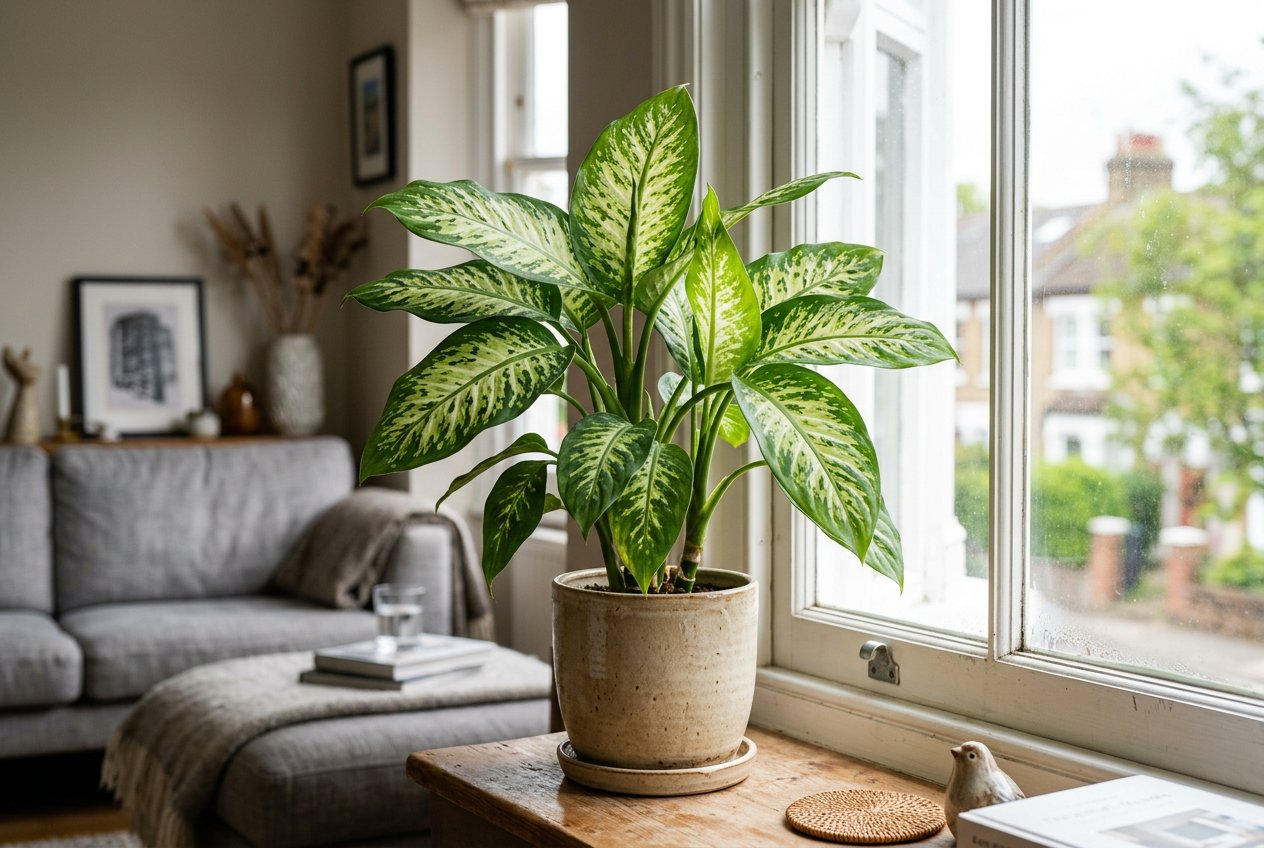
Upright tropical plant with large oval leaves patterned in cream and green. Named because the sap temporarily numbs the tongue and throat if ingested. Fast-growing and easy in a warm bright spot.
Best rooms for dumb cane
Light requirements
Best near a window with filtered light — avoid harsh direct rays.
Tolerates shade and north-facing windows with limited natural light.
How to care for dumb cane
Tolerates lower light but grows best in bright indirect light. Water when the top 3cm dries. Wipe large leaves to remove dust. Feed monthly spring-summer. Tolerates average humidity but appreciates misting. Wear gloves when pruning. Minimum 15°C.
Watering
Water when the top 2–3cm of compost feels dry. Roughly weekly.
Propagation
- Stem cuttings
- Air layering
- Tip cuttings in water
Toxicity
Sap contains calcium oxalate crystals that cause intense burning, swelling of the mouth and throat, and difficulty swallowing. Keep well away from pets and children.
Common problems
- Yellow lower leaves from overwatering or age (normal shedding)
- Brown leaf edges from dry air
- Leggy bare stem over time
Similar houseplants
Related guides
Best Hanging Houseplants UK
The best hanging houseplants for UK homes ranked by trail length, light needs, and care. Covers 10 trailing species with room-by-room placement advice.
Best Indoor Plants for UK Homes
The best indoor plants for UK homes ranked by light needs, care difficulty, and pet safety. Includes lux data for every room orientation.
Best Low-Light Houseplants for UK Homes
Ten low-light houseplants ranked by actual lux tolerance. Covers north-facing rooms, dark hallways, and bathrooms with specific care data per plant.