Snake Plant
Dracaena trifasciata
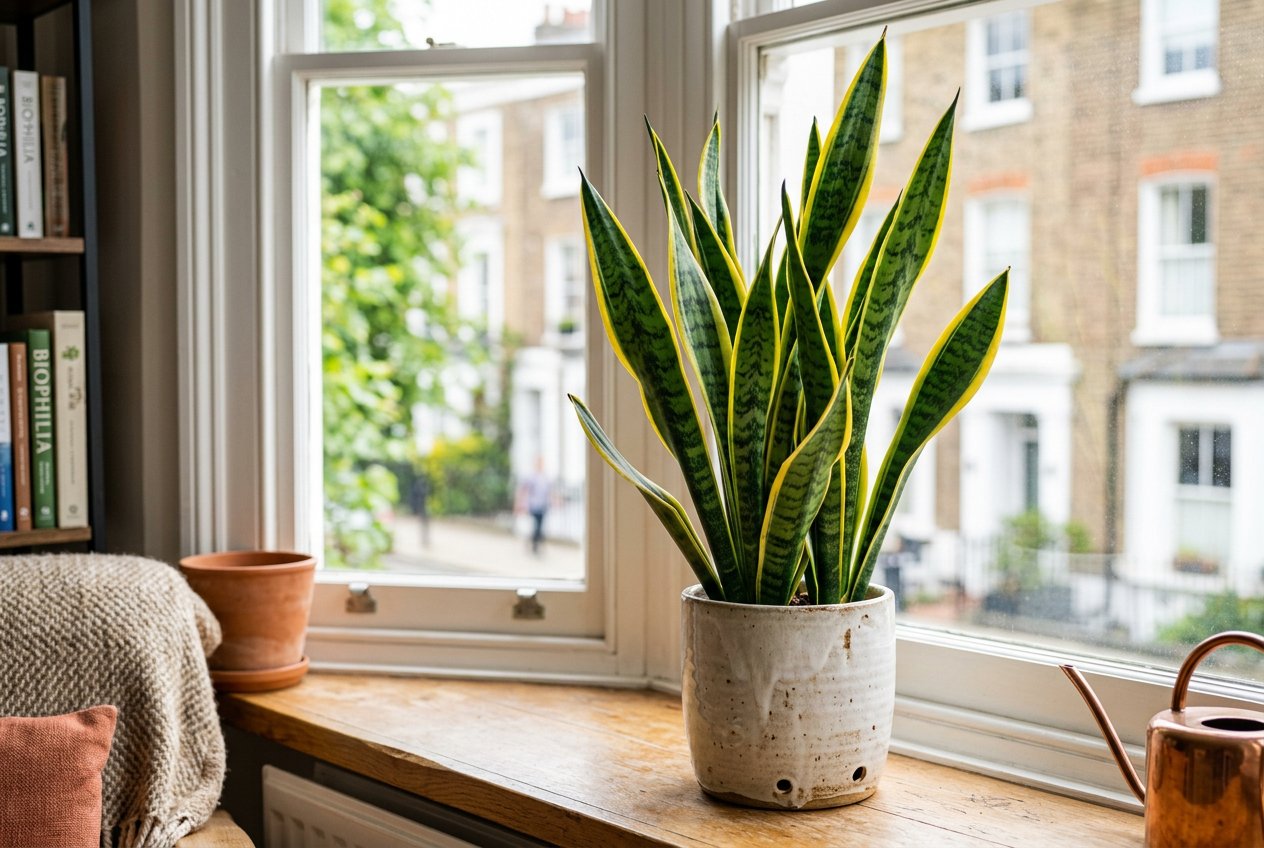
Upright architectural plant with stiff sword-shaped leaves banded in green and gold. Formerly Sansevieria, now reclassified as Dracaena. One of the toughest houseplants on earth — thrives on complete neglect. Converts CO2 to oxygen at night.
Best rooms for snake plant
Light requirements
Best near a window with filtered light — avoid harsh direct rays.
Tolerates shade and north-facing windows with limited natural light.
Thrives on a sunny windowsill with several hours of direct sunlight.
How to care for snake plant
Tolerates anything from deep shade to bright direct sun. Water only when the compost has dried out completely — every 2-4 weeks in summer, monthly in winter. Overwatering is the only reliable way to kill it. Free-draining compost essential. Feed 2-3 times in the growing season. Minimum 10°C.
Watering
Let the compost dry out completely between waterings. Roughly every 2–4 weeks.
Propagation
- Division of rhizomes
- Leaf cuttings in compost (slow, may lose variegation)
Toxicity
Contains saponins. Causes nausea, vomiting, and diarrhoea if ingested by pets.
Common problems
- Mushy base from overwatering (the number one killer)
- Slow growth in deep shade
- Scarring from physical damage (permanent)
Similar houseplants
Related guides
Best Hanging Houseplants UK
The best hanging houseplants for UK homes ranked by trail length, light needs, and care. Covers 10 trailing species with room-by-room placement advice.
Best Indoor Plants for UK Homes
The best indoor plants for UK homes ranked by light needs, care difficulty, and pet safety. Includes lux data for every room orientation.
Best Low-Light Houseplants for UK Homes
Ten low-light houseplants ranked by actual lux tolerance. Covers north-facing rooms, dark hallways, and bathrooms with specific care data per plant.